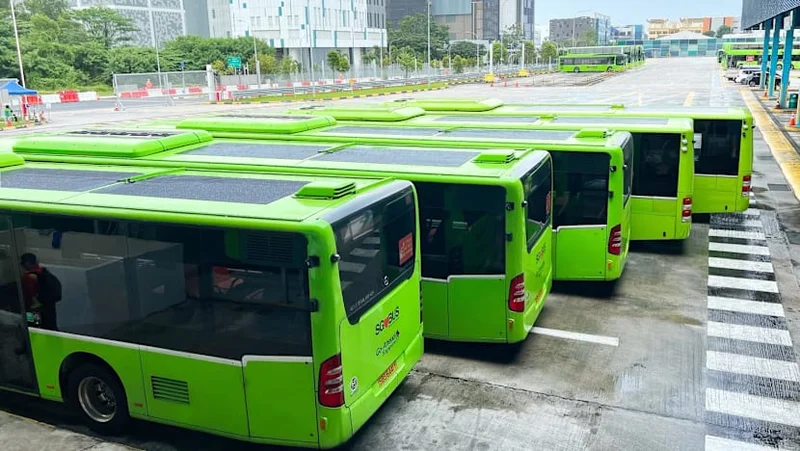
LTA to roll out AI system using bus cameras to detect traffic violations, road defects
The system achieved an average accuracy of 90 per cent in trials, with deployment starting in the fourth quarter of 2026 and expansion to all bus routes by 2030.
SINGAPORE: An AI-powered video analytics system that uses existing cameras on board buses to detect errant motorists and road defects will be progressively rolled out from the fourth quarter of 2026, the Land Transport Authority (LTA) said on Friday (Aug 21).
The system can detect motorists who encroach into bus lanes or park illegally along roads, as well as road infrastructure defects and non-compliant road works.
Trials have been completed, with the system achieving an average accuracy of 90 per cent across the scenarios tested. It will be progressively expanded to all bus routes by 2030.
LTA said the technology would enhance its monitoring capabilities across the bus network, facilitating more timely rectification or enforcement where needed.
“Technology solutions can play an important role in relieving bus captains of manual duties and unlocking the next bound of how we assess risks to safety,” said Senior Minister of State for Transport and National Development Sun Xueling.
Speaking at the Public Transport Safety and Security Awards 2026 at One Punggol, Ms Sun added that reducing encroachments into bus lanes would help avoid situations where bus captains have to brake suddenly to prevent collisions.
LTA will also progressively deploy a fully automated safety audio announcement feature across the bus fleet from the end of 2027, in tandem with an upgrade to the Bus Fleet Management System.
The audio safety announcements have been piloted on 11 bus services since August 2025, reminding passengers to hold onto hand grips and grab poles before the bus moves off.
“The feature has been well received and will continue to be available on these services,” LTA said.
REDUCING DRIVER FATIGUE
LTA has also been working with bus operators to review 54 services with runtimes exceeding two hours.
“To reduce fatigue from continuous driving and improve safety, we have also shortened driving time for bus captains on 10 routes with runtimes that exceed two hours,” Ms Sun said.
“This includes adjusting the route or introducing a driver swap in the middle of the route to let our bus captains take a break.”
LTA said measures implemented on the 10 services also included converting continuous loop services to bi-directional routes.
The measures are among recommendations submitted by the Bus Safety Tripartite Taskforce in March 2025 to better support bus captains and enhance bus safety.
Beyond operational changes to reduce fatigue, bus captains are also undergoing refresher training. As of July 2026, 99 per cent had completed the Bus Captain Drive Safe refresher programme, which aims to raise safety awareness and reinforce safe driving practices.
“We are on track to reach 100 per cent by October 2026,” Ms Sun said.
“This reflects the strong commitment of our operators and bus captains towards continuous learning and professional development.”