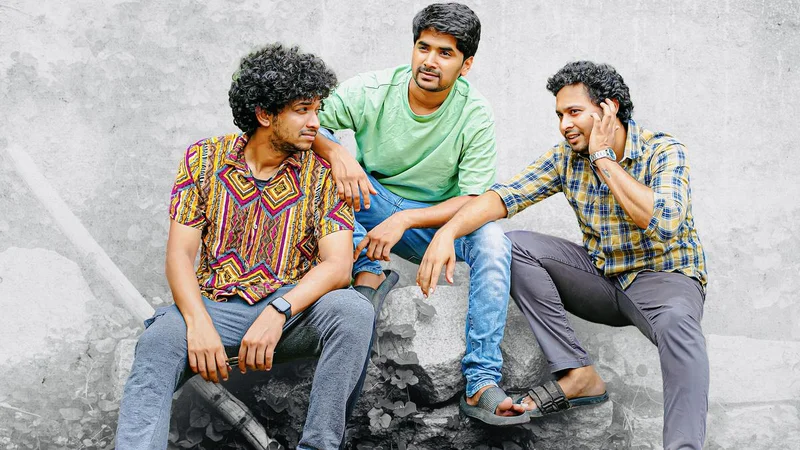
Many films get caught up trying too hard to make a point. They are too eager to please, rather than to make the audience feel. The main intention of the Telugu indie filmAmeer Log is to let viewers soak in the Hyderabadi way of life. A coming-of-age tale of three aimless friends in a slum serves as the base to capture the identity of a city through its language, humour, food and brotherhood.
Ameer Log thrives in its irreverent, laidback setting. Three men in their 20s living in the vicinity of Golconda — Srinu, Mallesh and Rafique — are unaffected by familial pressures to fend for themselves. They are content sipping a dozen cups of chai a day, enjoying a good game of cricket, picking up petty fights with rival gangs and meeting their chacha (Vishwender Reddy Kommidi) on the street to indulge in daily gossip.
Ameer Log (Telugu)
It takes a lot of coaxing to convince them to make something of their lives. Srinu (Hari Munnangi), much to his single mother’s relief, joins a corporate firm as an office boy. Mallesh (Sasidhar Kocharlakota) reluctantly drives a cab for a living. Rafique (Manoj) eases the pressure off his brother by working in a mechanic shop. The story mirrors the realities of their neighbourhood as much as their lives.
When the chacha doesn’t get to meet his Dubai-based grandson on his birthday, the young men decide to cheer him up with a celebration in Hyderabad instead. The party is an intimate, unpretentious affair. Centred around a sumptuous home-cooked biryani and effortless banter among friends who feel like family, the scene is an instant source of nostalgia.
The conversations flow seamlessly from Telugu to Dakhni, Hindi and English, sans any filter, ensuring steady humour. Srinu’s uncanny observations about life in the corporate sector, where little work gets done amid cigarette puffs and regular doses of chai, are hilarious. The characters’ emotions are refreshingly transparent; what you see is what you get.
A seemingly casual bet-match between the corporate employees and the ‘basti boys’ alters the protagonists’ lives. Post an imaginative edit leading to the intermission, food — biryani in particular — becomes the driving force of the film. As the men join hands with an aspiring entrepreneur to start a biryani joint, the storytelling loses its free-spiritedness and veers into predictability.
‘Niyyat mein khatra.. jholi mein pathra’ (misguided intentions lead nowhere), the chacha cautions, emphasising the regular cliché of a food film — that the secret ingredient to a dish is the love with which it is made. From there, the film tackles an obvious clash between the trio’s homegrown identity and corporate greed.
The conflict in the film is largely internal. It is all about what the men seek versus the life they get to lead. A tragedy in the latter half, probably aimed as a kick in the gut for the trio to take responsibility for their lives, is the rare moment where a hint of artifice creeps in. In contrast to the infectious enthusiasm with which the film operates, the climax feels lazily written and is wrapped up in a hurry.
While Ameer Log is a film that talks a lot about ‘authentic’ Hyderabadi biryani, director Ramana Reddy Soma pays more attention to the emotion behind the dish. He teases the viewer with visuals of cooking biryani rather than delving into culinary specifics. The sole focus on representing a region’s vast culinary culture largely through biryani also feels restrictive at times.
The film soars when it sets itself free from the ‘actual’ plot. Chacha constantly resists the lucrative real estate offers to sell his home. You feel for him as his son expresses his inability to return to India for a visit over calls. The three friends, meanwhile, fill the void left by his absent son and family. Their hearts are lighter as they play carrom with chacha and press his feet after a long day.
Ameer Log, in many ways, is a spiritual sibling of The Angrez, the trend-setting Deccani film from 2005 that paved the way for films rooted in Hyderabadi humour. While a flurry of releases over the years has tried to leverage the demand for such stories (yielding mixed results), this film does not feel like a cash-grab attempt, thanks to its heartfelt portrayal of community living and genuine interpersonal relationships.
The film wears its heart on its sleeve, is quite aware of its limitations, and never takes itself too seriously. The writing, while engaging, is helped by the fluid edits and neat performances.
While the leads, Hari Munnangi, Sasidhar Kocharlakota and Manoj, share an easy, believable camaraderie as friends standing through thick and thin, it is Vishwender Reddy Kommidi who delivers the most affecting performance as the chacha. Veda Jalandhar is impressive as the confident, urban woman who has her feet firmly on the ground (finally, a woman in a male-heavy film with agency).
A lot of the film’s raw, authentic texture is drawn from Smaran Sai’s music, which is a fusion of dappu and marfa beats with a dash of hip-hop and indie folk. If you have to pick one chartbuster-worthy party number, it has to be Awwal Daawath. Meanwhile, SVK’s cinematography retains the film’s simplicity without glamourising the backdrop or the story’s key events.
Ameer Log is a worthy exploration of the lesser-seen side of Hyderabad, especially at a time when regional films with a hyperlocal focus are attracting widespread attention across the country. In a fast-changing world, it is comforting to watch a film about a community that still takes pride in its old-world charm.
Published - August 21, 2026 02:47 pm IST