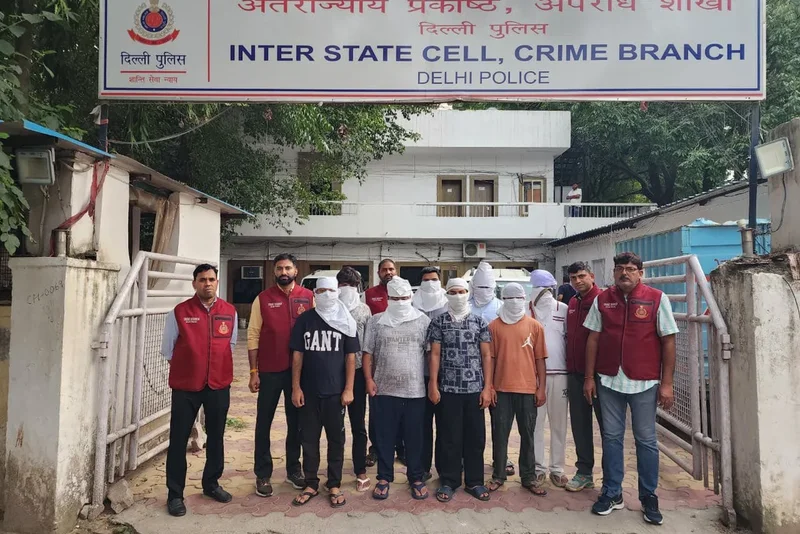
Police in India’s capital of Delhi busted a multi-city racket trafficking counterfeit and illegally diverted anti-cancer drugs, arrested 17 people, and seized medicines worth Rs 90m (£688,188) in a major crackdown.
The syndicate, involving hospital and nursing staff, allegedly traded in stolen and fake cancer treatment drugs from several government hospitals while replacing some of those with counterfeit medicines.
The alleged network operated across Delhi and national capital region, Mumbai, Hyderabad, Haryana, Uttar Pradesh and other locations.
Police said the drugs were sourced through three channels.
The first was the diversion of medicines from government institutions and warehouses, the second through theft of medicines, vials and packaging material from private hospitals, and the last through the manufacturing of counterfeit medicines.
“The accused themselves made counterfeit drugs by imitating the vials and the packing and using fake batch numbers. They filled them with sterilised water and sold them as real drugs to desperate patients at discounted prices,” a senior police officer said, according to The Indian Express.
The drugs seized included immunotherapy medicines and drugs used in targeted therapies, including Darzalex, Imfinzi, Erbitux, Opdyta, Gazyva, Bavencio, Adcetris and Keytruda.
The cost of these life-saving medicines for cancer patients ranges from Rs 15,000 (£114) to Rs 200,000 (£1530) per vial or injection.
Aditya Gautam, deputy commissioner of police, Crime Branch, said 588 filled anti-cancer vials, six empty vials, seven empty medicine boxes and 3,021 units of other medicines, worth up to Rs 90m, were recovered. Around Rs 5,000,000 (£38,000 approx) in cash was also recovered.
The investigation began on 22 June after the Crime Branch received information about the racket. Following verification, police identified suspicious premises in East Delhi, Rohini and Mumbai.
Seven teams conducted simultaneous raids in Delhi and Navi Mumbai on 11 July in coordination with the drugs department and local police. Further arrests followed interrogations and searches, police said.
“The medicines were procured without valid invoices, purchase records, drug licences or other required documentation and stored at residential and other premises before being circulated through intermediaries,” Mr Gautam said.
Police said batch numbers, maximum retail prices and other identifying marks were allegedly removed using chemicals including acetone to conceal the source and identity of the medicines during the repackaging process.
Packaging material such as thermocol boxes, bubble wrap, adhesive tape and polythene was also recovered, along with registers and diaries allegedly recording medicine and cash transactions.
The latest crackdown is another blow to India’s reputation as the “pharmacy of the world”, a description prime minister Narendra Modi has himself used to highlight the country’s growing pharmaceutical reach.
In 2026, the government has said India is seeking to move from being the “pharmacy of the world” to a global innovation hub, with quality and reliability central to that ambition.
India is also a hub for international patients arriving for cheaper treatment.
Government data shows that 507,244 foreign nationals travelled to India for medical treatment in 2025, with cancer treatment among the specialised procedures sought by international patients.
Police said Anand Kumar, a former pharmaceutical firm operator, was allegedly a key intermediary, with 337 anti-cancer vials recovered from him. Police also alleged that several accused used pharmaceutical businesses and invoices to facilitate the movement of medicines.
Jaswant Sharma, a nursing-qualified oncology department in-charge, allegedly removed medicines from a hospital, while Manish Sharma, another nursing-qualified worker, allegedly misappropriated injections, police said.
Police also alleged that Deepak alias Ravi, a dental technician and former personal assistant to an oncologist, received vials from nursing staff. Officers said 108 vials were recovered from him.
India is the world's third-largest producer of drugs and pharmaceuticals by volume, accounting for about 10 per cent of total production by volume.
However, high-profile incidents, including the deaths of children in The Gambia and India linked to contaminated Indian-made cough syrups, have sparked global warnings from the WHO over tainted products. India-made cough syrups were linked to the deaths of more than 140 children in Africa and Central Asia, and 24 children in central India.