Peru Government Programme Puts Prisons and the Armed Forces at the Centre
Peru · POLITICS
The plan also reshapes taxes for small firms and puts soldiers outside prison walls. The opposition wants to know who pays.
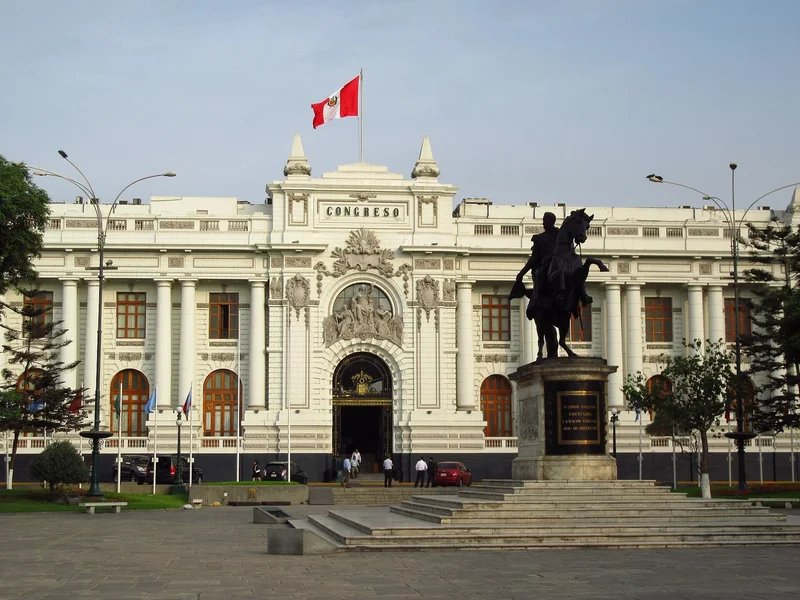
Peru government programme puts prisons and the armed forces at the centre of its security strategy. Prime Minister Luis Fernando Galarreta Velarde presented the plan to Congress on Thursday 20 August 2026, without triggering a confidence vote.
What the Peru Government Programme Sets Out
The Peru government programme focuses on reducing insecurity and crime as one of its five main axes. It names extortion, contract killings, organised crime, drug trafficking and illegal mining as key threats.
Galarreta promised more operational capacity, intelligence, technology and police presence. He also vowed tighter control of the prison system and more operations in high-crime areas.
Prisons at the Centre
The plan includes high-security prisons for the most dangerous inmates. Disused military barracks would be assessed as a way to ease overcrowding, according to the prime minister.
In addition, inmates convicted of minor offences, including those sentenced over unpaid child support, would move to separate new facilities. Security arches and metal detectors would be installed in prisons.
Armed Forces in Prison Security
Galarreta asked for exceptional participation by the armed forces in prison security. The military would handle outer cordons and personnel checks at facilities run by INPE, the national prison institute.
However, the military would not take custody inside the prisons. This distinction aims to keep the armed forces in a support role, not as jailers.
Tax Reform for Small Firms
The economic agenda includes simplifying business tax by moving from four income tax regimes to two. A new single simplified regime would serve the smallest firms, while a general regime would cover everyone else.
The smallest-firm regime would have no monthly turnover cap, which is meant to help businesses with seasonal sales. In addition, the plan refers to reviewing and rationalising tax exemptions.
Opposition Questions Funding
Opposition benches accused the cabinet of making promises without explaining how they would be carried out or paid for. They pointed to the lack of detail on where the money for security, prison building and social programmes would come from.
Even so, the government proceeded with the presentation. Under article 130 of the reformed constitution, this appearance no longer triggers a confidence motion.
Political Context
Peru’s president is Keiko Fujimori, in office since 28 July 2026. The programme is her administration’s general policy, presented by her prime minister.
Meanwhile, the focus on prisons and the armed forces marks a shift in security policy. The plan aims to address public concerns about crime and overcrowding.
Implementation Challenges
The plan’s success depends on funding and execution. Opposition critics say the lack of financial details is a major gap.
For example, building high-security prisons and adapting military barracks will require significant investment. The government has not yet specified how it will pay for these projects.
Broader Economic Agenda
Beyond security, the Peru government programme includes tax simplification to support small businesses. The transition period for the new tax regimes is part of the plan.
By contrast, the review of tax exemptions could affect current beneficiaries. However, no specific figures were provided in the speech.
What the Peru Government Programme Must Fund
The presentation took place on Thursday morning, starting at about 10:00. Since no confidence vote follows, the government can move forward with its agenda.
Still, the opposition’s concerns about funding remain unresolved. The programme’s future will depend on how the government addresses these questions in the coming months.
Frequently Asked Questions
What is the Peru government programme?
The Peru government programme is the general policy presented by Prime Minister Luis Fernando Galarreta Velarde to Congress on 20 August 2026. It focuses on security, prisons, and tax reform, among other areas.
How will the armed forces be used in prisons?
The armed forces would handle outer cordons and personnel checks at prisons run by INPE, the national prison institute. They would not take custody inside the facilities.
What changes are proposed for small businesses?
The plan would move from four income tax regimes to two, with a new simplified regime for the smallest firms. This regime would have no monthly turnover cap, helping businesses with seasonal sales.
Did Congress vote on the programme?
No. Under the reformed constitution, the prime minister’s appearance does not trigger a confidence motion. Therefore, there was no vote on the programme.
This article was produced by The Rio Times’ automated newsroom system. How we use AI · Report an error