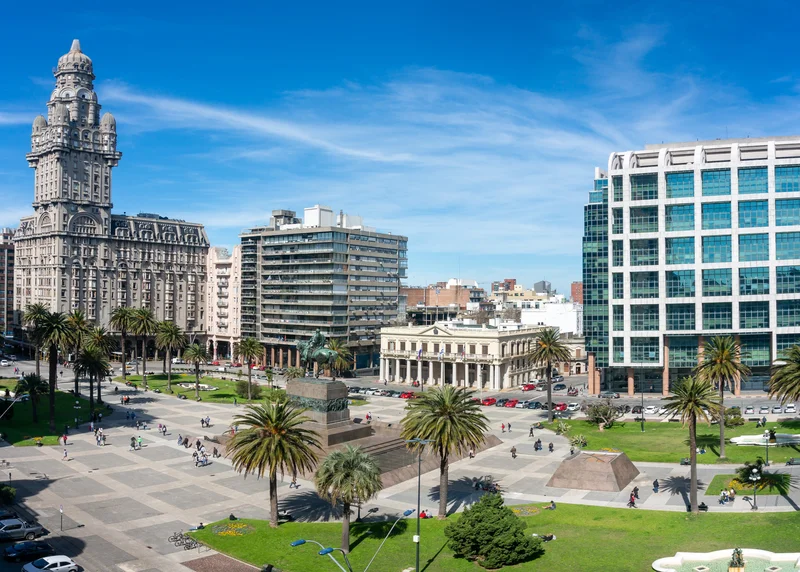
This weekend, Montevideo will become the epicenter of progressive political debate in the Americas. The Uruguayan capital is hosting the third Pan-American Congress, a parliamentary forum that brings together more than 100 legislators, former presidents, ministers, and leaders from 15 countries in the region. In a context in which punitive populism and authoritarian-leaning prescriptions are gaining ground, participants aim to build alternatives and open a more balanced dialogue between the south and the north of the continent.
The ideas of the late Uruguayan former president Pepe Mujica will hover over the debates at an event scheduled to be opened this Friday by his political heir, the current president Yamandú Orsi. David Adler, coordinator of the Pan-American Congress, highlights the country’s role as a beacon for progressive forces worldwide. “In the United States, our society faces persecution by a government that is increasingly authoritarian and we have much to learn from Uruguayan society, which has a very vivid memory and deepened its democratic roots,” Adler says.
Under the slogan “Solidarity between peoples. Sovereignty among nations,” the meeting seeks to build common positions on current challenges such as the weakening of the international order, forced migration, rising costs of living, and the advance of organized crime, among others.
Self-criticism
Adler says recent electoral defeats for the left in countries such as Ecuador and Colombia force a period of self-criticism, but also the sharing of initiatives that help rebuild a frayed social fabric. “We are not arriving in a golden age, but in full acknowledgment of those defeats. That is why there are closed-door spaces to speak frankly about good practices and also about experiments that have failed to reach the public,” the event coordinator says.
The Pan-American Congress was created in 2024 in Bogotá at the initiative of then–Colombian president Gustavo Petro and moved to Mexico the following year. From Montevideo, the organizers maintain the intention of opening a more balanced dialogue between North and South America. “We have the International Monetary Fund and the Organization of American States, both headquartered in Washington, which shows an architecture in which the north speaks and expects the south to obey. We want to reverse the terms: for the south to speak and the north to listen,” Adler emphasizes.
The Uruguayan delegation will be led by Vice President Carolina Cosse and will also include the presidential secretary Alejandro Sánchez, along with a sizeable group of legislators.
Traveling from abroad are former presidents Ernesto Samper (Colombia) and Gabriel Boric (Chile); Morena’s national secretary Carolina Rangel; the governor of Buenos Aires province, Axel Kicillof; Humberto Costa, senator and international relations coordinator of Brazil’s Workers’ Party; and U.S. congressmembers Pramila Jayapal and Jesús “Chuy” García.