Food inflation may be changing character again.
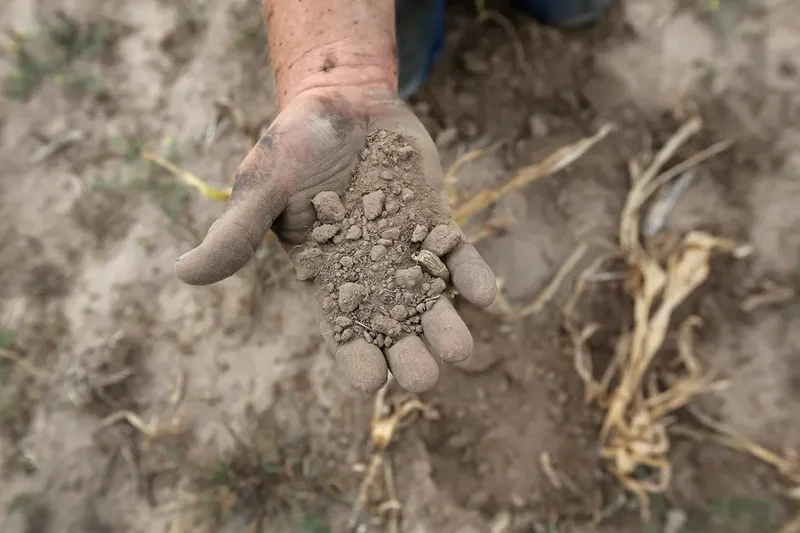
For several years, businesses and consumers have learned to explain higher food prices through the lingering effects of the pandemic: labor shortages, supply-chain disruptions, transportation costs and elevated wages. Many of those pressures remain. But another collection of forces is beginning to converge - this time in our fields, global commodity markets and some of the world's most important agricultural trade routes.
For those of us who watch the food-away-from-home economy closely, the warning signs deserve attention. The next food inflation shock may not begin at the grocery shelf or restaurant menu. It may begin in an Iowa cornfield, a drought-stressed wheat field or a grain terminal on the Black Sea.
The Grain Signal Is Flashing Again
Start with an important distinction: this is not a story about America running out of corn. USDA currently forecasts roughly 16.0 billion bushels of U.S. corn production in 2026 - which, if realized, would be the second-largest crop on record. That context matters.
But grain markets are nevertheless repricing risk. CME Group's Agriculture Index shows July monthly returns of 13.15% for Kansas City wheat, 8.49% for Chicago wheat and 5.76% for corn. Wheat is the more dramatic immediate story. Corn is the more subtle one: a large crop paired with a shrinking inventory cushion and very strong demand.
Corn: A Large Crop With Less Margin For Error
USDA's August crop report reduced projected national corn yield to 180.7 bushels per acre, down 5.8 bushels from last year's record. At the same time, projected 2026/27 ending stocks have moved from about 1.96 billion bushels in May and June to 1.79 billion in July and 1.653 billion in August.
That is roughly a 15% reduction in the projected cushion from May to August - even while the country is still expected to harvest an enormous crop. USDA's Economic Research Service has also emphasized the demand side: feed use remains significant, ethanol grind is elevated and exports have strengthened.
Corn matters well beyond products that visibly contain it. It sits deep inside the economics of America's food system. It feeds livestock and poultry and moves through sweeteners, starches, oils and processed ingredients. When corn economics tighten, the effects can ultimately migrate into proteins, dairy, manufactured foods and menus.
The Black Sea Is A Food Corridor, Not A Distant War
Then there is Ukraine.
Russia’s war against Ukraine has again become directly relevant to the global food economy as attacks on ports, vessels and agricultural infrastructure disrupt Black Sea trade. Reuters reported on August 13 that Ukraine's grain exports were down 76% year over year in the first half of August. A week later, Reuters reported that Chicago wheat futures had risen more than 17% since early July as buyers confronted renewed supply risk and shipping uncertainty.
Before the full-scale invasion, Ukraine was one of the world's major agricultural exporters. The implication is larger than the tonnage that leaves one country's ports. Commodity markets price the next available bushel, the next vessel and the next reliable supplier. When a major export corridor becomes less dependable, buyers compete for alternatives, freight and insurance costs rise, and risk premiums can travel across borders.
An American restaurant does not have to buy Ukrainian wheat for this to matter. The Black Sea is one of the global food system's pressure points - and prolonged disruption there can change the cost of supply somewhere else.
Weather Whiplash Is Becoming Part Of The Cost Structure
Now add weather.
NOAA says July 2026 was the warmest month in the 132-year contiguous U.S. record, averaging 76.9 degrees Fahrenheit. By August 4, 48.5% of the contiguous United States was in drought. Yet the same national system also experienced heavy rainfall and flash flooding in multiple regions.
That is why I prefer the term weather whiplash to a simplistic drought narrative. Agricultural risk increasingly comes from too little water in one place, too much in another, and extreme heat layered over both. No responsible analysis should claim that a single flood or drought was caused by climate change without attribution science. But the changing baseline and the increasing operational consequences are impossible for food leaders to ignore.
This Is A Pattern, Not A New Concern
None of this is entirely new to those of us who have been watching the food system as a connected economic ecosystem.
In May 2021, I wrote in Forbes that the back half of that year was about to become seriously turbulent for food businesses. At the time, I pointed to commodity inputs, labor, supply-chain costs and drought as variables capable of upsetting the synchronization between agriculture and food distribution. Food inflation accelerated dramatically the following year.
Later in 2021, in an article titled 'The Key To Quieting Mother Nature's Supply-Chain Fury,' I argued that the industry was concentrating on the middle and end of the supply chain while underestimating the vulnerability of the natural-resource inputs at the beginning of it. In 2023, I returned to the same theme through regenerative agriculture, arguing that food-system resilience increasingly depends on how we manage land, water, energy and production.
Then, in January 2025, while consumers were understandably focused on egg prices, I argued that the real economics of the egg could not be separated from the chicken, disease, feed, climate conditions, biological production cycles and demand. That article cited a forecast that egg prices would increase more than 20% during 2025. USDA's final figures later showed average retail egg prices were 21.9% higher in 2025 than in 2024.
The point is not that every commodity move can be predicted. It cannot. The point is that food inflation increasingly needs to be understood as a system. Weather, agriculture, disease, geopolitics, energy, labor and supply chains no longer behave as isolated variables. Their convergence is what creates volatility.
Restaurants Have Little Room To Absorb Another Shock
That convergence arrives at an uncomfortable time for food-away-from-home operators.
The National Restaurant Association's baseline model for a typical independent restaurant has food and labor each consuming about 33 cents of every sales dollar, with other expenses taking another 29 cents and leaving roughly a nickel in pre-tax profit. Since the pandemic, average wholesale food prices remain about 35% above February 2020 levels, while restaurant employee hourly earnings have increased 41%.
One-third of operators said their restaurant was not profitable during the first half of 2026. Menu prices are still moving higher as well: they increased 0.3% in July and were 3.4% above July 2025.
Therein lies the challenge. Operators cannot indefinitely solve input inflation through menu inflation. At some point consumers change frequency, trade down, change channels or decide another price increase is one too many. And because wholesale food-price relief varies dramatically by commodity and menu mix, the pressure is rarely uniform across concepts.
Volatility May Be The New Structural Cost
The most important conclusion may therefore be different from the one consumers hear most often.
The structural change taking place in food may not be permanently higher prices. It may be permanently higher volatility.
That means commodity intelligence increasingly belongs alongside labor productivity, menu engineering and consumer analytics as a core management capability. The winners will not be companies that somehow predict every drought, war, recall or commodity spike. Nobody can.
They will be the companies that create optionality: broader supplier networks, flexible menu architectures, stronger procurement intelligence, tighter waste controls, regional sourcing alternatives and the ability to reformulate or substitute without compromising the consumer experience.
When your historical profit pool is only a nickel on every sales dollar, volatility does not have to become a catastrophe to become consequential.
The next shock may already be forming long before it reaches the menu. The leadership challenge is learning to read the signals early enough to do something about it.
Source Notes & Links
- USDA Crop Production - August 12, 2026
- USDA ERS Corn and Other Feed Grains Market Outlook - August 14, 2026
- Reuters - Ukraine offers Russia truce in Black Sea as food supply fears mount - August 13, 2026
- Reuters - Global wheat buyers brace for supply squeeze amid Black Sea attacks - August 20, 2026
- NOAA/NCEI - Assessing U.S. Temperature and Precipitation in July 2026
- National Restaurant Association - Restaurants Remain Resilient Despite Challenging Business Conditions
- National Restaurant Association - Menu Prices, August 12, 2026
- Forbes - Food Price Increases... The Post-Covid Reality (May 31, 2021)
- Forbes - The Key To Quieting Mother Nature's Supply-Chain Fury (October 31, 2021)
- Forbes - A Net Zero World Starts With Regenerative Agriculture (February 15, 2023)
- Forbes - Food Inflation: The Egg Comes First But The Chicken Matters! (January 31, 2025)
- USDA ERS - U.S. food-at-home prices increased 2.3 percent in 2025