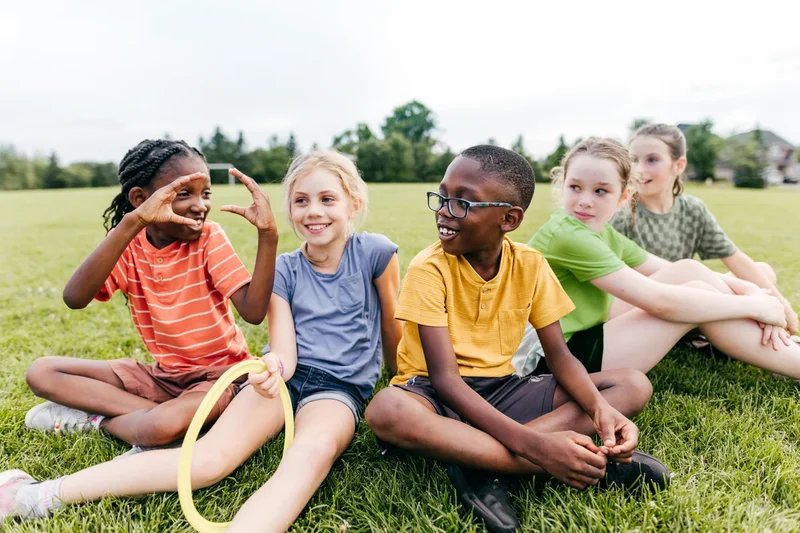
Entering a new school brings a host of uncertainties for young students: Will they recognize any classmates? Who will join them at the lunch table? Who will share their time during recess?
"I’m this much nervous," said Iman Fair-Seldon, 5, holding her hands about 4 inches (10 centimeters) apart. Next month, Iman begins first grade at a different institution in southern New Jersey, near Philadelphia. Even with her anxiety, she noted that she is eager to build new friendships.
Navigating a school change or a major step, like moving from elementary to middle school, can prove difficult. Parents often wish to support their children but may feel uncertain about what actions to take. Here is guidance offered by adults alongside the true experts: children who have personally experienced these transitions.
Schedule playdates and go to birthday parties
Caregivers hold major sway over the social environments and companions of young children, according to specialists. Parents can facilitate meaningful social connections by organizing visits to local parks, playgrounds, or birthday parties, as well as deciding when a young child is ready for activities like sleepovers.
"Initially, parents have a huge impact when it comes to the friends that children have," said Dr. Asha Barber Sutton, a licensed marriage and family therapist and an associate dean of academic affairs at National University in San Diego. "More than we would like to believe, our actions as caregivers make a difference in terms of how children experience the world."
Even though Amira Fair, Iman's mother, prefers keeping to herself, she actively pushes past those feelings to help her daughter build relationships. "I make it my business to exchange numbers and try to schedule monthly playdates," she said. "One thing I tried to do, especially at her old school, was go to every single birthday function, say hi to the parents, get a present, see the family."
Let kids navigate their own friendships
Parents can’t manage every friendship for their children, experts say. Instead, they can help children develop their own sense of what makes a good friend: Are they kind? Are they honest? Can you be yourself around them? Some difficult interactions can help children learn what they value in a friend and how to handle conflict, Sutton said.
Parents can also ask questions to help their children think about what they value in friendships: What qualities do you like in your friends? Who makes you feel comfortable being yourself? Those conversations can give children a framework for evaluating their own friendships when problems arise, experts say.
Jaiden Journet, a 14-year-old starting at a new high school in North Carolina, suggests parents ask their kids: “Have you found anything you have in common with anyone?”
Help kids get involved
Parents also can support their children through encouragement, especially if they are shy or anxious. Encouraging children to get involved in extracurricular activities or to try something new can help them meet people with similar interests.
Shia Watts, 16, says trying something new led her to some of her friends at Notre Dame High School in Sherman Oaks, California.
“Last year, I was part of theater production. I’d never done that before, but I met so many amazing people,” she said.
When Jamir Gonzalez transferred last year to Uncommon Camden Prep High School in New Jersey, he joined the basketball and debate teams.
“If you have any hobbies, find out if they have that at your school, and if they do, talk to the people that are there,” said Jamir, now a 16-year-old senior.
Once students find opportunities to connect, starting the conversation is the next step, experts say. Smiling, complimenting others and asking questions can help start a conversation and keep it going.
Iman, the New Jersey 5-year-old, remembers how she met her now “B-F-F-F-F-F.” It started with a compliment.
“I think I said, ‘I like your shirt,’ and then she said, ‘Thank you.’ And I said, ‘So what’s your name?’” she recalled.
Put down the cellphones — sometimes
Students may find it harder to start conversations when their peers are on their phones, wearing headphones or focused on screens. Experts say parents can encourage children, particularly teens, to put devices away at times so they can be more present and engaged with the people around them. One way to help: Stop texting your child at school, some teachers and experts say.
But being too harsh with older children's tech limits can isolate them socially, Sutton said. Still, parents should talk with their teens about expectations around technology, social media and gaming, including knowing who kids are interacting with online.
Technology can also help children maintain friendships when circumstances separate them, Sutton said. “If you move away, it’s no longer like, ‘Hey, I moved out of state, and I can never see you,’ ” she said. “We have FaceTime, and we can still stay connected to friends in that way.”
Even one friendship counts
Feeling connected and having a sense of belonging at school can have an important effect on students’ well-being. If a student feels staff and peers at their school care about them, they are less likely to have poor mental health, use substances or be involved in violence, according to the Centers for Disease Control and Prevention, and they are more likely to have better grades and attendance.
But a student needn't have a large friend group to feel connected. Even one relationship can make a meaningful difference, said Nicole Hockley, co-founder and CEO of Sandy Hook Promise, a nonprofit that focuses on gun violence prevention in schools.
“Even if you only have one really strong friendship or one strong trusted adult, one strong sense of belonging, that can be enough to really positively affect your well-being and your trajectory through school and life,” she said.
For students who are nervous about starting over, Hockley said, it can help to remember that other students may be looking for connection, too.
“There’s also someone else just like you in that same space who’s also saying, ‘I would like to meet someone. I’d like to make a friend,’ ” she said. “It can be intimidating, but it’s not hard once you practice it.”