Astromech has raised $20mn at a $3.8 billion valuation to build AI that predicts how living systems will change.
The company says its models learn from 3.8 billion years of biological history. The valuation and the training window are the same number, and nobody has said whether that is a coincidence.
Bob Nelsen led the round, with Peak 6, NeoGenesis Capital, Builders VC and CAZ Investments taking part, GamesBeat reported. Total funding now stands at $60mn.
Who is behind it
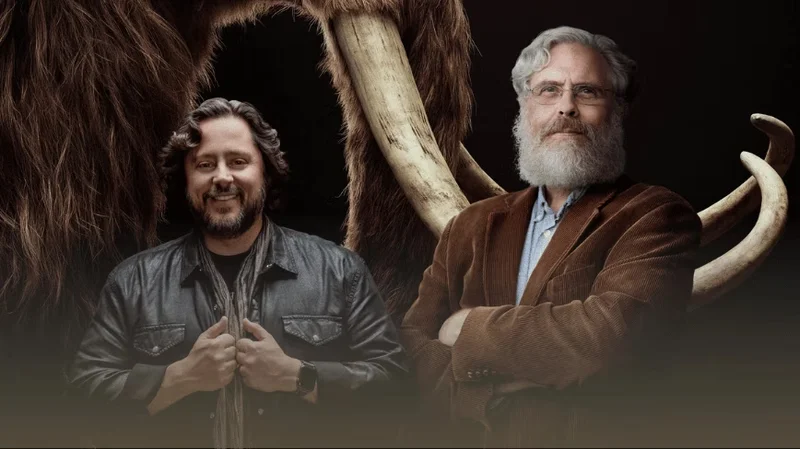
Astromech was founded by Ben Lamm and George Church, the pair behind Colossal Biosciences.
Colossal is the company attempting to bring back the woolly mammoth. Astromech works in the opposite direction, trying to forecast what biology does next rather than reconstruct what it did.
The Dallas startup gestated inside Colossal and inherited its data. That includes a genome bank of extinct and living species, tooling built for large biological datasets, and ancient-DNA capability that compares old genomes with living ones to see what changed and when.
What it is trying to do
Lamm describes it as a forecast.
“We are building an algorithmic prediction solution,” he told Inc. “Think of it like the weather, a complex system that humanity can predict due to specific technology and data sets. We are building the same for biology with evolutionary data.”
The platform takes three kinds of input, genomic, evolutionary and functional, and produces three kinds of output: where a genome or population is heading, where it is most likely to break, and which regulatory circuits are driving the change.
“Biology runs the world and historically, we have only reacted to it,” Lamm said in the announcement.
The technical claim
The method is ancestral state reconstruction, pushed past sequence.
Rather than inferring only the ancestral protein at each point on a family tree, Astromech reconstructs the ancestral regulatory state: chromatin accessibility, gene expression and functional annotation. It runs that through a Bayesian framework that returns calibrated confidence rather than single-point predictions.
Church explained why that matters. “Most of the variations that matter for complex traits, for example, morphology and longevity are regulatory rather than coding, so reconstructing the ancestral regulatory state, not just the ancestral protein, has the crucial explanatory power,” he said.
He added that this needs functional data across many species and AI reconstruction cheap enough to run genome-wide. “Neither was true ten years ago.”
What it has actually shown
The company is in what it calls a deep research and development phase.
Its first public demonstration maps 46 longevity-associated genes across a time-calibrated tree of life. It compares species that solved the same problem differently: Asian elephants that resist cancer despite their size, bowhead whales that pass two centuries, Brandt’s bats that weigh a few grams and live past forty, and Tasmanian devils, which are vulnerable to a transmissible cancer.
Astromech says an internal benchmark of its tree-inference method ran roughly 100 times faster than conventional maximum-likelihood approaches with comparable accuracy.
In retrospective validation, the pipeline recovered trait-associated genes already established in published research and flagged further candidates.
That is the whole public record. Prospective validation, the test of whether a forecast holds, comes later through partner pilots in health and biosecurity.
The distinction matters. Recovering genes that published research already found shows the pipeline works on known answers. It does not show the model can call one in advance.
The arithmetic
Sixty million dollars raised. A $3.8 billion valuation. One retrospective validation and a map of 46 genes.
That is roughly sixty-three times the capital raised, on a platform with no product in market.
Investors have backed this founding team through a longer wait before. Tech Funding News noted that Colossal spent five years and hundreds of millions without producing a de-extinct animal, and kept raising anyway.
The valuation sits in familiar territory. TNW reported in July that Chai Discovery raised $400mn at the same $3.8bn valuation, on a different problem and twenty times the capital.
Who else is in this space
Tech Funding News names Insitro, which has raised more than $700mn for machine-learning drug discovery, and Alphabet’s Isomorphic Labs.
Astromech positions itself upstream of both. It is not designing drugs. It is trying to say where biology will fail before anyone picks a target.
The desk has covered the layer it wants to feed. A Cambridge startup raised the same $20mn in July to build a foundation model for the chest, aimed at speeding drug trials.
Google DeepMind moved into adjacent ground in July with an AI biosecurity programme. The raw material is also improving: the NIH released the largest genomics and health database yet in July.
Downstream, the money keeps moving. Novartis paid up to $1.5bn for the UK biotech Myricx in July.
What the platform is meant to catch
Astromech lists six applications: flagging which species are susceptible to a pathogen before it reaches humans, predicting drug resistance before treatments fail, mapping disease risk and healthspan, modelling herd vulnerability under disease and climate stress, identifying at-risk species and ecosystems, and anticipating food security threats.
The same framework is supposed to serve all of them by changing the evidence layered on top, not the architecture.
The company is hiring across ancestral modelling, regulatory genomics, genomic inference, sequence reconstruction, metabolic modelling and protein folding. The money goes to the research team, more species in the functional genomic datasets, and the comparative infrastructure that trains the models.
What is not established
No forecast has been tested prospectively. Everything published so far looks backwards.
The 100-times speed figure is an internal benchmark that Astromech has not published for outside review.
No partner pilot has been named, and no customer has been announced in health, biosecurity, agriculture or conservation.
The funding coverage also disagrees with itself on the company’s valuation history, so this piece uses only the current figure, which every source states as $3.8bn.
Get the TNW newsletter
Get the most important tech news in your inbox each week.