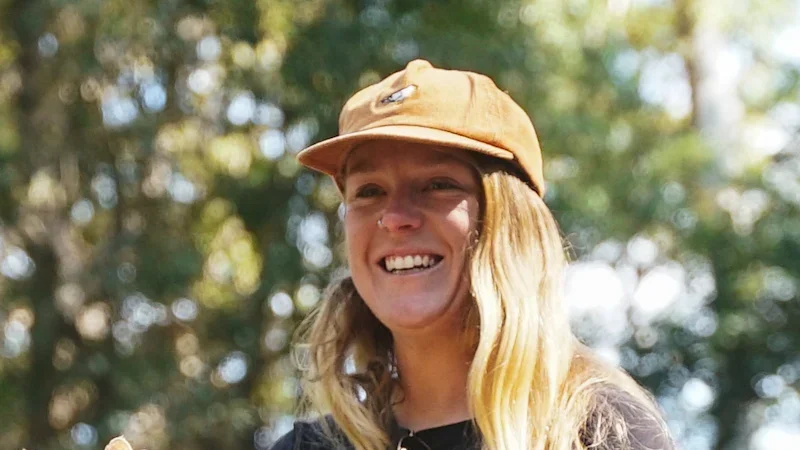
Gabrielle Boyle resigned from the AFL three days before Microsoft’s AI assistant was switched on throughout the organisation.
She had asked whether she could opt out. The AFL told her, in writing, that she could not.
“You do not have a right to request that your work not be accessed by our AI systems,” the code’s HR executive Ciara Gilchrist wrote to her on June 23 according to documents seen by this masthead.
Boyle sent her resignation on June 26. Microsoft’s Copilot went live on June 29.
From her Coffs Harbour base, Boyle was the AFL’s participation manager for northern NSW, responsible for getting five to 12-year-olds to play football in the Hunter region, the North Coast and the central and north-west. She describes herself as an AI refuser who will not use ChatGPT, Copilot or any other large language model.
Her objections run from the immediate to the apocalyptic: the water and power consumed by data centres, what the technology is doing to people’s capacity to think, and research suggesting advanced AI could pose a risk of human extinction.
Boyle is an outlier, and knows it. She no longer owns a smartphone, has deleted her social media accounts and now lives in a converted Toyota 4WD.
The AFL’s refusal to allow Boyle a choice is not unlawful. Employers in Australia can install software on the equipment they own, are exempt from privacy law when handling employee records, and generally own whatever their staff produce. Most workers accept AI at work, or accept that they have no realistic way to avoid it.
Boyle’s case, illustrating how far someone has to go if they really don’t want to use the technology, is also early test of a new feature of many Australian workplaces.
As employers embed AI into the systems their staff use daily, often at short notice and with no option to decline, the law has not caught up. In a recent survey of Australian Services Union members, who often work in clerical roles, more than half were not aware their employer had an AI policy at all.
Boyle’s departure caps a four-month exchange with the AFL, documented in emails seen by this masthead, that began with an internal staff survey.
About 35 per cent of AFL staff said in a survey last year that they were not comfortable with AI being adopted in the workplace.
Boyle raised her concerns at an executive roadshow when the leadership team, including chief executive Andrew Dillon, visited Coffs Harbour on March 5. She asked what the AFL’s position on AI was and whether a policy would arrive to protect data and jobs.
Bec Haagsma, the AFL’s executive general manager customer, commercial and technology, fielded the question and spoke positively about AI’s potential to improve both the elite game and the AFL’s administration. Boyle says about eight colleagues thanked her for speaking up when she got back to the office.
She followed up in writing to Haagsma, setting out research on AI’s labour market and extinction risks and asking the league to pause its adoption.
Meanwhile, on March 16, Boyle emailed to report that a trainee planned to tidy up a list of registered AFL program participants by putting it through an AI tool. The list held children’s personal details, drawn from PlayHQ, the platform community clubs use to register players. No AI policy existed at the time.
“Sharing detailed personal information of our registered participants to third-party AI companies seems like it would be in breach of their privacy,” she wrote.
The AFL’s AI policy was released that day. It bars uploading personal or confidential information into unapproved tools, sets rules for AI meeting transcription and lists endorsed products including ChatGPT, Microsoft 365 Copilot, Salesforce Agentforce, Cursor and Claude Code. Its stated aspiration is to “embrace AI to elevate our people’s performance and impact”.
A footnote records that the policy was written with the assistance of generative AI.
Haagsma replied to Boyle’s broader concerns the following day, saying the AFL had to do more to share its plans transparently. She invited Boyle to join an AI community of interest that was about to launch.
Boyle says that group never eventuated.
The organisation’s first national AI training session came on April 21 with more than 300 staff joining a call titled Making Sense of AI, run by an external provider. Boyle says the facilitator told staff to give their AI assistants human names, rejecting suggestions like “Chatty” as insufficiently human, and to have the AI generate pictures of them.
By mid-June, Boyle had told her managers she would not have Copilot on her laptop, would not put her work through AI systems and would not direct her team to use it. She wrote that the change was causing her significant distress and that she felt unsafe at work.
The AFL’s response was that compliance with the policy was expected of everyone and that failure to comply “may result in performance management”. It declined her request for a mutual separation and disputed her recollection that she had been told to resign.
The AFL also gave her a technical answer. Copilot, its technology team explained, can only see files and emails Boyle could already open herself. It doesn’t give anyone new access to anything, the AFL’s information stays on the AFL’s own systems, and none of it is used to train Microsoft’s models.
“AFL’s position is that it is not meaningfully distinct from any other form of email or work surveillance that already occurs,” HR executive Gilchrist wrote.
An AFL spokesman said the league recognised the opportunities AI presented and supported its responsible use “to enhance the way we work”.
“We also respect that some may hold different views on the adoption of new technology and that’s OK too,” the spokesman told this masthead.
Staff were given less than two weeks’ notice of the rollout. ACTU assistant secretary Joseph Mitchell said employers do not get to make that call alone.
“Employers have an obligation under the Fair Work Act to consult with workers when they decide to adopt AI, where it is likely to change employees’ jobs or how they do them,” he told this masthead. “Failure to engage in such meaningful consultation requirements breaches an employer’s responsibilities under the Act.”
That obligation is triggered, however, only where a change is likely to have significant effects on staff, such as job losses or changed hours. And where the duty applies, an employer must tell affected staff about the decision in writing and genuinely consider their views before acting. It does not give anyone a veto.
‘Employers have an obligation under the Fair Work Act to consult with workers when they decide to adopt AI, where it is likely to change employees’ jobs or how they do them.’ACTU Assistant Secretary Joseph Mitchell
Australian Services Union national secretary Emeline Gaske said the AFL’s technical defence misses what has actually changed.
“Technology is changing so rapidly that the question of whether a specific tool is technically confined to a worker’s existing permissions is beside the point,” she told this masthead. “These tools are fundamentally changing how workers’ day-to-day output is being captured, reviewed and judged.”
Gaske said cases such as Boyle’s would keep landing in a grey zone until the law changed, with employers arguing what they were doing was lawful even where it infringed workers’ privacy. The union wants enforceable safeguards and genuine worker consultation before AI is deployed.
Boyle approached her union, the Fair Work Commission and LawAccess NSW. All three told her they could not help.
Tom Sulston, head of policy at Digital Rights Watch, said her position was close to legally hopeless. Employers have an exemption under privacy law covering employee records, and employment contracts typically give the employer ownership of what a worker produces.
“We can’t put the onus on individuals to opt out,” Sulston said. “Individual opt-outs won’t stop situations where employees are training the AI systems that will eventually replace them.”
Four months before the rollout, NSW legislated in this area. The Work Health and Safety Amendment (Digital Work Systems) Act, passed in February, places a duty on employers to ensure digital systems do not create health and safety risks, and allows union representatives to inspect them. Whether it applies to a general-purpose assistant like Copilot remains untested.
Nicholas Davis, co-director of the University of Technology Sydney’s Human Technology Institute, said Boyle reacted less to the software than to the way it arrived.
“This is not just a tech refusal story. This is a conduct issue,” he said.
Australians rank among the least trusting of AI in the world, according to research by KPMG and the University of Melbourne. Davis said the distrust is not of whether the systems work, but of how employers are using them.
“You lose great people,” he said. “You don’t want to lose staff because you are not managing the change process well, completely aside from your legal requirements to consult.”
He was pessimistic about Boyle’s chances of avoiding AI elsewhere.
“Saying I don’t want to work anywhere where there’s AI is very similar to saying I don’t want to work anywhere where a Google product is used,” he said. “It’s possible, but it is very, very hard.”
Boyle is now living in a 1986 Toyota Troop Carrier with her cat, carrying a flip phone and handing cards to strangers on their screens that read: “I’m open to talk, want to have a conversation?”
“What we do on an individual level matters,” Boyle said. “Our input adds to their data. Our time adds to their power. That’s why I’m no longer online and refuse AI wherever I can. It’s my personal way of protesting against a future I don’t want.”
Get news and reviews on technology, gadgets and gaming in our Technology newsletter. Sign up to receive it every Friday.