Long before Sara Ruane became a herpetologist, two interests were already shaping her future: snakes and Guns N’ Roses. By fifth grade, she knew she wanted to study reptiles. A few years later, a magazine cover featuring Guns N’ Roses guitarist Slash holding his pet reticulated python brought those worlds together.
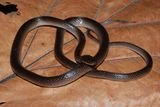
Decades later, that childhood connection would resurface in the forests of New Guinea. In a study published in Zootaxa, Ruane and her colleagues have described a new species of reddish-brown groundsnake, officially named Lielaphis slashi — or Slash’s groundsnake — in honor of the musician’s lifelong enthusiasm for reptiles, zoos, museums, and natural history.
“As a long-time herpephile, I am extremely honored and humbled to have Lielaphis slashi from New Guinea named after me. It is really exciting; I never would have imagined this moment would arrive,” said Slash in a press release.
All About Slash’s Groundsnake
Measuring about 28 inches long, Slash’s groundsnake belongs to a group of elusive, mostly nocturnal snakes found primarily in New Guinea. It is not considered dangerous to people and does not produce venom capable of causing serious harm.
Scientists still know relatively little about how the newly recognized species lives. Its anatomy, however, offers a few clues about what may be on the dinner menu.
“Snakes in this genus often have large teeth in the back of their mouths, which New Guinea groundsnakes may use to grab onto and eat small, slippery-scaled lizards and the eggs of other reptiles; this snake isn’t grasping and squeezing its prey like a boa constrictor,” explained Ruane.
Read More: This New “Two-Headed” Snake Species Has a Tail that Looks Like Its Own Head
How Scientists Found L. slashi
The snake’s scientific journey began one night in 2006, when study co-author Chris Austin encountered an unfamiliar specimen during fieldwork in New Guinea.
“These New Guinea groundsnakes are nocturnal, so the best way to find them is at night. They are typically found just after sunset at the base of large trees where they are looking for something to eat. When working at night in New Guinea, you need to be very careful as there are several highly venomous species that look very similar to the non-venomous groundsnakes,” said Austin in a press release.
Its appearance alone was not enough to establish a new species. Researchers later compared its scales, genetics, and likely ecological niche with those of related snakes. The combined evidence revealed a distinct evolutionary lineage.
“Using multiple cutting-edge genetic analyses, we found that L. slashi is genetically distinct from other similar snakes in the same genus,” said first author Tianqi Huang in the press release.
Why Finding New Species Matters for Conservation
Giving an animal a scientific name does more than add it to a catalog. Researchers must know a species exists before they can determine where it lives, assess the threats it faces, or develop plans to protect it.
That need is especially urgent in New Guinea, a globally important center of biodiversity where many animals remain poorly documented. Specifically, the forests inhabited by Slash’s groundsnake face pressure from many human activities.
“The habitats that Slash’s groundsnake is from are under threat from industries like coffee farming and mining. That’s part of why describing the species that live there is important. Every species should be recognized in order for us to better understand how ecosystems work, how everything fits into the environment. We can’t conserve animals or other living things that we don’t know about,” concluded Ruane.
For Slash’s groundsnake, a famous name may bring welcome attention. But its discovery also points toward a larger mystery — how many other species are still slipping unnoticed through New Guinea’s forests?
Read More: Cannibalism in Snakes Is Not Uncommon — but Could be a Behavior That's Tied to Evolution
Article Sources
Our writers at Discovermagazine.com use peer-reviewed studies and high-quality sources for our articles, and our editors review for scientific accuracy and editorial standards. Review the sources used below for this article:
- This article references information from a study published in Zootaxa:A new species of Papuan groundsnake (Squamata: Colubridae: Lielaphis) from New Guinea