UK MP urges government to ban goods produced in West Bank settlements
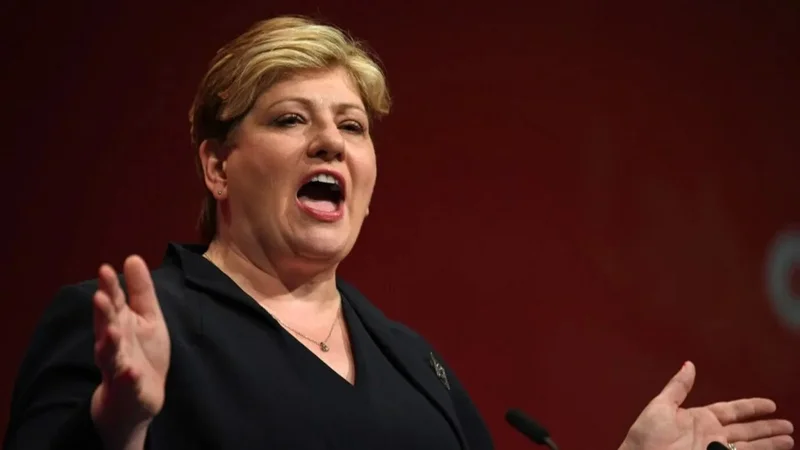
Emily Thornberry, chair of the UK Parliament’s Foreign Affairs Committee, has once again called on the British government to ban imports of goods produced in Israeli settlements in the occupied West Bank.
“A year ago, my committee said that we should stop allowing the sale of goods from the West Bank in Britain. And the government is yet to do anything about that,” Thornberry told Sky News.
Calling for a two-state solution where Israelis and Palestinians lived side by side, Thornberry said the international community had “pretty much unanimously agreed” that the West Bank was the territory meant for the Palestinians in that arrangement.
“But we have a far-right government in Israel which is doing its best to try to extinguish the hope of a Palestinian state by building as many Israeli settlements on that area as possible. And they are about to cut the whole of the West Bank in half,” she said.
Besides these attempts to defeat a two-nation solution, Thornberry said, there is also a level of settler violence which is the “worst we have ever seen”.
Her remarks came as the UK government announced on Wednesday that it will announce "measures" against Israel over new settlement construction east of Jerusalem that would effectively cut the occupied West Bank in two.
Foreign Secretary Ed Miliband warned that the project – tenders for which were opened this week – poses a threat to a two-state solution in the region.
Miliband indicated that he made it clear to the Israeli foreign minister, Gideon Sa'ar, that the "Israeli government must halt E1 plans immediately, retract the tender and stop all settlement expansion".
"The impact of settler violence and terrorism has been catastrophic for Palestinian communities. Settlement expansion and attempts to create irreversible divisions on the ground threaten peace, security and the prospects for a viable Palestinian state," he said.
Israel issued a tender on Tuesday for the construction of 1,234 settlement units in the southern part of the E1 plan east of occupied Jerusalem, moving one of the most controversial settlement schemes from the approval and planning stage towards land marketing and practical implementation.
The tender covers seven settlement complexes over approximately 12,000 dunams between Jerusalem and the settlement of Ma'ale Adumim and comprises interconnected residential, industrial and tourism plans, as well as roads and infrastructure networks.
'The Israeli government must halt E1 plans immediately, retract the tender and stop all settlement expansion...The impact of settler violence and terrorism has been catastrophic for Palestinian communities'
In his statement, Miliband said that the UK will not "stand back and accept the destruction" of the two-state solution, adding that London "will set out a comprehensive set of measures" in the coming weeks, including sanctions targeting those involved in illegal settlement expansion.
UK Minister of State for the Middle East Stephen Doughty has also joined Miliband in condemning Israel, describing the move as a "deliberate and destructive act designed to undermine a two-state solution".
Last week, Middle East Eye exclusively reported that the UK government was preparing to announce new policies on Israel in September, including a ban on goods produced in settlements and possible sanctions on individuals, organisations and additional Israeli ministers linked to the settler movement.
MEE also reported that London was considering further restrictions on arms sales to Israel. On Wednesday, Foreign Secretary Ed Miliband criticised Israel over a tender for new settlement construction in the West Bank, describing it as an “unacceptable act” that would undermine prospects for a two-state solution.
The UK government currently does not ban trade with Israeli settlements, although it strongly advises British businesses against involvement with economic and financial activity within them. In addition, goods produced in settlements are not eligible for preferential tariff treatment under the UK’s trade agreements with Israel and the Palestinian Authority.