- See more This is Money on Google - save us as a Preferred Source
Everywhere you look at the moment, somebody is talking about artificial intelligence.
Whether it's the latest AI company making headlines, another technology stock soaring in value or investors desperately trying to spot the next big winner, it's easy to feel as though the only place worth putting your attention is the stock market.
Don't get me wrong, technology is changing the world and AI will undoubtedly shape our future. But while everyone else is looking to tech, I've found myself looking around people's homes instead.
After more than 25 years valuing antiques and collectables, I've learnt that some of the best-performing items were never bought as investments.
They were bought because people liked them, used them and, more often than not, never imagined anyone would want them again.
That's because every antique started life as an ordinary object.
Trending: Watch and wait to see if Lidl trainers shoot up in value over time
Nobody bought a Victorian dining table believing it would one day become an antique worth thousands of pounds.
Equally, no one carefully tucked away an old advertising sign expecting future collectors to compete for the chance to own it. People simply bought the objects that reflected the world they lived in.
We're doing exactly the same thing today, quietly curating tomorrow's collectables without even realising it.
The fascinating difference is that, unlike the Victorians, we're likely to witness many of these everyday objects reaching their peak collectable value within our own lifetimes.
The collecting cycle has accelerated dramatically. Globalisation, online marketplaces and the relentless pace of social media mean trends emerge, disappear and are rediscovered at a speed previous generations could never have imagined.
Nostalgia no longer takes half a century to develop; it can take little more than a decade.
An object can go from being the must-have purchase of the moment, to being forgotten, to becoming highly sought after by collectors in what feels like the blink of an eye.
Resident expert: Dan Hatfield
In many ways, we're the first generation to watch tomorrow's antiques being created and then become nostalgic for them while we're still here to enjoy them.
I'm constantly asked what people should be collecting today if they want to own tomorrow's antiques. It's a question I've been exploring with Alice Beer on our new podcast, Pre-Loved Prophets, and one that becomes more fascinating the more you think about it.
Every week we uncover hidden treasures and surprising values, but we're also asking another question: which of today's everyday possessions will future collectors wish we'd kept?
Somewhere in your home could be an object that perfectly captures what life in Britain was like during the 2020s. That's exactly the sort of thing future collectors will be searching for.
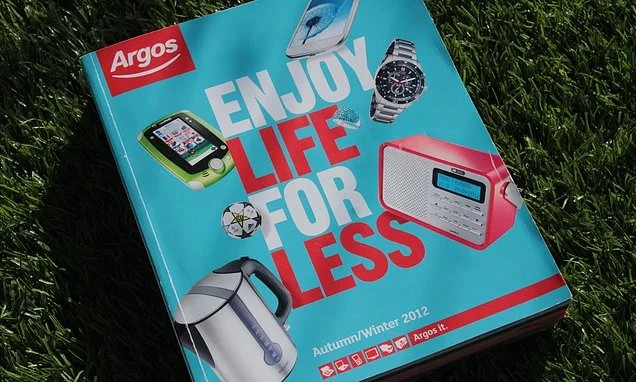
One of the items we recently discussed was the humble Argos catalogue.
It sounds extraordinary, but these everyday publications from the last century can now be worth more than a bottle of vintage wine. Some of the rarer editions sell for more than £200, while a 1991 catalogue we featured on the podcast was valued at around £80.
If someone had told you, as you flicked through one all those years ago deciding what to put on your Christmas list, that one day collectors would happily pay that sort of money, you'd have laughed.
After all, millions were printed every year and most ended up in the recycling without a second thought.
Yet that's precisely why they're so fascinating today. They weren't designed to be collectables; they simply became time capsules.
They capture how we shopped, what we aspired to own, what things cost and what everyday life looked like at a particular moment in history. That, ultimately, is what collectors are buying. Not just the catalogue itself, but the memories attached to it.
For me, the Argos catalogue offers one of the biggest clues to spotting tomorrow's treasures.
It makes you wonder which everyday objects surrounding us today, the items we'll eventually throw away, donate or simply stop noticing, could one day become equally sought-after reminders of our own era, commanding prices that would seem almost unbelievable today.
The reason for this trend is simple.
In this increasingly nostalgia-driven world, people aren't merely buying an object; they're buying the emotions and memories attached to it.
A collectable is, in many ways, a passport back to another chapter of life. It reconnects us with our childhood, our first home, our favourite television programme or a moment in history that felt significant.
As artificial intelligence reshapes how we work, communicate and consume, I actually think our attachment to physical objects will only grow stronger.
The faster technology moves us forwards, the more we'll find ourselves looking backwards.
In an age where so much of life exists on a screen, tangible objects offer something algorithms never can: authenticity, memory and human connection.
That's why I believe nostalgia will become one of the defining currencies of the decades ahead, and the everyday objects surrounding us today may one day be prized not for what they are, but for what they remind us of.
So, with that in mind, here are the everyday items I'd be thinking twice before throwing away...
Collaborations
If one trend defines the 2020s for me, it's collaborations.
This is the decade when every brand seemed to want to work with another. Fashion labels teamed up with sportswear companies, fast-food chains launched clothing collections and limited-edition products sold out within minutes before appearing online for several times their original retail price.
These collaborations aren't just products, they're cultural moments.
Whether it's Greggs clothing, supermarket merchandise or designer partnerships, they capture exactly what people were talking about at that point in time. And that's precisely what collectors look for years later.
One collaboration that particularly fascinates me is the Swatch partnership with luxury watchmaker Audemars Piguet, which is why I previously dedicated an entire article to it.
Future classic? It's hard to say whether the Royal Pop will be an item that grows in value
It perfectly demonstrates how the worlds of luxury and accessibility have collided. Not everyone can afford a five-figure Swiss watch, but collaborations like this allow people to buy into the story.
That's why I think they'll age so well.
Collectors won't simply be buying a watch or a pair of shoes in years to come. They'll be buying a snapshot of what defined the 2020s.
Viral items
Counterintuitive though it may sound, the shorter the craze, the greater the collecting potential can often be.
The items that interest me most are the ones that exploded into public consciousness almost overnight, sparked queues, headlines and a frenzy of buying, only to disappear from view just as quickly.
They become cultural snapshots, perfectly capturing a moment before the world moved on.
Because these crazes burn so brightly, many people assume the items are yesterday's news and throw them away or stop valuing them.
That's precisely what creates future collectables.
Years later they're remembered not simply for what they were, but for the extraordinary excitement they generated.
Today's viral sensation has a habit of becoming tomorrow's nostalgic treasure.
I think the original Prime bottles are a perfect example. Whether you loved the craze or couldn't understand it, they became part of the national conversation.
The same goes for the McDonald's Adult Happy Meal toys.
They were wonderfully short-lived, hugely talked about and exactly the sort of items people dismiss once the hype dies down.
I'd also keep an eye on Aldi merchandise, Lidl trainers and anything that feels like a passing fad.
The products that make us smile today often become the products that transport us back tomorrow.
Analogue items
Another category I think we're massively underestimating is paper.
As our lives become increasingly digital, physical paper is quietly disappearing.
Boarding passes live on our phones. Takeaway menus have become QR codes. TV listings are online and instruction manuals are downloaded rather than printed.
That means today's ordinary bits of paper could become tomorrow's fascinating pieces of social history.
Collectors already pay good money for old catalogues, brochures and magazines that most people threw away without a second thought.
It wouldn't surprise me if printed reminders of everyday life become increasingly desirable simply because so few survive.
My top bet is the humble Domino's menu.
It instantly transports me back to my younger years, deciding what to order, waiting for the knock at the door and arguing over who was paying.
As printed takeaway menus become harder and harder to find, I wouldn't be surprised if they developed the same nostalgic pull that Argos catalogues have today.
One day we'll smile in disbelief that a pizza once cost around £20.
That's exactly how nostalgia works.
The object itself isn't the treasure. The memories attached to it are.
The same applies to TV guides. Imagine finding a Christmas edition from 2025 or a listings magazine covering England in a World Cup final.
These publications become far more than television schedules.
They become time capsules, preserving the moments a nation experienced together.
Toys
Of course, toys remain one of my favourite collecting categories.
I've always said toys are time machines because they reconnect us with childhood more quickly than almost anything else. Pick up the toy you desperately wanted when you were eight years old and suddenly you're remembering birthdays, Christmas mornings and school holidays.
That's why toys have become one of the strongest-performing areas of the collectables market.
Lego is perhaps the best example. A study by researchers at the Higher School of Economics found that sealed Lego sets increased in value by an average of around 11 per cent a year between 1997 and 2015.
That's an impressive return by anyone's standards and, for a period, some sets even outperformed gold.
Today's toys could easily become tomorrow's prized possessions.
Watch closely: Dan Hatfield is keeping a close eye on Jellycats, Labubu figures and limited-edition Lego sets
Jellycats, Labubu figures and limited-edition LEGO sets are all categories I'd be keeping a close eye on.
One piece of advice I always give collectors is this: don't automatically buy the most popular item in a range.
The least popular version is often produced in smaller numbers because fewer people buy it. Fast forward twenty years and those are the pieces collectors struggle to find when they're trying to complete a set.
Sometimes the toy nobody wanted becomes the one everybody wants.
Music memorabilia
Every generation has artists who define a period of their lives, and today's fans are collecting far more than albums.
Tour-exclusive merchandise, VIP passes, venue-only posters, limited-edition vinyl and even promotional giveaways are all becoming part of the story.
When I look at artists such as Taylor Swift and Harry Styles, I see performers who have defined a generation in much the same way The Beatles or the Spice Girls did before them.
That's why I'd think twice before throwing away anything linked to those cultural moments.
Beatles concert tickets can now change hands for more than £2,000.
Nobody bought those tickets expecting them to become valuable. They bought them because they wanted to see a band they loved.
The value came later.
The same could easily happen with today's era-defining artists.
Sporting memorabilia
Sport has always been one of the strongest collecting categories because it captures moments that millions of us experience together.
The sports memorabilia market is already estimated to be worth around £30billion globally, and I can't see that appetite disappearing any time soon.
Every unforgettable sporting occasion creates future collectables.
Official programmes, tickets, accreditation passes, football shirts and event merchandise all become physical reminders of history.
Football shirts are a wonderful example.
Many shirts from the 1990s now change hands for hundreds of pounds, particularly if they've never been worn and still have their original tags attached.
Again, it comes back to condition.
Collectors will always pay more for the very best examples.
If you're buying with one eye on the future, keep the tags on, keep the packaging if you can and resist the temptation to wear it.
You'll thank yourself in years to come.