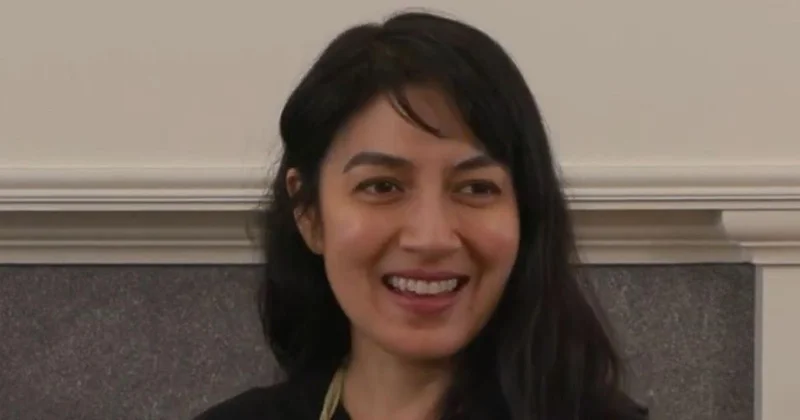
Tahmima Anam’s new novel, * Uprising*, is set on an isolated island “at the end of the country, in the middle of a river that emptied into the sea”. Here, a hundred or so women in prostitution – sex workers for the soft-spoken and sex slaves for those who know what the work truly entails – live and serve customers who come ashore in boats and trawlers. Suspended in water, the island’s inhabitants are cut off from the mainland, relying on the madam, Amma, to feed and clothe them, and take care of their day-to-day needs.
In the few hours that the men are away from the island, the women catch up on restless sleep, take drugs and smoke ganja, and curse their daughters. The island has no sons – it is perhaps the only place in the world where boys are of no use, so they are put up for adoption, shipped off with their “fathers”, or left to die. In the rare case that the mother is aware of her son’s whereabouts, she waits impatiently for him to come rescue her, after finally accepting that no husband or lover is going to whisk her away.
The land at the end of the country
This land at the “end of the country” seems to be a sordid imagination of some wretched woman’s nightmare. It is shrouded in fog during winters and mist during the torrential monsoon. Women of good families do not turn their eyes in the island’s direction but the men – both good and bad – salivate and tug at their crotches, fantasising about the pleasure they can buy for a few takas. Islands are tropical paradises – the reader decides that surely no such place of absolute cruelty can exist in our world.
But this place is not merely a figment of the author’s imagination. The brothel island really does exist. Banishanta, in Bangladesh, is a small riverbank village in Mongla. Asian Dispatch says “it is one of the oldest and among the few registered brothels in the country. It sits on a fragile strip of land, where rising sea levels and shifting river flow, driven by climate change, have gradually swallowed the shore.”
The women’s livelihoods, precarious as they are, are jeopardised multifold by the onslaught of climate disasters. The summers are more brutal than ever, the monsoons wash away everything, and they can no longer predict the tides. There is no money when the men don’t come; Amma feeds them reluctantly, adding line after line to debts already owed to her. The women believe they owe millions of takas to Amma and they can never possibly repay her – forget their own freedoms; even their daughters are bonded to this life. Waiting for puberty is detrimental to business, so Amma fattens them up with a cocktail of drugs, selling the young girls’ virginity at high prices.
The story is told by an unknown woman’s daughter who watches her mother and her colleagues do everything that no civil society would want a child to witness. Venereal diseases, abortions and miscarriages, and self-harm are a part of life here and the children know that their mothers sell their bodies not only for sex, but also for men to bite, punch, and beat. The mother’s body, which otherwise might have only belonged to the child, becomes a brutal reminder of the fate that awaits them.
Fire and blossom
The reader naturally wonders why these women haven’t stood up against Amma’s reign of terror – after all, Amma is one and they are many. Flashbacks of the past include the women’s backstories, including Amma’s, who were raped, abused, or simply sold into sex trafficking either out of poverty or because these women were thought to be useful for nothing else. Most of them arrived on the island as young girls, knowing they were deeply unwanted. Illiteracy is an additional curse. They had never felt the need to revolt – frankly speaking, where would they go once they were “free”? What would they do? How would they feed their daughters? So when fifth-class pass Kusum Khan arrives on the island, secretly cooking ideas of a revolution, the women brush her off as naive.
Kusum is no stranger to defying tyranny. She participated in the students’ protests and witnessed how ideas are so powerful that they can dethrone a dictator. If Dhaka had a helicopter-flying tyrant, then their island had Amma, who was just as arrogant and heartless. Their ammunition comprises a left-behind cellphone, a secretly smuggled charger, digital sex, and mobile financial service, bKash. They might be employed in the world’s oldest profession but it is modern technology that might offer a recourse from their misery.
Kusum, whose name means both “fire” and “blossom”, sows the seeds for what will become a remarkable resistance. She has no faith in Bon Bibi, the guardian of the forest, whom the islanders ardently worship, but the children, who have never before witnessed such open defiance to fate, are convinced that Kusum is a goddess and she has come to save their mothers.
Uprising is unflinchingly graphic in its portrayal of life on the floating brothel and the reader braves shock upon shock as they learn of each woman’s story. The violence, repetitive and nauseating, is crucial in conveying the irredeemable rot of patriarchal and political corruption. The repeated cycles of violation against the female body are played out on the body of the island too – the women want the world to believe that their land is diseased and cursed, but we remember that it was not always so. There was a time when the island was pristine and beautiful, when Bon Bibi blessed her creations with health and prosperity – until men arrived, flashing claws and greed, ready to tear into her life-giving soil and soft flesh.
Uprising, Tahmima Anam, Penguin Random House India.
We welcome your comments at letters@scroll.in.