I'm quitting Kindle, and Amazon's new DRM update proves why you should too
Aug 22, 2026 — 5:00 AM ET
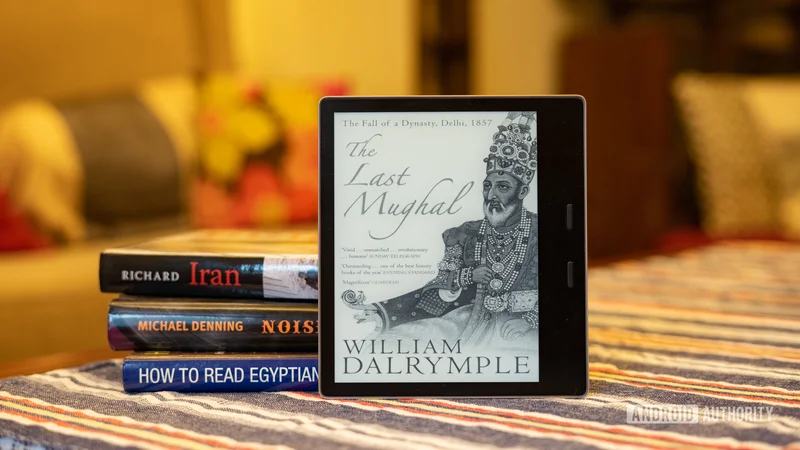
The Kindle Oasis was released in 2019, and it’s been a while since Amazon added a meaningful update to the system. So, when I learned that Amazon was rolling out a new system software update this past week, I was quite excited. That’s until I learned that the update closes a long-standing loophole for library books borrowed via Libby that lets you hold onto a book longer than you’d otherwise be allowed. Additionally, it further tightens DRM to ensure buyers can’t offload books from the Kindle.
While the first feature doesn’t affect me much, the latter, as someone who likes preserving digital media, makes the update an instant no-go for me. On paper, these changes protect publishers’ rights and intellectual property. For the end user, though, they are just another reminder that you never truly own your digital library or even the hardware you technically bought.
Look, I can understand Amazon wanting to safeguard publishers’ contracts, but the company has spent years ignoring basic software features that readers have been begging for while actively stripping away the few workarounds that made the ecosystem bearable. However, this latest move is the final straw for me. I am done trying to stay ahead of Amazon’s shenanigans, and I’m convinced I’m never buying another Kindle. Here’s why.
Would Amazon's DRM restrictions convince you to leave the Kindle ecosystem?
The illusion of digital ownership
Let’s start with the elephant in the room. For years, Kindle users have relied on a clever workaround to manage their reading for borrowed library books. By downloading a book through Libby and immediately putting the device into airplane mode, readers could hold onto their digital loans past the official due date.
Libby loans tend to range from 7 to 21 days. That might sound like a reasonable duration for the average book, but if you read large tomes like “The Wheel of Time,” you know it’s not nearly enough. You might be a slow reader, or you might just be busy with work and life, but the trick bought you extra time to read.
When a corporation can change how your e-reader works after you buy it, how much of the experience do you truly own?
The thing is, on Libby’s end, the book was still returned to the library system on time for the next person in line, but the local file remained readable on the disconnected device. Amazon has now closed this gap entirely by implementing an on-device digital timer. When your loan expires, the book locks up regardless of whether you are connected to the internet.
I understand why Amazon and publishers wanted to shut this down. Digital library licenses are expensive and complicated, and authors deserve proper compensation for their work.
But taking this option away stings because it highlights a much bigger problem with modern e-readers. You are increasingly renting access not just to your content, but also to your hardware. Every time Amazon pushes a silent background update, it proves that the device in your hands is really just a remote storefront disguised as hardware, and the company can change or even remove functionality you’re accustomed to.
When a corporation can change how your e-reader works after you buy it to protect its bottom line, without any heads-up, how much of the experience do you truly own?
The fences keep getting higher
The crackdown does not stop with library loans. Amazon has also tightened its digital rights management protocols, targeting how files are handled on older hardware like my Kindle Oasis. This makes it much harder to back up your purchased books or manage collections through third-party software like Calibre.
Amazon clearly wants users to only buy books through the Kindle storefront, and it is willing to put up massive digital walls to keep users from looking elsewhere. The idea is pretty simple: once you’ve built up a sizable ebook library that can’t be read anywhere but on a Kindle, there’s less incentive for you to look at alternative ebook readers, no matter how much better the hardware experience is.
Previously, I could buy a book from the Kindle storefront, strip out the DRM and keep a clean copy for my personal library and archival purposes. That’s no longer an option.
Amazon can delete, update, or even remove access to a book at will.
As someone deep into the Kindle ecosystem, I can confirm that enthusiasts are exhausted from playing this game. When you buy a physical paperback, you can lend it to a friend, sell it to a used bookstore, or let it sit on your shelf. Digital books don’t have those advantages. In fact, there have been instances where Amazon retroactively made changes to a published book. I care about things like editions. I care about things like reading the first version of a book ever published because it represents the author’s raw thoughts rather than whatever edits the publisher made.
The fact that I can no longer retain a copy of that version rubs me the wrong way. By locking down ebooks through multiple layers of encryption, Amazon leaves me with no control over the book at all. Amazon can delete, update, or even remove access to a book at will.
Users who have spent thousands of dollars building a digital library are realizing that they could lose access to their favorite books whenever Amazon decides to change its software policies, and it does that often enough.
New hardware, same old limitations
For a brand that is as slow-moving as it is, it’s not all been terrible. Amazon has finally made some moves on the hardware front. We finally got a color e-ink display with the Kindle Colorsoft, addressing a years-long request from comic book fans and readers who wanted vibrant cover art. But you only have to look at Kobo and Boox to see just how far ahead of Kindle their ecosystems are.
Hardware updates are nice, but Amazon continues to neglect the actual software experience. The operating system on a modern Kindle feels almost identical to what we were using a decade ago, minus the useful features Amazon has stripped away over time. A quick look at the Kindle community online reveals a massive list of basic software features that Amazon simply refuses to build.
Hardware updates are nice, but Amazon continues to neglect the actual software experience.
Users have been begging for native Bluetooth support for page-turners, allowing people to turn pages wirelessly without clipping bulky third-party clamps onto the screen bezel. Readers want proper directory organization — things like real nested subfolders inside collections so you can sort an author’s work by series instead of dumping hundreds of titles into one flat list.
We still cannot set custom lock-screen wallpapers without tedious jailbreaks, and basic reading statistics, such as daily page counts or a persistent progress bar, remain completely absent. Amazon has the engineering resources to build complex anti-piracy lockouts, yet it cannot provide users with simple operating system controls that budget competitors included years ago.
Kindle Unlimited is not the answer
Amazon’s locking down the DRM and Libby loopholes makes sense when you see what the company wants you to do. The company would love for you to sign up for Kindle Unlimited instead. The company pushes its monthly subscription service across lock screens, homepages, and navigation menus. The pitch sounds great on the surface because you pay a fixed monthly fee for unlimited reading. Leaving aside the fact that people in general, and readers in particular, are absolutely tired of being pushed subscriptions, the reality of the catalog is far less impressive.
Kindle Unlimited cannot replace a public library. Not until it gets rid of the slop problem.
If you spend time browsing Kindle Unlimited, you will find a massive collection of self-published titles, serialized novellas, and niche releases, but very few mainstream bestsellers or new releases from major publishers. I’m not going to say that self-publishing is bad — there is certainly good content in the mix — but there’s more slop than substance in the mix, and it certainly cannot replace a public library. Amazon expects users to pay a recurring fee for a restricted catalog while simultaneously shutting down the methods people used to read actual library bestsellers on their own terms.
It is an aggressive business strategy that alienates the exact audience of readers who helped build the Kindle brand in the first place.
The competition is just doing it better
This latest update is the breaking point for my loyalty to Amazon. People are already leaving the Kindle ecosystem, and anti-consumer moves like these will only accelerate the shift. We are no longer living in an era where Amazon has a monopoly on quality e-readers. The competition has caught up, and in many ways, rival platforms have blown past Amazon in software flexibility and user freedom.
Brands like Kobo offer devices with integrated OverDrive support, seamless Instapaper integration for web articles, and native support for open file formats like EPUB without requiring cloud conversions or going through Amazon’s servers.
We are no longer living in an era where Amazon has a monopoly on quality e-readers.
Meanwhile, Android-based e-ink tablets from brands like Boox let you install any reading app you choose, giving you much more freedom over where you buy your books. These platforms treat you like an adult who owns a piece of hardware rather than a subscriber trapped inside a walled ecosystem. In fact, Boox isn’t even trying to build an alternate ecosystem.
Combine that with self-hosted apps like BookLore and Calibre, and you have a bona fide Kindle ecosystem replacement that’s entirely under your own control. That’s the route I’ve taken, and it is becoming the go-to choice for most enthusiasts.
It’s time to vote with your wallet
In 2026, the convenience of the Kindle ecosystem is no longer worth the trade-offs it asks you to make. I am tired of waking up to software updates that make my device less capable than it was when I bought it. On my end, I’ve jailbroken my Kindle and used an update blocker to safeguard myself. But the fact is I shouldn’t have to.
The closure of the Libby workaround and the tightening of DRM show exactly where Amazon places its priorities. The company cares about locked-in subscription revenue and publisher deals, not the user experience. That lack of consumer-centricity is precisely why I’ll switch device families when it’s time to upgrade.
As consumers, our only leverage is where we choose to spend our money. My current Kindle will be the last one I ever buy, and it might be time for you to look at Kindle alternatives as well.