University of Tehran rolls out national atlas of dust
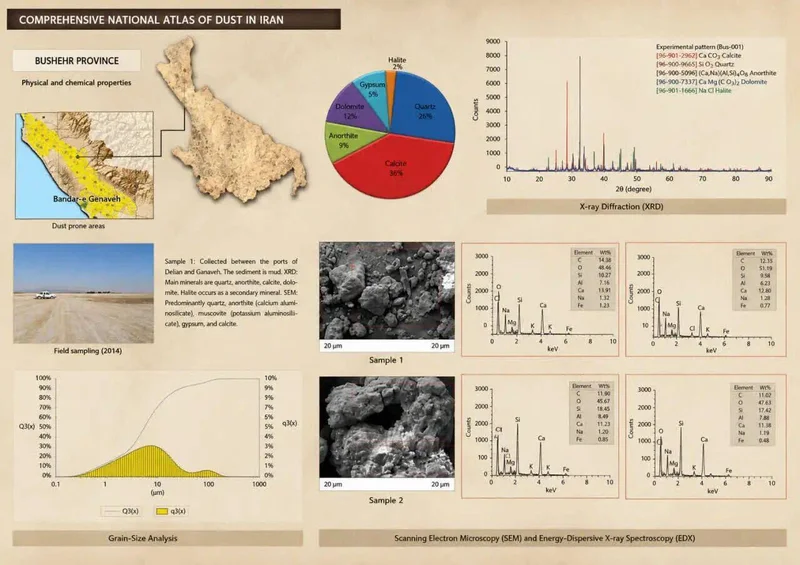
TEHRAN – The International Desert Research Center at the University of Tehran, in cooperation with the Geological Survey and Mineral Exploration of Iran, has released the country’s first comprehensive atlas of dust after more than a decade of research.
These studies focused on identifying dust hotspots, monitoring field and surface sediment samplings, and atmospheric dust, conducting physical, chemical, and mineralogical tests and analyzing the data obtained from these studies, IRNA reported.
The initiative presents a national overview of dust hotspots, characteristics of particles, geochemical distribution, as well as the environmental and health hazards associated with this phenomenon. The data compiled in this atlas are presented in two categories: national map and provincial map, which can serve as a scientific basis for decision-making, policymaking, and dust control planning.
Dust storms are significant environmental challenges that adversely affect food security, human health, and the sustainable development process at national and regional levels.
Being located in an arid and semi-arid area, Iran has been negatively impacted by climate change. The rise in temperatures, drop in precipitation, intensified droughts, and frequent SDSs have not only threatened the ecosystem and biodiversity but also jeopardized the country’s food security by exacerbating soil erosion, expanding desertification, and declining agricultural productivity.
In August 2025, the national specialized working group on sand and dust storms (SDSs), in cooperation with other governmental bodies, approved a comprehensive plan to address SDSs, which will be used as a national reference document to enhance the country’s resilience against one of the most acute environmental threats.
At the 29th meeting of the national specialized working group on SDSs management, the 150-page comprehensive plan was developed with cross-sectoral collaboration of 15 executive agencies and government bodies, including the DOE, the ministries of agriculture, health, energy, and transport, as well as the Natural Resources Organization, Crisis Management Organization, and Meteorological Organization, IRNA reported.
The plan involves ten key strategies, hundreds of specific actions, performance indicators, an implementation timeline, and institutional labor division among responsible agencies.
In July 2025, President Masoud Pezeshkian issued an order calling for the establishment of a specialized working group to address SDSs, which have turned into a significant public health concern in the country.
In this line, the DOE presented a report on the hazards of SDSs as a comprehensive and growing threat, and enumerated the national plans and strategies to mitigate the impacts of SDSs, IRNA reported.
Highlighting the significance of preserving the environment, as a critical issue of the country, the president ordered the establishment of a working group, consisting of experts, academics, representatives of ministries and executive agencies, to prepare and implement operational plans to combat the dust phenomenon, drawing on successful international experiences.
Dust storms are major environmental challenges that adversely impact food security, human health, and the sustainable development process at national and regional levels.
MT/MG