Taskforce finds Malay/Muslim youth value meaningful work, relationships, faith over job titles
AI generated
SINGAPORE – Beyond salary, qualifications and job titles, Malay/Muslim youth in Singapore want meaningful work, financial stability and strong family networks and connections.
These were the findings by the Malay/Muslim Youth Taskforce that were released on Aug 22.
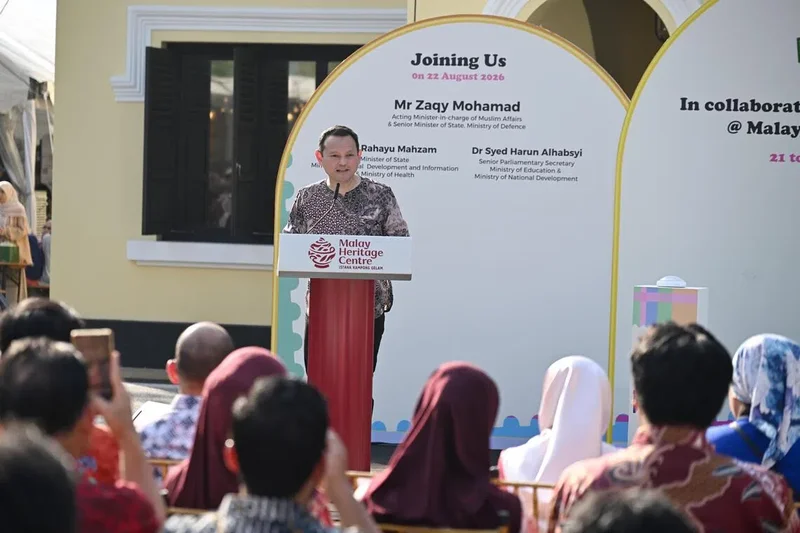
Speaking at the M³+ Youth Festival that day, Acting Minister-in-charge of Muslim Affairs, Zaqy Mohamad, who is also adviser to M³+, said these young people have strong aspirations.
But they often face questions about navigating artificial intelligence (AI) and remaining grounded in their faith.
The 2026 edition of the annual festival, themed Weaving Threads of Tomorrow, is designed to empower young Malay/Muslim Singaporeans.
In engaging over 2,600 youth, the taskforce also found that young people aged between 15 and 35 place a greater value on mental well-being, and access to opportunities.
The taskforce, announced in October 2025, is a joint secretariat comprising the People’s Association Malay Activity Executive Committees Council, the Islamic Religious Council of Singapore (Muis), Mendaki and the National Youth Council (NYC).
Some issues it is looking into include career development, effective use of AI and strengthening social cohesion in young people.
Unveiling its findings at the festival, the taskforce found that many youth said while opportunities such as career guidance exist, they are not always accessible. Those without established networks often find it harder to discover opportunities and navigate career pathways.
Lack of participation
The taskforce also found that despite M³+ programmes growing over the years, a significant number of youth were not participating in them. It did not elaborate on the scale of non-participation.
Building on existing programmes, several initiatives will be rolled out. These include engagement sessions.
Titled Let’s Sembang, the engagement sessions will allow young people to connect with one another through shared interests such as sports, art and culture, said Zaqy. They are slated to begin in 2027.
To support navigating the workplace while staying grounded in faith, a Youth Meets Career Playbook will be developed, said Zaqy.
He said: “You are Muslim and you are Singaporean, you do not have to choose between these parts of yourself.”
Senior data engineer, Mohamed Sharif, 27, said that for the first time, the IMYouth (Indian Muslim Youth) have been included in the festival.
He is its treasurer and said he was grateful for the opportunity to organise a youth mixer for young people to interact with one another.
AI-ready
A d-AI-ly Explorer programme under Langkah Digital, will also be introduced, said Zaqy. This is among components of a Youth Launchpad to connect youth with mentors, professional networks and industries.
It will also tackle building youths’ digital confidence while improving their AI fluency by making them work in teams to identify challenges and develop digital or AI-enabled concepts.
About 300 youth are expected to develop around 100 projects, with selected teams receiving further mentorship and opportunities to showcase and refine their ideas.
Singer-songwriter Shareefa Aminah Shariff, better known as Shazza, who served as a youth consultant on the taskforce, said one of the main concerns brought up by youth was career-related.
She said it was heartening to see young people want work-life balance.
She added: “I am confident these initiatives will make a clear impact on the lives of youth.”
Young people can also tap on NYC’s newly launched Discover portal to access resources on volunteering and mentorships, among others.
Taskforce co-chair, Minister of State for Digital Development and Information and Health Rahayu Mahzam, said to ensure the initiatives are accessible, the taskforce has looked at partnering social media influencers.
Speaking to the media, she said while there are youth who know where to get help, some do not.
She said: “It is no longer just about sitting in a room and having a dialogue (with young people),” adding that going to where youth are most comfortable might work better for reaching out to them.
Shareefa added: “We want to foster a culture where youth feel comfortable to speak up about what they want and need while being confident to take on a role in society.”