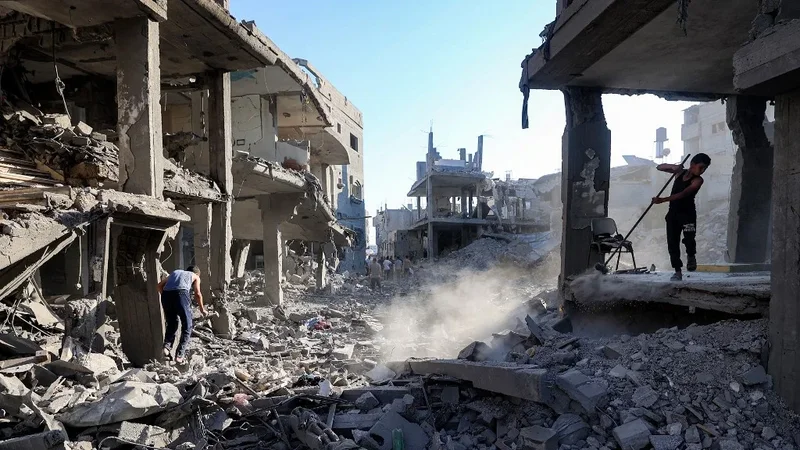
It was a routine online meeting with my academic supervisors during the summer. One of them, who had just returned from visiting her home country, spoke about the joy of being surrounded by family, the comfort of familiar places, and the quiet sense of belonging that comes from returning home.
Then she used a phrase that has stayed with me ever since: “The privilege of home.”
Until that moment, I had never considered home a privilege. I had always thought of it as something ordinary, something everyone simply had.
But since leaving Gaza almost a year ago, those three words have echoed in my mind, forcing me to ask questions I had never needed to confront before: what is home? When does it become part of our identity?
Can it be destroyed not only physically, but psychologically? And what happens when there is nowhere left to return to?
Ironically, I do not think I truly understood the meaning of home until I first arrived in the United Kingdom in 2019 to pursue my master’s degree. Like countless international students, I became homesick.
I missed my family, the familiar sounds of Gaza, speaking Arabic without thinking, Friday lunches, and the ordinary routines I had always taken for granted. Yet beneath all that longing was a certainty I barely recognised at the time: Gaza was still there.
My family was still there. My neighbourhood was still there. My home was still there. The distance between us was geographical, not existential.
I knew that when my studies ended, I would return. That certainty quietly shaped everything. It allowed me to embrace a different culture, build friendships, and imagine a future without ever questioning where I belonged.