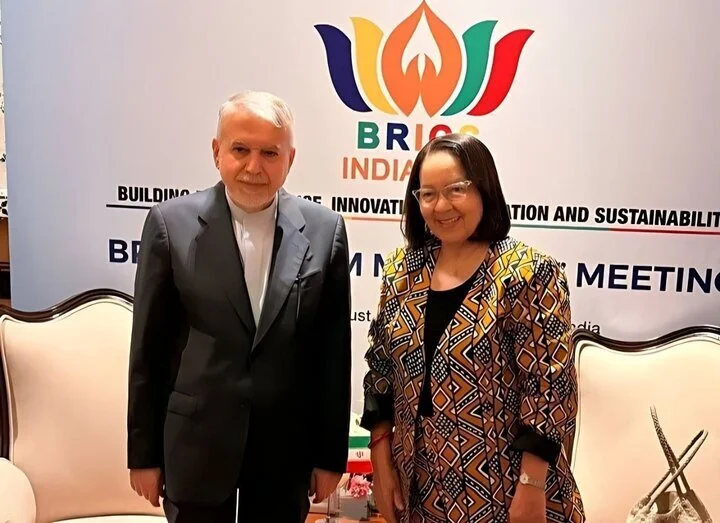
Iran, South Africa seek closer tourism cooperation through private-sector ties
TEHRAN – Iran and South Africa have discussed expanding tourism cooperation through stronger private-sector ties, joint marketing initiatives and a framework for implementing bilateral projects.
Iranian Minister of Cultural Heritage, Tourism and Handicrafts Seyyed Reza Salehi-Amiri held talks with South African Tourism Minister Patricia de Lille on Friday on the sidelines of the third BRICS Tourism Ministers’ Meeting in India.
Salehi-Amiri said Iran and South Africa have complementary tourism capacities and called for moving beyond political relations toward practical and economic cooperation in tourism, Mehr news agency reported.
“We believe the gateway to Africa should be through South Africa,” he said, adding that both countries have the potential to establish stronger tourism relations and that implementation depends on the commitment of both sides.
Salehi-Amiri also highlighted the standing of late South African leader Nelson Mandela in Iran, saying he is highly respected by the Iranian people.
During the meeting, the Iranian minister also highlighted the country’s historical, cultural and tourism assets, saying that the country has more than one million identified historical sites and objects, 43,000 nationally registered heritage sites and 30 World Heritage properties. He added that 27 elements of Iranian intangible heritage have been inscribed on UNESCO lists, while 58 other sites are awaiting international registration.
Iran also offers a diverse range of tourism products, including cultural and historical tourism, medical tourism, ecotourism and adventure tourism, Salehi-Amiri said, stressing the need to promote these capacities in new international markets.
Three priorities for cooperation
Salehi-Amiri proposed three main areas for practical tourism cooperation between the two countries, with connecting their private-sector players identified as the first priority.
He called for tourism agencies, airlines, hotels and other businesses across the tourism supply chain to establish direct links, while governments should facilitate business-to-business cooperation and joint projects.
“Governments should play a facilitating role so that the existing capacities in the two countries can be transformed into real commercial and tourism relations,” he said.
As a second priority, Salehi-Amiri proposed strengthening mutual understanding and joint tourism marketing. He suggested organizing familiarization tours for South African journalists, influencers, media professionals and tourism industry representatives to enable them to experience Iran’s tourism attractions and produce content for South African audiences.
He also called for greater use of social media and other new media platforms to promote the two countries’ attractions, cultures, lifestyles and tourism opportunities.
The third priority was the preparation of a cooperation document and a clear implementation framework. Salehi-Amiri stressed that bilateral understandings should be translated into practical, time-bound programs.
The two sides agreed that Iran would prepare its proposals and a framework for tourism cooperation and send them to South Africa for consideration, with the aim of moving bilateral tourism ties toward the implementation stage.
AM