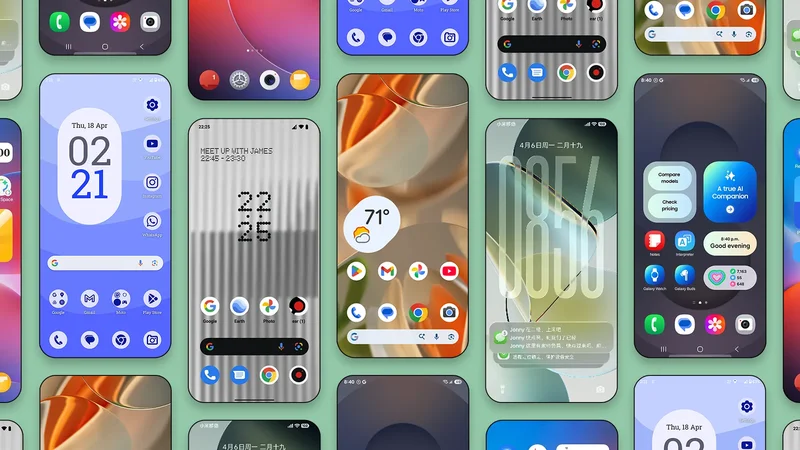
When we talk about iPhones, you pretty much know the software experience you'll get regardless of which model you buy.
With Android phones, though, it's not only about running Android. The software experience depends heavily on the Android skin your phone uses, which can make or break it.
For example, one reason many users continue to prefer Google Pixel phones over devices from OnePlus and Samsung is how Android feels on a Pixel.
I'm not talking about the AI or Pixel-exclusive features, but the OS's overall look and feel.
Pixel's Android skin feels right at home to me. It isn't filled with unnecessary bloatware, over-the-top 3D animations, or blurry glass effects.
But many people still call this "stock Android," and that's not entirely accurate. In 2026, there isn't really a stock Android anymore, and that's completely fine.
Pixel UI and stock Android are two different things
Google's Pixel software has evolved far beyond basic Android
For the longest time, buying a Google phone was considered the easiest way to get the "stock Android" experience. That made sense during the Nexus days, when Google's phones ran a much closer-to-bare-bones version of Android.
But that hasn't really been the case for years. What Google ships on modern Pixel phones, including the new Pixel 11 series, is its own interpretation of Android called Pixel UI.
Like every other Android OEM, Google starts with the AOSP base layer and builds its own skin on top. That includes Material You theming, animations, Pixel-exclusive features, its own launcher, and plenty of other little touches that make a Pixel feel like a Pixel.
The actual "stock Android" is much more bare-bones than what you get on a Pixel. And I think that's where the confusion comes from.
When most people say they prefer stock Android over the likes of One UI or ColorOS, they usually don't mean they want the bare-bones AOSP experience. What they're really saying is that they prefer Google's interpretation of Android.
So technically, calling Pixel UI "stock Android" isn't correct. But at the same time, I don't think it's quite as wrong as it sounds either.
Calling Pixel UI 'stock Android' isn't really wrong
It still represents what many people expect pure Android to feel like
I think the meaning of "stock Android" has changed over the years. Originally, it referred to Android without a manufacturer's heavy skin or modifications on top.
But today, when most people say they like stock Android, they're almost always talking about the software experience on a Pixel.
And that's completely fine. Most people don't know what AOSP is, and they really don't need to. What they know is that when they pick up a Pixel, they're getting Android the way Google wants Android to look, feel, and behave.
That's why I don't think calling Pixel UI "stock Android" is necessarily wrong anymore, even if it technically isn't accurate.
Stock Android has almost become less of an actual piece of software and more of an idea: Google's own vision of what Android should be. And right now, Pixel UI is that.
It's actually good that stock Android has disappeared
Different Android skins now offer something for almost everyone
Contrary to everything I've said above, I think it's a good thing that true stock Android has (mostly) disappeared.
There was a time when being close to stock Android was considered a compliment.
I still remember Google Play Edition phones, where manufacturers sold versions of their flagships running mostly stock Android instead of their own skins.
Back then, a "clean Android" experience with faster updates and less bloatware was something brands actively advertised.
But the Android landscape has changed a lot since then. Google now gives manufacturers access to Android's base code much earlier, allowing them to prepare their own skins and updates ahead of the stable release.
Brands have also become much better at maintaining and updating their own software.
More importantly, Android skins have developed their own identities. Someone might prefer One UI for its design, Samsung DeX, or Good Lock. Someone else might like the pixelated look of Nothing OS, while people like me prefer Pixel UI.
I think that's better for Android. Every manufacturer trying to recreate the same stock experience would be boring, and we'd miss out on features that make these phones different in the first place.
I'm still a Pixel fan at heart
If you gave me all of these Android skins and asked me to pick one, I'd still go with Pixel UI. As I mentioned above, there's something about Google's approach that feels right to me.
That doesn't mean I don't miss some of the Android skins we've lost along the way. There are still a couple of classics I'd love to see make a comeback someday.