Thereâs this viral app called Carrier Pidge, and with all due respect to its creator, itâs just a paint job on a kind of app that already existed. Same with another, similar new app, Roost.
What these apps do is they send messages on a delay, with actual geography taken into account so that messages between longer distances take longer. Slowly, a pen pal app, has been doing this since the 20-teens.
But these new apps are getting approving write-ups because, unlike Slowly, they have cute gimmicks. Specifically, they have little simulated animals in themâhoming pigeons in the case of Carrier Pidge, and a whole menagerie including pigeons in the case of Roost. Carrier Pidge has a feature where your pigeon might die, triggering a micropurchase obligation where you have to buy a new pigeon.
The idea, I guess, is that digital overload can be relieved slightly if you sign up for an app that makes messaging slow and sucky, like in the bygone past, when, vibes-wise, life felt more alive, man. âSome things are better when theyâre worse,â 27-year-old Carrier Pidge user Olivia Macdonald recently told the New York Times.
This gets it completely wrong. Carrier Pigeons were not worse at all. They were better. Like all old technology, a lot was lost when we gave people gave up pigeons.
And I apologize again to the creators of these adorable apps, but I need to be a pedant for a second. If someone wanted to make a great carrier pigeon appâand hell, maybe someone shouldâit might be fun. It would be a little like a Tamagotchi, a little like a messaging app, and a little like Geocaching.
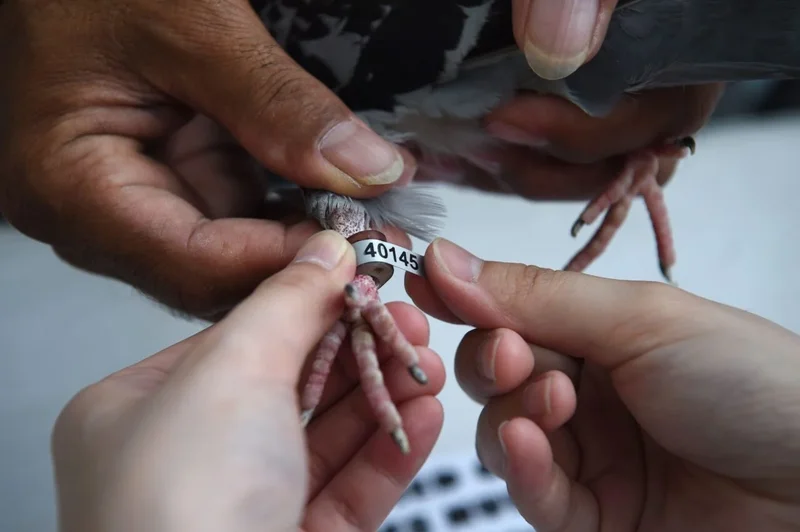
The way homing pigeons work is that you have to actually hatch and rear them in whatâs essentially going to be your âinbox.â You then distribute your pigeons to the places out in the world where there are people who might need to send you messages, photos, or small objects. You can hand-deliver pigeons to your friends and colleagues in a targeted way, or, say, distribute them more haphazardly via balloon. But the point is that homing pigeons only have one path. You canât, as the Carrier Pidge app description says, âSend carrier pigeons to anyone.â You can only ever send them home.
This is what would be fun about a carrier pigeon app. You would have to raise pigeons in the app, and then when youâre physically next to someone who might want to send you a message by homing pigeon, transfer some of your pigeons to them. On iPhone you could use the same tapping function as NameDrop. You would also need to take in some of their pigeons as guests in order to reply. You would then have to care and feed for other peopleâs digital pigeons (sure, maybe with in-app purchases).
But homing doves and pigeons have been used for thousands of years, with the practice dating back to Roman times at least. Pigeon mail has withstood the test of timeâyes, homing pigeons still existâbecause sending things by bird just works. *Sometimes better than the internet. *
For instance, as previously covered by Gizmodo, there was the time in 2009 when a financial services company in South Africa moved large amounts of data to a recipient 50 miles away by strapping a memory card to the leg of a homing pigeon named Winston. Apparently at the time, the crummy local ISP could only move 4% of that amount of data in the time Winstonâs flight took.
So while I donât intend for this to be a mean write-up of any smalltime developerâs goofy app, I do, as always, want everyone to show some respect to pigeons.