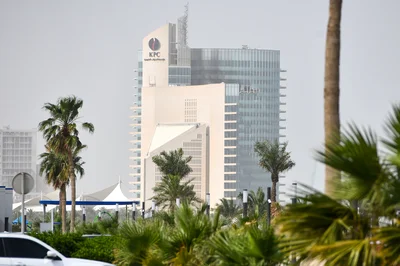
More than 80 energy facilities in the Middle East have been damaged since the Feb. 28 start of the Iran war, with over one-third of them classified as severely or very severely hit, said the head of the International Energy Agency (IEA) on Monday, Anadolu reports.
Speaking during an Atlantic Council event in Washington, DC, Fatih Birol said the scale of destruction to oil fields, refineries, terminals, and other infrastructure means supply recovery will take time even if the conflict were to end immediately.
“This is one of the most critical issues, and different than the past, many of the facilities are badly damaged,” he said, adding that the IEA is monitoring all affected sites.
Birol, a Turkish economist and energy expert, said restoring regional energy supply to where it was before the crisis could take as long as two years, underscoring the depth of the disruption across the region’s oil and gas system.
He described the current turmoil as “the largest energy security threat in history,” saying the losses in oil and gas supply already far exceed those seen during the 1973 and 1979 oil shocks and after the start of the Ukraine war in 2022.
Birol said the world had lost around 30 million barrels per day of oil supply so far, compared with roughly 5 million barrels per day in each of the 1970s oil crises. In natural gas, he said the disruption has also exceeded the roughly 75 billion cubic meters lost since the start of the Ukraine war.
On emergency response measures, Birol said the IEA had already coordinated a record release of 400 million barrels from strategic stockpiles in March, calling it the largest and quickest such action in the agency’s history.
He said he hoped another emergency oil stockpile release would not be needed, but stressed that the agency stands ready to act if market conditions worsen.
Still, he cautioned that emergency reserves alone cannot offset prolonged infrastructure losses, particularly in countries with weak finances or limited storage capacity.
In addition to oil and gas, he warned that the conflict is disrupting flows of fertilizers, petrochemicals, helium, and other critical commodities essential for global supply chains.
READ: Saudi, Iranian foreign ministers discuss regional developments
– Prices yet to reflect disruption
Birol also said market prices have not yet fully reflected the severity of the disruption on the ground, arguing that a gap remains between the scale of the crisis and current pricing.
“I agree there’s a disconnect there, but I think soon we will see that they will converge,” he said, warning of serious consequences for the global economy.
He said emerging and developing economies that rely heavily on imported energy are particularly vulnerable, citing risks to inflation, economic stability, and political conditions. He also warned that Europe could face significant challenges in jet fuel and diesel supplies.
Birol said the IEA, the International Monetary Fund, and the World Bank are launching a coordinated initiative to help developing countries manage the economic impact of the war through energy policy advice, economic support, and timely information sharing.
Looking ahead, he said the crisis is likely to trigger a broader policy response, including stronger efforts to diversify energy suppliers, routes, and fuel mixes, as well as renewed investment in nuclear power, renewable energy, and energy efficiency.
“My golden rule for energy security is diversification,” he said. “Don’t over-rely on one single country, one single trade route, one single fuel.”
He also warned that chokepoints beyond oil and gas, particularly in critical minerals refining and processing, remain poorly understood and could emerge as the next major vulnerability for the global economy.