Sydney council rates are going up. Blame the fuel crisis
Save
You have reached your maximum number of saved items.
Remove items from your saved list to add more.
Save this article for later
Add articles to your saved list and come back to them anytime.
Got it
AAA
Global instability is set to hit NSW ratepayers, with councils planning sharp increases to bin collection fees and rates charges as soaring fuel costs and global instability strain budgets.
From Sydney’s suburbs to the state’s far west, councils say a perfect storm of rising diesel prices and structural funding constraints is driving up the cost of delivering essential services – with households set to feel the impact on their rates bills from July.
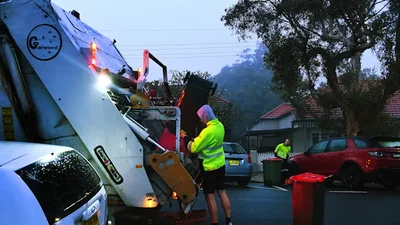
Rising fuel costs are affecting councils across NSW.Kate Geraghty
The conflict in Iran – which has sent the price of fuel, especially diesel, skyrocketing – has coincided with councils finalising draft 2026-27 budgets.
Early documents show many councils are planning to increase “domestic waste management” charges – the fees households pay to have their bins collected – to cover the cost of running the trucks.
Under NSW regulations, councils must fully recover these costs, leaving little choice but to pass increases on to ratepayers.
In Camden, a 35 per cent increase has been proposed, equating to an extra $164.85 average annual charge for households. Northern Beaches has flagged an 8.8 per cent rise, Hornsby is proposing a 10 per cent increase, and Bathurst plans to lift its fee from $575 to $618.
A report by Parramatta Council warned instability in the Middle East was causing flow-on effects for construction materials and general operating costs including keeping waste trucks on roads.
In a similar report, The Hills Shire Council noted everything from street sweeping to road repairs is affected by fuel-dependent plants and equipment.
Blacktown Council has taken the extraordinary step of stockpiling 80,000 litres of diesel specifically for waste collection vehicles to ensure services are maintained.
Pressures are particularly acute in regional areas where long distances increase fuel usage. Wingecarribee Shire Council has recorded $308,000 in additional fuel costs in the last quarter alone.
In Bourke, the state’s fourth-largest council area, the situation has become critical. The council, which uses 20,000 litres of diesel each week, has been forced to bypass standard procurement to secure fuel after supply interruptions.
Local Government NSW president Darcy Byrne said councils have few options but to raise fees.
“This isn’t about councils trying to skim extra revenue, it’s about funding services in line with the real cost of delivering them,” Byrne said.
Byrne argued councils were constrained by the state’s rate-pegging system, which has capped the amount that councils can increase their general rates charges from July to between 2.7 and 5.7 per cent, adjusted according to each council’s population.
Local Government NSW president Darcy Byrne said rising fuel costs were harming council bottom lines.Dean Sewell
Byrne said these caps, set before recent global tensions, no longer reflected current fuel costs.
“Councils are in an impossible situation where responsibilities are growing but funding capacity is shrinking,” he said.
Ten councils have applied the state’s independent pricing regulator to increase rates beyond the standard peg from July. If approved, those increases would result in higher rates charges for households and some businesses.
North Sydney is seeking to increase rates by 52.66 per cent over three years, Hawkesbury has applied for 39.4 per cent over four years, Ku-ring-gai is planning a 24.6 per cent rise and Blacktown is seeking 16.64 per cent in 2026, followed by two years of 8.53 per cent increases.
Council leaders are calling on the state government for support, asking for it to classify waste collection as an essential service to secure fuel supply and grant councils access to revenue from the state’s waste levy.
Blacktown Council chief executive Kerry Robinson issued a blunt warning about the consequences of inaction.
“If we don’t pick up the rubbish, the state has a public health problem,” he said.
A spokeswoman for the NSW Department Climate Change, Energy, the Environment and Water said the government was “actively monitoring fuel disruption impacts” and will continue to support communities and industry partners.
Without intervention or regulatory changes, Byrne warned councils will remain under financial strain, leaving households to absorb yet another cost-of-living increase.
At Penrith Community Kitchen, which provides 120 daily meals to western Sydney residents in need, secretary Gai Hawthorn warned the rate increases could create a “ripple effect” for households already experiencing cost-of-living pain.
She said the kitchen had already seen an increase in demand for emergency food and hot meals, including from people in full-time work and local schools wanting to help families get through the week.
“We’ve had children who haven’t had dinner because there’s no food in the house. Fuel costs are crazy and any further price rises will make it harder for people.”
Start *the day with a summary of the day’s most important and interesting stories, analysis and insights. Sign up for our Morning Edition newsletter.***
Save
You have reached your maximum number of saved items.
Remove items from your saved list to add more.
David Barwell is an urban affairs reporter for The Sydney Morning HeraldConnect via email.