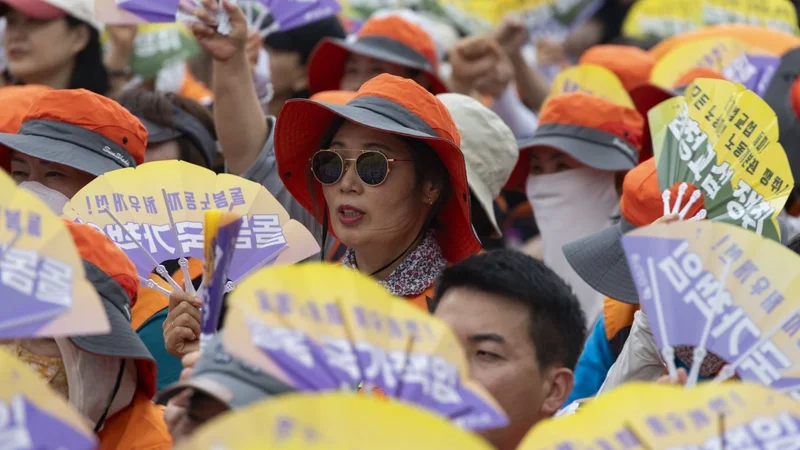
South Korean unions use new labour rules to push envelope on bonus demands
Without clearer boundaries, the revised act could fuel labour disputes and create uncertainty for businesses and the economy, critics warn
If left unchecked, critics warn, the revised Trade Union and Labour Relations Adjustment Act – commonly known as the Yellow Envelope Act – could fuel labour disputes, create uncertainty for businesses and threaten an economy that is only beginning to recover.
At the heart of the controversy is whether calls for bonus adjustments and other such demands fall under the new act, which has expanded the scope of labour disputes beyond traditional issues such as wages, working hours, welfare and dismissals to include “business management decisions affecting working conditions”.
That broader definition has emboldened some unions to make demands that would previously have been considered beyond their collective bargaining remit.
The controversy over profit-linked bonuses began at SK Hynix, which agreed last year to remove its previous cap and allocate 10 per cent of annual operating profit to an employee bonus pool for the next decade.