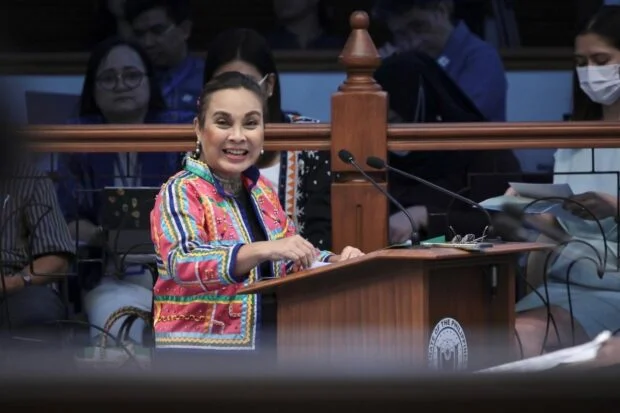
Legarda hails signing of GIDA Schools Act into law
MANILA, Philippines – For generations of Filipino families living in the country’s most isolated communities, going to school has often meant walking for hours through mountains, crossing rivers without bridges, riding makeshift boats, or studying in classrooms without electricity and source of water.
These are daily realities for thousands of learners in geographically isolated and disadvantaged areas (GIDA), where distance continues to restrict educational opportunity, and where a child’s future is determined by where they were born rather than by their potential.
Article continues after this advertisement
Recognizing these persistent hurdles and inequities, Senator Loren Legarda hailed the signing of Republic Act No. 12321, or the Geographically Isolated and Disadvantaged Areas (GIDA) Schools Act, on July 23, 2026. Legarda principally authored and co-sponsored the measure, which institutionalizes a whole-of-government approach to ensuring that children in remote communities have equitable access to quality education.
“Ang batas na ito ay para sa mga batang araw‑araw naglalakad sa putikan, tumatawid sa ilog at mga sira-sirang tulay, umaakyat ng bundok, at pumapasok sa paaralang walang kuryente at malinis na tubig upang makapag-aral. Para rin ito sa mga gurong nilalakbay ang parehong hirap upang makapagturo, at sa mga magulang na, sa kabila ng kahirapan, ay hindi sumusuko sa paniniwalang ang edukasyon ang pinakamahalagang maipapamana sa kanilang mga anak.” Legarda said.
“Hindi dapat maging hadlang ang layo, kahirapan, at kakulangan sa imprastraktura sa karapatan ng bawat batang Pilipino na magkaroon ng dekalidad na edukasyon. Ipinapakita ng batas na ito na hindi sila nag-iisa at na ang kanilang mga pangarap ay mahalaga” Legarda added.
The GIDA Schools Act establishes national school accessibility standards to ensure that students have access to basic education schools within a walkable distance of three (3) kilometers from their place of residence or, where this is not feasible, through safe and accessible transportation. It also requires the Department of Education to develop a National GIDA Schools Map that will guide government investments where they are needed most instead of leaving remote communities invisible in national planning.
Recognizing that quality education cannot succeed without basic services, the law mandates coordinated action among government agencies to provide roads, electricity, internet connectivity, environmental safeguards, and support for Indigenous communities. It also promotes disaster-resilient and culturally appropriate school facilities, including the use of sustainable construction materials where appropriate.
Article continues after this advertisement
For teachers assigned to last-mile schools, the measure provides stronger institutional support through hardship and hazard allowances, housing assistance, professional development opportunities, and localized recruitment to encourage educators to remain in underserved communities.
“Maraming guro ang nagsisilbing hindi lamang tagapagturo kundi tagapag-alaga, tagapayo, at pangalawang magulang sa mga komunidad na matagal nang kulang sa serbisyo. Hindi sapat na tawagin natin silang bayani. Dapat tiyakin ng pamahalaan na mayroon silang sapat na suporta upang maipagpatuloy ang kanilang misyon,” Legarda stressed.
Article continues after this advertisement
The law likewise institutionalizes culturally responsive education by integrating Indigenous Knowledge Systems and Practices into learning in ancestral domains, while engaging community elders as Indigenous Knowledge Educators. It also strengthens the role of Local School Boards in identifying priority GIDA schools and monitoring investments, with annual reporting to Congress to ensure transparency and accountability.
The enactment of the measure comes as the country continues to grapple with a nationwide education crisis. According to the Second Congressional Commission on Education (EDCOM II), learners in last-mile schools consistently perform among the lowest in the country. In the Grade 10 and Grade 12 National Achievement Tests, nearly 82 percent of learners in GIDA schools failed to meet minimum proficiency standards, underscoring how geography continues to shape educational outcomes.
“Sa maraming mag-aaral sa geographically isolated and disadvantaged areas (GIDA), ang pinakamalaking hamon ay ang paglalakbay at ang mga sakripisyong kailangan upang makarating sa paaralan. Kapag ang layo ng biyahe ang nagiging dahilan upang mahuli, lumiban, malagay sa panganib, magkasakit, o tuluyang huminto ang isang bata sa pag-aaral, tungkulin ng pamahalaan na kumilos. Hindi dapat ang lokasyon ng tahanan ang magtakda ng kinabukasan ng isang bata,” Legarda stressed.
A longtime champion of education reform, Legarda previously served as Chairperson of the Senate Committee on Basic Education and of the Senate Committee on Higher, Technical and Vocational Education. She also served as Co-Chairperson of EDCOM II, where she pushed for reforms to address long-standing learning gaps and unequal access to quality education.
“We must stop romanticizing these hardships or using the stories of the few who endured them as proof that the system is working. Their perseverance deserves respect, but suffering should never be treated as a necessary part of education or as a badge of honor. No child should have to risk safety, health, or dignity simply to reach a classroom. The duty of the government is to remove these barriers so that success no longer depends on how much hardship a child can survive,” Legarda concluded.