- See more Daily Mail on Google - save us as a Preferred Source
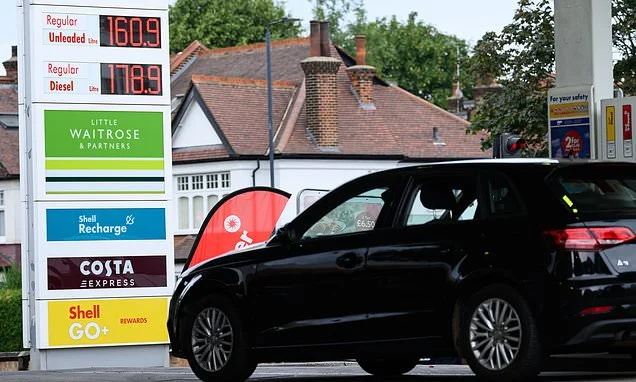
A fill-up is set to hit £100 again as pump prices rocket because of the Iran war escalating.
In a major blow for millions of families on the great summer getaway after schools broke up this week, The RAC said diesel and petrol surged again today.
It means it has soared around 9p a litre – or almost £5 a fill-up for the average family car – in little over two weeks.
Average petrol prices at UK forecourts, meanwhile, have soared by about 6p a litre – or around £3 a fill-up.
It means the average family car in total now costs about £95 to fill-up with diesel and £86 with petrol.
Separate figures compiled by the AA found that soaring pump prices will collectively add millions of pounds to the fuel bills of 20.7million drivers it estimates will hit the roads over the next week from this weekend, as part of the second wave of families hitting the road for their summer getaway.
With no signs of a let-up in the Middle East fighting, which flared up again this month after a peace deal broke down, diesel looks set to hit the £100 mark for a fill-up within days. Petrol could soon follow.
A fill-up is set to hit £100 again as pump prices rocket because of the Iran war escalating after a fragile ceasefire broke down
Donald Trump and Tehran have been ramping up rhetoric with more strikes taking place after a tentative ceasefire disintegrated
Pictured: Houthi supporters hold up their weapons during a protest against Saudi Arabia
It comes after oil prices hit a two-month high because of the escalating conflict, with Brent Crude spiking back over $100 a barrel.
Donald Trump and Tehran have been ramping up rhetoric with more strikes taking place in recent days after the tentative ceasefire disintegrated.
Markets have been particularly spooked after Iran-backed Houthi militants hit two Saudi oil tankers.
It means oil supplies to the West face being further choked off amid Iran's near-closure of the Strait of Hormuz, which typically carries around a fifth of the world's oil and gas.
The spiralling oil prices as a result of this has been pushing pump prices back up after they fell briefly following last month’s peace deal being struck.
The RAC’s Simon Williams said: ‘With oil breaching the $100-mark for the first time in two months, prices at the pumps have surged again since yesterday, taking the cost of filling up back to a level last seen in mid-June – something we all hoped we’d seen the back of.
‘The average price of unleaded jumped by more than half a penny and is now up nearly 6p (5.6p) a litre since 6 July to 156.19p.
‘Diesel, which went up by another penny, has undergone an even sharper rise at almost 9p (8.6p) in just over two weeks to the point where it's averaging 173.15p.
‘Since the Iran war lows, this translates to percentage increases of 4% and 5% respectively.
‘Although not as great as the start of the conflict, it's nonetheless worrying as both fuels are so much more expensive than they were then. A tank of fuel for a family-sized petrol car now costs £86 while the diesel equivalent is £95.
‘Unless the hostilities end soon, it's hard not to see the price of petrol reaching a new Iran war high.’
The AA's fuel guru Luke Bosdet added: 'This is a bitter blow for the second wave of summer holiday road travellers, and it doesn’t look as if it will get any better soon.
'Worse still, councils at many coastal resorts are exploiting their visitors with ridiculously high parking costs for a day at the seaside.'
Average diesel prices at UK forecourts hit a high of 191.54p a litre in April after the US-Iran conflict first broke out on February 28. They were 142.38p a litre when the conflict broke out. Today they were 173.15p.
Petrol hit a high of 159.53p a litre in May. It was 132.83p at the start of the conflict and 156.19p today, according to the RAC’s figures.
It means petrol could soon hit a post-conflict high, whereas diesel has a way to go to hit this.
The Houthis control northern Yemen, including territory along the Bab el-Mandeb, a vital maritime trade route that links the Red Sea to the Gulf of Aden and the Indian Ocean.
While the rebels have not formally announced the closure of the waterway, as some had feared might happen, the militia group's threat to ships using Saudi ports has raised serious concerns over the safety of navigating a channel used by 7 per cent of global maritime traffic, further threatening oil supply flows.