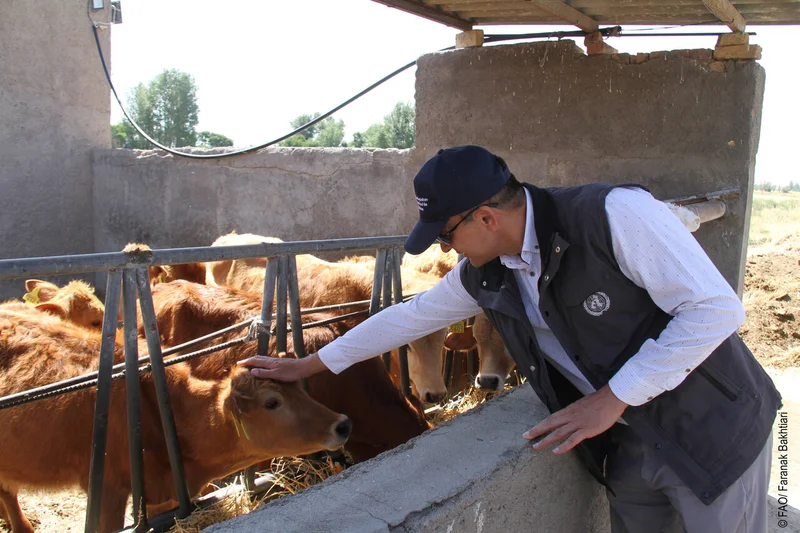
FAO lays groundwork for livestock production in northwest Iran
TEHRAN – A delegation from the Food and Agriculture Organization of the United Nations (FAO), led by the FAO Representative in the Islamic Republic of Iran, Farrukh Toirov, conducted a four-day field mission to Ardabil, East Azarbaijan, West Azarbaijan and Kordestan provinces from 12 to 15 July 2026 to support sustainable livestock development.
Held under the project “Empowering Local Communities to Conserve and Develop Endangered Indigenous Livestock Gene Pool in the Northwest of Iran,” the mission brought together national and provincial stakeholders to assess field conditions and collect information that will contribute to the project's final workplan.
Northwest Iran (the Islamic Republic of) is home to several valuable indigenous livestock breeds, including the Bactrian camel, Sarabi cattle, Mahabadi goat, and Markhoz goat. These breeds represent an important component of the country’s agricultural biodiversity and provide livelihoods, cultural identity, and resilience for rural and pastoral communities.
During the mission, the delegation visited the livestock production areas in Ardabil, Sarab (East Azarbaijan Province), Mahabad (West Azarbaijan Province) and Dehgolan (Kordestan Province), where they met with local authorities, technical experts, livestock producers and other stakeholders to discuss the status of livestock production systems, indigenous breeds and community priorities.
The consultations provided an opportunity to validate and refine the project's planned interventions while gathering additional technical information to support evidence-based implementation. Discussions also focused on identifying opportunities and potential challenges that should be reflected in the project's operational planning.
"Field engagement is essential to ensure that project activities respond to the realities and priorities of livestock producers and locals," said FAO Representative in the Islamic Republic of Iran. "Through close collaboration with our national and provincial partners, we can design interventions that are practical, locally relevant and capable of delivering sustainable benefits for rural communities."
The project invests in the rehabilitation of grazing areas, strengthens milk and mohair processing facilities, and provides extensive training and capacity-development opportunities for livestock keepers, technical experts, and policymakers. In parallel, efforts will be made to enhance value chains and create new market opportunities for products derived from indigenous livestock breeds, helping improve incomes and economic resilience in rural areas.