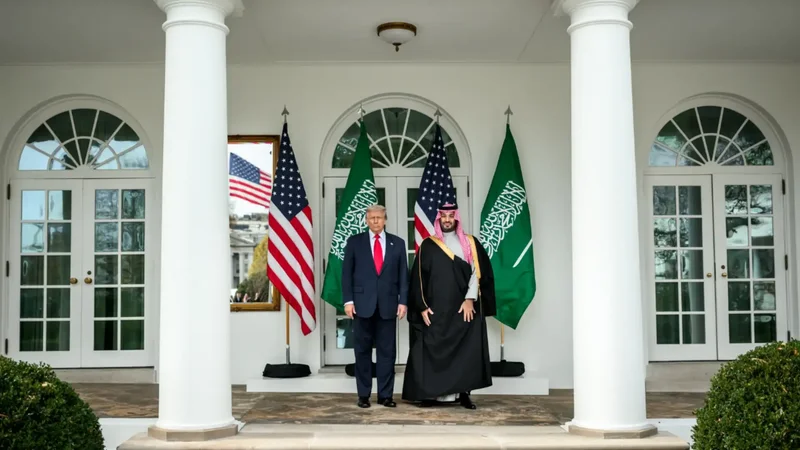
The United States and
Saudi Arabiaâs new nuclear cooperation agreement has rewritten a fresh chapter in the
Middle Eastâs already volatile security landscape. Signed in Washington by US Energy Secretary
Chris Wright and Saudi Energy Minister Abdulaziz bin Salman, the soâcalled â123 agreementâ paves the way for Riyadh to acquire uranium enrichment capability for its civilian nuclear programme. The deal, the contours of which have not been revealed, is framed as a civilian energy initiative, but its strategic implications are complicated and have the potential to destabilise the already complicated security dynamic in the region.
The nuclear agreement, expected to last 30 years, will involve US firms in building Saudi Arabiaâs nuclear infrastructure. With the Trump administration insisting that American involvement will ensure safeguards and monitoring. Yet the US administration has released few details about the agreement, fuelling speculation about what Riyadhâs longâstanding desire to enrich uranium could mean. Nonâproliferation experts warn that once centrifuges begin spinning, the line between civilian energy and weaponsâgrade enrichment becomes dangerously thin, as has been a major cause of worry in Iran. These centrifuges were the main target of the US-Israeli raids on Iran in June last year. Crown Prince Mohammed bin Salman himself has previously stated that Saudi Arabia would âwithout a doubtâ pursue nuclear weapons if Iran did the same, as was earlier reported by the BBC.
The timing of the deal is significant. As Iranâs nuclear programme continued to advance despite sanctions, Tehranâs missile and drone attacks on Gulf states have exposed vulnerabilities in the defences. Against this backdrop, Saudi Arabiaâs nuclear ambitions raise fears of a regional arms race. Israel, has reacted sharply, with former defence minister Avigdor Liberman declared that Riyadhâs civilian programme âwill end in nuclear weapons and lead to a mad arms race across the entire Middle East.â Israeli officials have long opposed Arab states acquiring nuclear capability, viewing it as a direct threat to their strategic edge.
The concerns are not limited to proliferation. The Middle East has already witnessed strikes near nuclear facilitiesâIranâs Bushehr plant and the UAEâs Barakah plant have both been targeted in recent conflicts, though reactors were not hit. Analysts caution that introducing more nuclear sites into such a volatile environment increases the risk of catastrophic accidents. The examples of Fukushima in 2011 and Chernobyl in 1986 remain stark reminders of the damage that reactor damage can unleash. In a region where missile and drone warfare has become routine, any inadvertent step can cause a lot of damage.
Washington insists the deal is about energy diversification, helping Saudi Arabia reduce dependence on oil and meet growing domestic power needs. But scepticism runs deep. US lawmakers from both parties have voiced concern. Critics argue that by enabling enrichment, the US risks legitimising Saudi Arabiaâs pathway to a weapons programme, even if unintentionally. The fact that Riyadh has a mutual defence pact with nuclearâarmed Pakistan, has the potential to increase tensions on the Indian sub-continent. Pakistanâs defence minister recently suggested his countryâs nuclear programme could be âmade availableâ to Saudi Arabia if required.
If Iran crosses the nuclear threshold, Saudi Arabia will has stated that it will follow. If Saudi Arabia acquires enrichment capability, others in the region may demand the same. The result could be a cascading arms race in one of the worldâs most unstable theatres. The UAE also has a successful civil-nuclear program, as competition between the two neighbours increases, perhaps UAE too may look at this option.
The Middle East today illustrates how nuclear ambitions, once legitimised, are almost impossible to contain. The USâSaudi deal may be framed as civilian cooperation, but its implications are unmistakably strategic. In a region already making headlines over missiles, drones and unresolved rivalries, the introduction of enrichment capability risks tipping the balance towards an uncharted new era.