Indiaâs airborne surveillance programme has entered a decisive new phase with the signing of two contracts that will anchor development of the AEW&C Mk II system.
The Centre for Airborne Systems (CABS), DRDOâs nodal laboratory for airborne radar, has tied up with AI Engineering Services Limited (AIESL) to convert six Airbus A321 aircraft from commercial to âgreenâ configuration. That conversion will form the foundation for larger indigenous airborne warning platforms.
In parallel, Adani Defence Systems and Technologies (ADSTL) has been appointed DevelopmentâcumâProduction Partner for the mission systems, signalling a deliberate push to integrate private industry into highâend defence projects.
The AEW&C Mk II is designed to deliver longer endurance, advanced surveillance, secure communications and enhanced commandâandâcontrol.
Operationally, it will allow the
Indian Air Force to detect and neutralise threats across extended ranges, strengthening the layered airâdefence network.
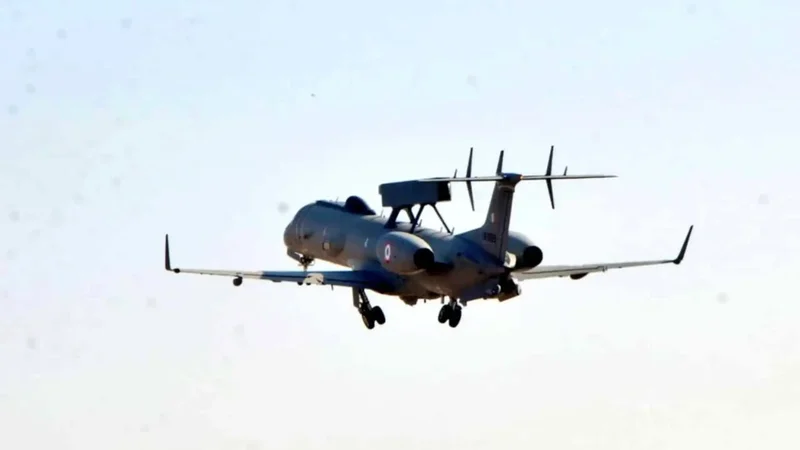
This development comes as the IAF has also achieved Final Operational Clearance for the Netra AEW&C system on Embraer ERJâ145 aircraft. Netra provides tactical airborne surveillance optimised for border monitoring, fighter control and tracking lowâflying cruise missiles.
The distinction between Netra and heavier AWACS platforms is central to Indiaâs strategy. Netra fills the tactical gap, offering affordable coverage along borders, while AWACSâcurrently three Phalcon systems mounted on Ilâ76sâserve as strategic assets with 360âdegree radar coverage and the ability to function as airborne command centres.
Defence planners have long warned that Indiaâs current fleet is too small for sustained coverage across multiple theatres, given the countryâs vast borders and expanding interests in the Indian Ocean.
The Mk II programme, based on Airbus platforms, is intended to bridge that gap. With greater endurance, higherâaltitude performance and enhanced radar coverage, these aircraft will complement Netra and AWACS to create a layered surveillance network.
Numbers matter in airborne warning: these platforms are force multipliers, improving the effectiveness of other combat systems by detecting threats earlier and coordinating responses in real time.
Indiaâs longâterm strategy is not to replace one platform with another but to build a tiered network: Netra for tactical missions, AWACS for theatreâwide command, and Mk II for extended endurance. Together, they will enable the IAF to operate as an integrated network and advance the countryâs goal of selfâreliance in airborne surveillance technologies.