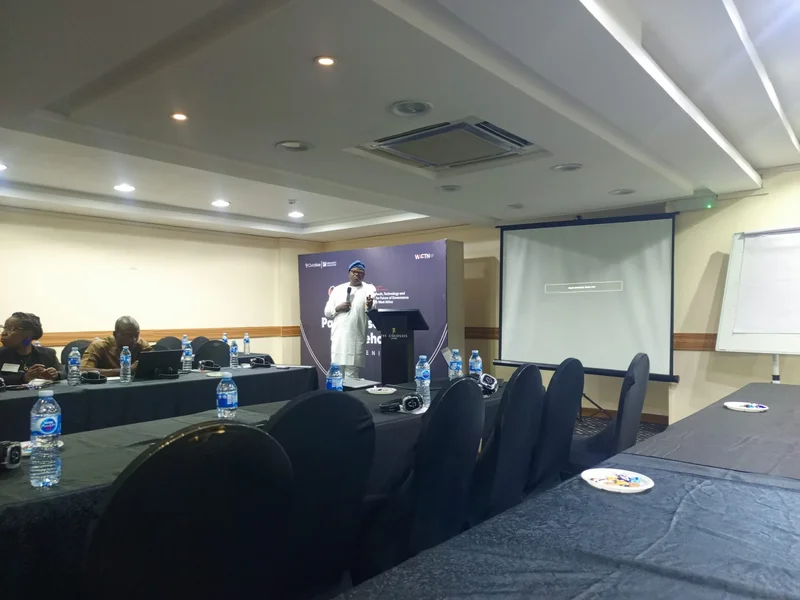
Non-governmental organisations must make compliance a central part of their operations to protect public trust and ensure that their work has a lasting impact, BudgIT Chief Executive Officer, Oluseun Onigbinde, has said.
Mr Onigbinde stated that compliance should not be treated as an administrative burden or an obstacle to social impact, but as a system for protecting organisations against financial abuse, regulatory violations and reputational damage.
“Compliance is not the enemy of impact. It is what makes impact durable,” he said.
He spoke on Thursday at the West African CivicTech Conference, Paper Presentation and Stakeholders’ Meeting organised by CivicHive in Lagos, which brought together civic organisations, technology innovators, policymakers and other stakeholders to discuss the role of young people and technology in strengthening governance and democracy in West Africa.
| | |
|---|
Mr Onigbinde’s lecture centred on the theme, “Setting the Tone: Youth, Technology, and the Future of Governance in West Africa.”
The conference came at a time when NGOs across Africa are facing growing regulatory pressure, shrinking civic space, funding challenges and rapid technological changes, all of which are putting pressure on their ability to sustain their work and remain accountable.
He urged civil society organisations to build compliance into their project planning, implementation, reporting and risk assessment processes.
Organisations, he noted, should regularly ask what laws governed their operations, how they could comply with those laws and who was responsible for ensuring compliance.
“What does the law say? How do we comply? What does compliance mean? Who would lead compliance? Those are important questions to ask,” he said.
Mr Onigbinde stressed that organisations needed to move beyond the passion that often drove people to establish social initiatives and build systems that would enable them to meet their legal and regulatory obligations.
“Sometimes we have passion, and it is passion that we started this initiative. But please, move from passion to business, notthe business of buying and selling, but move from passion to ensure that you can meet all regulatory goals,” he said.
He explained that organisations should have clear contracts and policies, properly onboard and train staff, define job responsibilities and establish procedures for reporting misconduct.
The BudgIT CEO also urged non-profit organisations to maintain and properly store their financial and operational records, warning that regulators could request documents covering several years during audits.
He advised organisations to check the laws governing their operations to determine how long they were required to retain documents and to maintain secure digital backups rather than relying solely on paper records.
“Do not keep them in paper copies only. Get them on cloud where you can, and make sure that all your documents are always easy to retrieve when it comes to audits,” he said.
He stated that tax authorities could request documents including contracts, bank statements, audit reports, management letters and minutes of board meetings.
Mr Onigbinde also advised organisations to document incidents that could affect their ability to meet regulatory deadlines.
If, for example, a government filing platform became unavailable when an organisation was required to submit a return, he said the organisation should document the failure and preserve evidence that it had attempted to comply.
“If you can’t remit it within that period, and it’s no fault of yours, it’s theirs. You must show evidence,” he stated.
He warned organisations against assuming that regulatory agencies operated in isolation, saying regulators were increasingly sharing information and linking their systems.
This, he noted, made it easier to identify organisations that had failed to meet their statutory obligations.
He urged organisations to ensure that their registrations, annual returns, tax filings and other regulatory obligations were up to date.
According to him, organisations in Ghana that fail to file their annual returns could be placed on a list of NGOs not in good standing, while organisations in Nigeria could be designated inactive.
“Don’t forget that that registry is also now linked to embassies,” he noted, warning that failure to maintain a good regulatory status could affect an organisation’s dealings with other institutions.
Mr Onigbinde said many non-profit organisations also had weak or inactive boards despite the legal responsibilities attached to board membership.
He stated that the individuals whose names appeared on an organisation’s registration documents could be held responsible for serious violations committed by the organisation.
“The people whose names are on your CAC registration certificate, that is your governing body,” he said.
“Those names … are the owners in trust. If anything happens in your organisation, they are the ones CAC, FIRS, financial reporting, all regulators will chase.”
He urged boards to meet regularly and make compliance a standing item on their agendas.
“If you meet four times a year, make sure that for every quarter there is compliance on the agenda that the board must discuss,” he stated.
He also advised organisations to assess the skills needed on their boards, including expertise in finance and compliance, while taking diversity and succession planning into consideration.
The BudgIT CEO warned against allowing founders or executive directors to make major decisions without effective oversight.
“Founder-centric decision-making without board oversight. That is one trap. Please avoid it,” he said.
He also urged organisations to separate financial duties so that one person did not control the entire process.
“Non-segregation of duties in finance, please. Again, separate the duties,” he stressed.
Mr Onigbinde noted that non-profit organisations must also document the sources of their funding and maintain evidence of how the money was used.
He urged them to maintain records of donors and funding sources, particularly where money came from jurisdictions considered high-risk.
He also advised organisations to strengthen their monitoring and evaluation systems to document not only how money was spent but also the results achieved.
“If someone has given you $50,000, I want to see the people elements. I’m not interested in the finances yet,” he stated.
“Build your monitoring and evaluation system in such a way that you can report who you met with that $50,000, what results you are seeing.”
He urged non-profits to comply with data protection laws and protect personal information collected from beneficiaries and other stakeholders.
Mr Onigbinde also warned organisations against using their resources to support political candidates.
He explained that individuals could belong to political parties or participate in political activities, but organisations should not use their resources to campaign for candidates.
“What is not within your right is to use the resources of a non-profit to support a candidate or to campaign,” he said.
He urged organisations involved in voter education and election-related activities to apply the same standards to all political parties and avoid endorsing candidates.
Mr Onigbinde stressed that civil society organisations could also use compliance to challenge excessive regulation.
He stated that if organisations collectively complied with reporting requirements, regulators could be forced to confront the limits of their capacity to monitor the sector.
“As advocates around civic space, we are now saying, let’s use compliance for pushback,” he revealed.
“If the law says submit your reports by June 30, ensure that we all submit. The regulator will then say that we don’t have capacity.”
Mr Onigbinde said Nigeria had 53 laws, policies and directives regulating non-profit organisations, adding that the number could rise to 54 if a bill requiring NGOs to register their international funding with a government agency becomes law.
He noted that legitimate regulation was necessary to prevent organisations from threatening national security, inciting violence or operating as political parties under the guise of NGOs.
However, he emphasised that regulation should not make it unnecessarily difficult for legitimate organisations to operate.
He warned that misconduct by one organisation could damage public confidence in the entire non-profit sector.
“If you are a non-profit, and there’s a story around here about not complying, about money being stolen, it affects your reputation,” he said.
“But not just your reputation, it affects the reputation of the entire sector.”
He urged organisations to establish crisis protocols, anticipate risks and prepare for leadership transitions and succession.
Compliance, he said, should be treated as the responsibility of everyone in an organisation, not only finance or administrative staff.
“Again, you cannot talk about compliance if leadership is not very serious about compliance,” he stated.
Other speakers
Welcoming participants, Acting Country Director of BudgIT Foundation and Head of CivicHive, Joseph Amenaghawon, stressed that the organisation was established to help young people, start-ups and civic organisations navigate the challenges of developing and sustaining their work.
He said the CivicTech Fellowship had provided participants with training and practical learning in civic technology, research and policy engagement.
Mr Amenaghawon noted that CivicHive received nearly 50 papers following a call for papers for the conference, with 22 eventually selected and published online.
Also speaking, Community and Partnerships Lead at The Luminary Project, Jasper Omagbemi, noted that many social impact organisations struggled to manage their documentation, funding records, volunteers and programmes.
She said the challenges had led to the development of Legit Good, a platform designed to help social impact organisations manage their operations.
Ms Omagbemi said the platform enables organisations to track donations and grant applications, manage volunteers, monitor programmes, access reports and create public profiles.
Participants from Nigeria, Senegal, Ghana and other West African countries attended the conference.