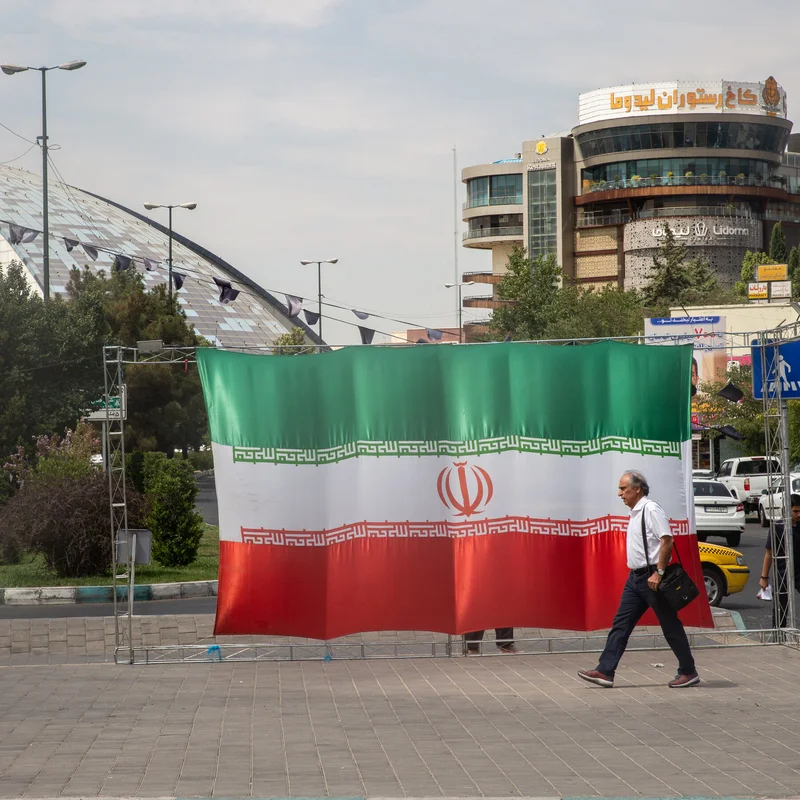
Tehran5:13 p.m. July 24
Latest
The United States and Iran traded more attacks across the Middle East after Tehran was said to have rejected a U.S. cease-fire proposal delivered by the leader of Iraq.
American forces targeted Iranian military assets and facilities, including drone storage sites, to reduce the threat to commercial shipping in the Strait of Hormuz, U.S. Central Command said. The attacks began at 2:15 a.m. local time and ended just over two hours later, according to the command, which oversees operations in the Middle East.
The Iranian military said it had launched drone attacks on Friday morning against U.S. military targets at bases in Bahrain, Jordan and Kuwait. There were no immediate reports of damage or casualties. The Islamic Revolutionary Guards Corps issued a warning for residents of countries that host American forces to keep at least 500 meters from military bases where those troops are located.
The resurgence in fighting has sent the price of oil above $100 for the first time since May. A threat by the Iranian-allied Houthi militants in Yemen to expand the fight to the Red Sea and target Saudi ships has injected further uncertainty into global energy markets.
The Houthis claimed on Wednesday to have struck two Saudi tankers, the first attacks since the group announced a blockade of Saudi ships this week. The Saudi authorities confirmed a strike on one tanker. This has stoked fears that, like the Strait of Hormuz, the Red Sea shipping route might also be blocked.
Mr. Trump said in a social media post on Thursday that from now on, he would make Iran pay for any damage to ships and cargo in the Strait of Hormuz using Iranian funds under U.S. control.
Iran’s foreign minister, Abbas Araghchi, later said — without mentioning Mr. Trump — that such a move would set an “incendiary precedent.”
Here’s what else we’re covering:
- Energy markets:The price of Brent crude, the global benchmark for oil, was up more than 7 percent at $100.95 a barrel on Friday. The price of crude is nearly 40 percent higher since the start of the war. Read more ›
- Tracking casualties:A group of Democratic senators urged Defense Secretary Pete Hegseth to provide “a full and accurate accounting” of all American troops killed or wounded in the war, saying the Pentagon has reported “inconsistent casualty figures.” Read more ›
Iran’s Revolutionary Guard Corps on Friday warned civilians in countries hosting U.S. military personnel to stay at least 500 meters from any building suspected of housing American forces. Iran’s bombing of U.S. bases across the Middle East has caused many American service members to move to hotels and office spaces, according to military personnel and American officials. The renewed warning suggested that the targets could widen again, as President Trump has threatened to strike Iranian civilian infrastructure in response to attacks on shipping.
The Iranian military said in a statement published by state media that it had launched drone attacks on Friday on U.S. military targets in Kuwait.
Iran on Thursday rejected a cease-fire proposal from President Trump that was carried to Tehran by the Iraqi prime minister, according to Iranian officials. The failed mediation effort came as Mr. Trump was threatening to escalate the war and target Iran’s critical infrastructure.
The officials, who asked not to be identified because they were discussing sensitive national security issues, said Prime Minister Ali al-Zaidi’s trip to Iran followed his recent visit with Mr. Trump at the White House.
After publication, the Iraqi government denied the account in a statement on social media, without elaborating. An Iraqi official, speaking on the condition of anonymity, said on Thursday that Mr. al-Zaidi was carrying a proposal to Tehran.
The details of the cease-fire proposal were not immediately clear. But Iranian officials said that it was the only offer on the table, and that their government was not interested in a temporary deal that left the question of control over the Strait of Hormuz unresolved.
Mr. al-Zaidi traveled to Tehran with a delegation of senior Iraqi officials and met with President Masoud Pezeshkian; Iran’s top negotiator, Brig. Gen. Mohammad Bagher Ghalibaf; and its foreign minister, Abbas Araghchi, according to local media reports.
Mr. Araghchi told state television that Iran and Iraq, which share a border, had mutual economic, political and security interests and close ties and that the visit was significant given the current circumstances in the region.
Mr. Araghchi said that Mr. al-Zaidi had shared his “views and impressions” from his trip to Washington, but that Tehran and Washington already had enough mediators. “The problem is not passing messages,” he said. “The problem is America’s outlook, which is illogical, greedy and controlling.”
Iran and the United States have steadily escalated tensions over the past few weeks, with American forces bombing military bases, as well as infrastructure like railroads, airports, bridges and seaports. Iran has launched strikes with ballistic missiles and drones on American military targets in the Middle East.
Two Iranian officials said that the country’s armed forces were anticipating — and preparing for — the possibility of the war expanding if Mr. Trump carries through with his threats to strike the capital of Tehran and critical infrastructure. If he does, the officials said, Iran will expand the fight regionally, including by striking Tel Aviv and asking its Houthi allies to close Bab al-Mandab, a strategic waterway in the Red Sea.
On Thursday in Tehran’s Azadi Square, where supporters of the government stage nightly pro-war rallies, a military vehicle paraded Iranian-made ballistic missiles pointing at the sky.
Corrected on
An earlier version of this article misattributed the account of Iran’s rejection of the proposal. It came only from Iranian officials, not also from Iraqi officials.
Democrats on the Senate Armed Services Committee urged Defense Secretary Pete Hegseth on Thursday to provide “a full and accurate accounting” of all U.S. troops killed or wounded in the Iran war.
“The information currently available to the public suggests that the department has not consistently provided timely and comprehensive public casualty reporting throughout the conflict,” Senator Mazie Hirono of Hawaii said in a letter also signed by the panel’s 11 other Democrats.
The senators said the Pentagon’s system for tracking casualties, which the Defense Department has said is updated regularly, has reported “inconsistent casualty figures, raising additional questions about the transparency and reliability of the department’s public reporting and statements.”
The Pentagon said earlier this week that roughly 100 American troops had been injured by Iranian attacks since early July. The Defense Department did not disclose the latest casualties in Jordan and elsewhere in the Middle East until The New York Times reported on injuries from four attacks last week, the last of which, on Friday, killed three soldiers and wounded several others.
At least 18 U.S. service members have died in the war since it started on Feb. 28, and about 570 have been wounded so far.
After months of relatively minimal involvement in the U.S.-Iran war, the Iranian-backed Houthi militant group in Yemen is making a delayed but potentially consequential entrance.
The Houthis claimed to have launched missile and drone strikes on two Saudi oil tankers in the Red Sea on Wednesday, just days after the group declared a naval blockade on shipping linked to Saudi Arabia.
The group has long portrayed itself as a frontline member of Iran’s so-called axis of resistance and has publicly tied itself to Iran’s fortunes. But while the Houthis are close to Iran, analysts describe their partnership as one shaped by both coordination and constraint.
Here’s what to know about the Houthis and their relationship with Iran.
Who are the Houthis?
The Houthis are Shiite militants who have been fighting Yemen’s internationally recognized government for about two decades. They overran the Yemeni capital, Sanaa, in 2014, forcing the government to flee to the southern city of Aden.
The following year, a Saudi-led coalition launched a bombing campaign to oust the militants but failed, leaving the Houthis in power in northern Yemen. Hundreds of thousands of people died from the violence, famine and disease that ensued in one of the world’s worst humanitarian crises.
The Houthis oppose Israel and the United States. The group is part of the so-called axis of resistance led by Iran, along with Hamas in Gaza, Hezbollah in Lebanon and armed groups in Syria and Iraq.
Fighting between the Houthis and the Saudi-backed Yemeni government subsided in recent years, and the United Nations helped broker a cease-fire in 2022.
Since then, the group has continued to launch attacks on its adversaries in the region. In the wake of the Hamas-led Oct. 7, 2023, attack on Israel that killed over 1,200 people and Israel’s subsequent bombardment of the Gaza Strip that has killed more than 73,000 people, the Houthis disrupted international shipping by firing on passing vessels in the Red Sea.
Crucial to the Houthis’ power is the Bab el-Mandeb Strait, a narrow waterway on Yemen’s southwest tip. The strait connects the Red Sea to the Gulf of Aden and is one of the world’s most important shipping routes.
Have the Houthis been involved in the war?
Until recently, the Houthis’ involvement in the broader Iran war had been halting and cautious. Experts said the group had been weakened by last year’s weekslong bombardment by the United States and Israel in Yemen — and forced into a careful calculation about how much of its dwindling arsenal it could afford to spend.
The new front in the war started to crack open earlier this month, when Houthi authorities accused Saudi Arabia of attacking Yemen’s main international airport in Sanaa in a dispute over an Iranian plane that tried to land there.
Analysts say Iran may have also urged the Houthis to disrupt shipping in the Red Sea. With the Strait of Hormuz effectively closed for months, the Red Sea has become a vital alternative export route for the transportation of Saudi oil and gas.
What is the Houthi relationship with Iran?
The Houthis are neither a direct conduit for Iranian interests in Yemen, nor a fully independent entity free of the Islamic Republic’s influence.
Analysts have said Iranian support helped the Houthis evolve from a group of poorly organized rebels to a powerful armed presence in the region, with an arsenal of cruise and ballistic missiles and long-range drones.
But the group has had to weigh its loyalty to Tehran alongside domestic calculations. It may have delayed engaging in full-scale confrontations in the current regional conflict because it could risk inviting renewed strikes on Houthi leadership and infrastructure — or even emboldening rival Yemeni factions.