‘We’re so looking forward to spending our big day with you all,’ the email reads. ‘If any of you wanted to make a holiday of it and rent one of the villas we’ve booked, they start at just £1,000 per person.’
Oh great, what a bargain – not – I remember thinking. It was 2011 and I was in my early 30s.
In the previous year or so I’d already been on two glamorous overseas weddings – one in the south of France and one in Tuscany (plus a hen do in Barcelona) – with different groups of friends who had vastly different incomes to me. How, I wondered, was I going to afford this next one?
I was a deputy editor at the time and I think I was earning a little more than £30,000. I don’t remember exactly how much the two weddings and hen do cost, but when the lovely couple in Ibiza suggested we might like to make a week of it and share one of the villas they had reserved, I should have known it was going to end up costing a small fortune.
On top of the flights, the wedding and hen do presents and the new dress, I must have forked out several thousand pounds. Then there were the long, languorous dinners in bustling market squares with copious amounts of wine and multiple courses.
There were the taxis, the cocktails and sharing the costs of humongous joints of beef and pieces of salmon for our group dinners.
I didn’t want to be the friend who got out the calculator or insisted we stopped by Lidl, so I bit my tongue. And, although I had some wonderful moments, it really showed the discrepancy between me and the friends, many of whom were working in banking and law.
Fast forward to today and the seemingly never-ending cost-of-living crisis, and things aren’t much better. In fact, research from Airbnb and The Family Holiday Charity reveals there’s a significant ‘holiday gap’ with more than a quarter (27 per cent) of UK families saying they can’t afford to go on holiday this year.
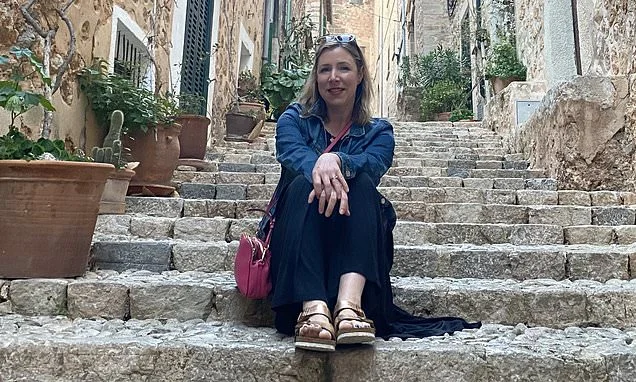
In the previous year or so I’d already been on two glamorous overseas weddings with different groups of friends who had vastly different incomes to me, writes Georgina Fuller
Nearly one fifth (19 per cent) have also cancelled a holiday abroad in the past six months due to financial concerns.
Another study, by cashback provider Rakuten, found women spend an average of £2,414 a year keeping up close friendships, with young adults (aged 25 to 34) spending most on travelling to see friends. Birthday celebrations – with an average annual estimated spend of £555 – birthday gifts (£463), and meals and drinks (£465) were also found to be the biggest outgoings when keeping up friendships.
When I put a call-out for friends and colleagues with similar ‘wealth gap’ holiday stories, it clearly resonated.
Laura was invited to celebrate her friend’s 50th birthday in Dubai, which is really not her sort of place. She usually goes on holiday at her mother’s caravan in Wales.
Although her friends were happy to pay for her to enjoy the cocktails, clothes shopping, daily blow dries in the hotel salon and even a luxury boat they had booked, when she, feeling like a poor relation, offered to get breakfast one morning, she was shocked to find it came to more than £180 for three of them.
‘It was hell of an experience and I love my friend very much. But this level of lavishness beloved by influencers isn’t for me. I didn’t and could never resent my friend but looking back I’m uneasy about the culture of opulence,’ Laura says.
Meanwhile Anna is a marketing executive who has a child at prep school which is, she admits, ‘a real stretch at times’ but something her husband, a lawyer, says they can manage.
She was thrilled when they were invited to join another family from her daughter’s school on a ski holiday at their chalet. She dutifully stocked up on salopettes and goggles from Vinted and Sports Direct and asked the friend if they could chip in with household costs for the week or pick up some wine en route.
Her jaw dropped when they drove up to the split-level chalet in Morzine to find a private chef and nanny in situ. They even had their own suite complete with balcony and sauna.
‘I thought back to the joke I’d made about booking a flight on “Sleazyjet” and getting stung by all the extras and I cringed,’ she says. ‘I knew they were quite well off but I had no idea they were that wealthy. They were so kind and welcoming but we spent most of the week feeling uncomfortable and awkward.’
Then there’s Jane, who was invited to a hen do in Marrakesh and blew more than £1,000 on a private riad with its own private chef and rooftop pool.
‘I left it to the last minute to book flights and ended up spending over £250 on those plus airport parking. The cocktails at a really expensive shisha bar came to about £200,’ she says.
But there was worse to follow. ‘One of the girls had booked us all in for a camel ride followed by a quad bike desert tour. As a vegetarian, I hated seeing the poor camels tied up like that and made to walk around the boiling hot desert. I didn’t want to say anything because I didn’t want to spoil things for my friend but it wasn’t something I’d have chosen to do. And when we went on the quad bikes, the sand kept going in my eyes,’ she says.
When I put a call-out for friends and colleagues with similar ‘wealth gap’ holiday stories, it clearly resonated, says Georgina (picture posed by models)
Jane works part time in the charity sector and earns much less than her wealthy friends who didn’t think of anything of forking out a grand for a weekend. ‘Whereas it’s a month’s rent for me,’ she says.
Yet another friend Harriet had to turn down being a bridesmaid for a more affluent friend who was getting married in Tuscany on a Friday because, as a part-time teaching assistant with two young children, she could not take the time off work nor afford to spend a week in a private villa with the other bridesmaids.
The bride, an accountant at a top London firm, thankfully forgave her. ‘We went for dinner when they got back and she was on such a high from the wedding she didn’t seem to mind I’d missed it,’ she says.
When I think back to the best holiday I’ve ever had with friends it was probably a trip to Ibiza several decades ago.
It was 1996 and I’d just turned 18. I don’t think any of us had credit cards (or mobile phones) which could have been a cause for concern but, aside from the fact we were overjoyed at finishing our A-levels, we were united in the fact that we were all, quite simply, broke.
All five of us had Saturday jobs, but that fortnight we lived off Pot Noodles and the free drinks they provided to get young women in to bars in San Antonio. We shared a grotty two-room apartment in a rundown hotel – and it was probably my favourite ever holiday.
As Shakespeare said: ‘My friends were poor but honest.’ And perhaps, when it comes to holidays at least, that’s the best combination.
Names and identifying details have been changed