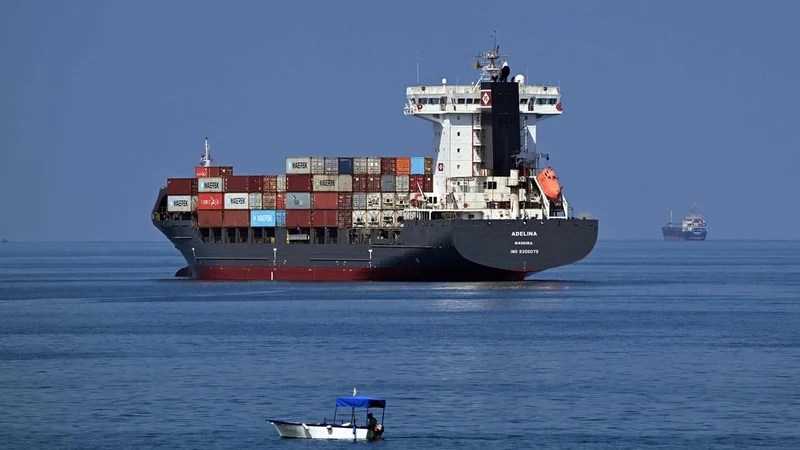
At sea, nationality is usually clear. Responsibility seldom is. An Indian seafarer may be recruited in Mumbai, hired by a company based in Singapore, placed on a ship flying the flag of Panama, carrying Kuwaiti oil, attacked off the coast of Oman, and detained in a fifth country. His family may know that he is in danger without knowing which government, shipowner, or insurer is responsible for bringing him home. No single authority is fully in charge. For thousands of Indian seafarers, this uncertainty is not an exception but a routine part of ordinary working life.
Of the 14 Indians killed in attacks connected to the conflict in West Asia since February 28, at least eight were seafarers aboard commercial ships. Other Indian seafarers have been injured or stranded because their vessel, its owner or its cargo made them targets in a war they did not choose.
Forgotten maritime workforce
India tends to regard seafarers as a shipping matter until trouble arises. Then, they become a consular case. Government figures put the workforce at about 3.2 lakh as of June 2025, nearly three times its size in 2014. The 2026 Seafarer Workforce Report ranks it second behind the Philippines, narrowly ahead of China, with just over 12% of global supply.
They work abroad without ever settling abroad. Their workplace moves. That mobility sits awkwardly with a consular system organised by territory. During a single voyage, a seafarer can cross several jurisdictions. No authority follows him all the way. An Indian mission may not even know that one of its nationals is nearby until his ship is seized, abandoned or hit.
India cannot wait for an emergency to find out where its seafarers are. Data compiled by the International Transport Workers’ Federation show that 1,125 Indian seafarers were abandoned in 2025, more than from any other country. In such cases, the file ricochets among a flag State, port authority, owner, insurer and Indian mission. After the recent strikes in West Asia, the government announced its Seafarer First response.
Officials must now account for every Indian seafarer in West Asia, whatever flag the vessel flies. A dashboard will track ships, threats and crew welfare; each affected family will have a liaison officer.
West Asia is not the only danger zone. In the Black Sea and Red Sea, crews now face missiles, drones and mines. Piracy and hostage-taking persist around the Gulf of Aden and off West Africa. On July 15, the government told shipowners, managers and recruitment agencies to avoid deploying Indian seafarers on vessels passing through the Strait of Hormuz until further orders. The dashboard and liaison system should remain available whenever a region is identified as high-risk.
There is a lifeline, there are gaps
Technology adds a peculiar cruelty here. A family in Kochi can watch a ship crawl, dot by dot, across a tracking app and still have no idea whether the person aboard is injured, detained or being sent into danger. A moving dot is a poor substitute for a phone call.
The dashboard can locate a ship. It cannot compel an owner or flag State to act, or secure access to a detained seafarer. Continuous tracking is unrealistic. When the system is activated, recruitment agencies should supply current crew and route data from owners and managers. India needs a standing maritime consular protocol that specifies who takes charge from the moment a distress signal is received.
In major shipping centres, Indian missions need a designated officer who knows the port authority, hospitals, insurers and local lawyers. Such relationships cannot be improvised after a ship is hit. Some flag States are quick to register a ship and slow to enforce the Maritime Labour Convention when wages stop, a crew is abandoned or repatriation is due. India must press them to honour those obligations.
India’s bilateral maritime agreements usually recognise Indian certificates and expand access to jobs. However, they say little about legal assistance, consular access, or repatriation. Shipowners choose the flag under which vessels operate, but they still need crews. The Philippines and Indonesia face similar challenges. Together, the three countries could push for common standards on repatriation, detention, and deployment in conflict zones through the International Maritime Organization and the International Labour Organization. Otherwise, an owner constrained by one country’s rules can simply hire elsewhere.
A cook in the ship galley does not become a combatant because the cargo is disputed or the owner has acquired enemies. India should oppose attacks on commercial shipping, whoever carries them out. Open sea lanes mean little if civilian crews cannot sail through them safely.
The right to know
Before signing a contract, a seafarer has a right to know who really owns the vessel, where it will sail, whether it is under sanctions, whether its insurance is valid and whether its owners have abandoned a crew before. Routes can change after departure. A seafarer ordered into a designated high-risk region should be able to refuse and return home without penalty.
On May 14, the Directorate General of Shipping prohibited licensed recruitment agencies from placing Indian seafarers on 366 vessels linked to abandonment unless specified compliance requirements were met. A seafarer should not have to hunt for the list. Recruitment agencies must show it to him before he signs and face penalties if they ignore it.
India’s maritime ambitions are usually measured in ports, corridors, naval deployments and tonnage. In a seafarer’s home, the questions are more immediate. Where is he? Who employs him? Who is responsible if he does not return? The flag above the vessel may be foreign. India’s responsibility to its nationals is not.
Indian seafarers need protection beyond borders, flags, and jurisdictions
Syed Akbaruddin is a former Permanent Representative of India to the United Nations and, currently, Dean, Kautilya School of Public Policy, Hyderabad
Published - July 25, 2026 12:08 am IST