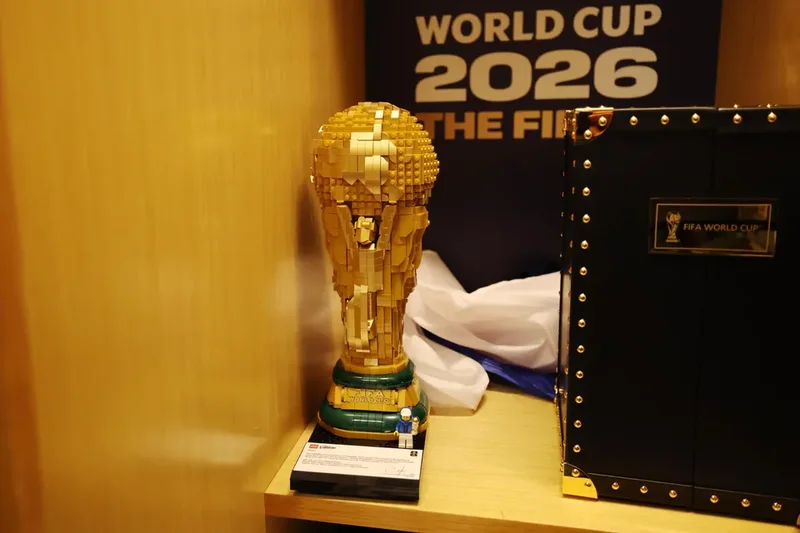
Just days after Spain’s win at the World Cup, LEGO released its exclusive Champion’s Edition of the FIFA World Cup trophy, available only for pre-orders in Spain. The limited-edition release kept regional fans engaged and gave them another opportunity to collect memorabilia celebrating their country's victory, even months after the win—but it also demonstrated how LEGO continued to build cultural momentum throughout the tournament.
Meanwhile, Adidas expects to generate $1.7 billion from event-related sales, according to the New York Times. As an official sponsor of the World Cup, the brand was everywhere. It spent millions in advertising and product launches, with its “Backyard Legends” campaign, team outfits, and merchandising. Based on data from Meltwater, a media and social intelligence provider, Adidas was the strongest sponsor in terms of social visibility, with the highest full-tournament share of voice and second in terms of engagement.
Adidas And LEGO Turned Visibility Into Relevance
Both brands, in their distinctive ways, managed to own significant visibility, relevance and momentum. Adidas, which was up against Nike in its home nation, managed to naturally associate itself with soccer culture and victory thanks to its partnership with both Spain and Argentina during the finale. The brand was visible everywhere that mattered, from from team kits and player boots to collaborations and tournament awards. to collaborations and tournament awards. Even outside the stadium, it managed to drive conversations and be at the center of emotional connection and culture.
Its full-cycle campaign, from the “Backyard Legends” campaign pre-tournament to its final blockbuster “La Final” campaign, demonstrated that the brand is rooted in soccer culture and present for all the moments that define the sport, from preparation to performance and celebration. Inspired by blockbuster posters, it created visuals that borrow from cinematic references and aimed to capture the tension and anticipation of the final. The result was one of the strongest social performances of any tournament sponsor, driven not just by visibility but by relevance. With its final campaign, which featured sports icons, Adidas reinforced its role in overall sports culture and naturally associated itself with success in the minds of viewers. Meltwater’s review showed that Adidas was the most consistently visible sponsor throughout the tournament, driving significant engagement across platforms.
LEGO approached the tournament from a different angle. The company launched its official World Cup Trophy set before the tournament, but rather than treating it as a promotional product launch, it built an entire ecosystem around it. Across its retail stores, LEGO built soccer-themed merchandising and interactive displays to immerse shoppers into the world of soccer. In New York City, a LEGO FIFA World Cup trophy was on display at Rockefeller Plaza for visitors to interact with all throughout the tournament and encourage families to experience the event through play. Built with more than 1.36 million LEGO bricks, the installation was one of the largest LEGO builds ever created, according to the company, and brought all kids (and kids at heart) together, reminding them of the uniting power of play and LEGO.
As explained in Meltwater’s research, its overall marketing centered on the trophy set was very well equipped for long-term awareness. “LEGO’s Official Trophy set campaign worked because the product itself was built for social distribution: it was visual, collectible, officially licensed and easy for athletes and creators to amplify. That made it different from a standard awareness campaign. It gave people something to show, build, remix and repost before there were live matches to react to.”
Beyond physical activations, the brand therefore excelled at keeping fans entertained thanks to a cultural object that allowed fans to keep the conversation going on social media. Data showed that the Official Trophy set campaign generated an engagement-per-mention rate about 12 times higher than the sponsor average and 4.4 times higher than the wider brand-collaboration average during its launch. Its “Hall of Fame Builder” campaign on TikTok drove significant creator content, demonstrating the brand’s ability to remain relevant and keep fans engaged.
The different approaches taken by Adidas and LEGO ultimately point to the same conclusion: paying for visibility alone is no longer enough. John Box, CEO of Meltwater, captured it clearly: “The takeaway for CMOs and CCOs is that visibility is not the same as relevance. If you’re only tracking mentions, or only reviewing performance after a campaign wraps, you’re measuring the wrong thing, and finding out too late to do anything about it.” He added that “the brands that won this tournament were the ones watching engagement while the moment was still live, and moving fast enough to be part of it before it passed.”
Whether through products, creator content, retail experiences or timely activations, both Adidas and LEGO found ways to sustain conversation throughout the tournament rather than relying on a single burst of attention. More importantly, every activation reinforced what each brand already stands for: Adidas deepened its association with football culture, while LEGO celebrated the unifying power of play.