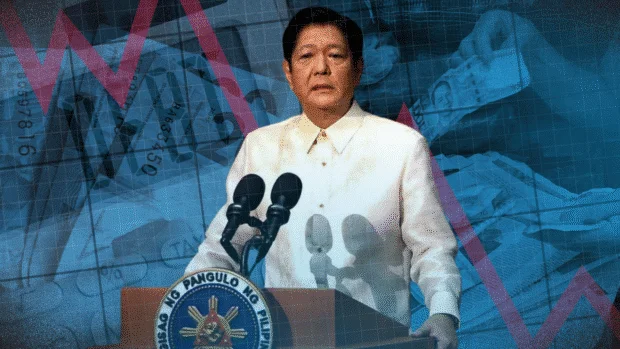
Marcos teases new chapter in corruption fight
“Abangan ang susunod na kabanata” (Wait till the next episode)—as the popular saying goes.
This was President Marcos’ cryptic response on Friday when asked if he would again tackle corruption issues in his penultimate State of the Nation Address (Sona) on Monday, as he did in his Sona last year.
Article continues after this advertisement
In his 2025 presidential address, Mr. Marcos delivered a fiery rebuke against widespread corruption in flood control projects.
But critics have belittled his catchphrase in that speech “Mahiya naman kayo (Have some shame)!” since no one among his close allies have been charged in connection with the flood works scandal.
The President, however, hinted at renewed campaign against corruption when he spoke to reporters on Friday.
A survey by Pulse Asia conducted June 28 to July 3 and July 6 showed that 29.8 percent of Filipinos want Mr. Marcos to discuss the government’s fight against corruption in his upcoming speech.
Vice President Sara Duterte’s impeachment trial (1.2 percent) and the recent leadership crisis in the Senate (1 percent) were among the least concerns, according to the Stratbase Group-commissioned survey among 2,400 respondents.
Article continues after this advertisement
What biz groups want
Meanwhile, business groups representing the country’s leading manufacturers and exporters said they want Mr. Marcos to lay out concrete plans to reduce the cost of doing business.
In a statement by her group, Federation of Philippine Industries (FPI) chairperson Elizabeth Lee said “Cutting power costs is a key factor to putting Philippine manufacturing on equal footing across” the region.
Article continues after this advertisement
FPI said lower power costs remain critical to energy-intensive industries, such as steel, cement, chemicals and food processing. It said reforms in the energy sector—including renewable energy expansion, grid modernization and policy reviews—should be accelerated.
The group also called for measures to reduce logistics costs, which it said are driven not only by fuel prices but also by port congestion, redundant local government pass-through fees and other operational bottlenecks.
“Streamlining operational friction points will directly lower input costs, improve supply chain reliability and make local goods more competitive,” Lee said. —WITH REPORTS FROM JASON SIGALES AND GILLIAN VILLANUEVA