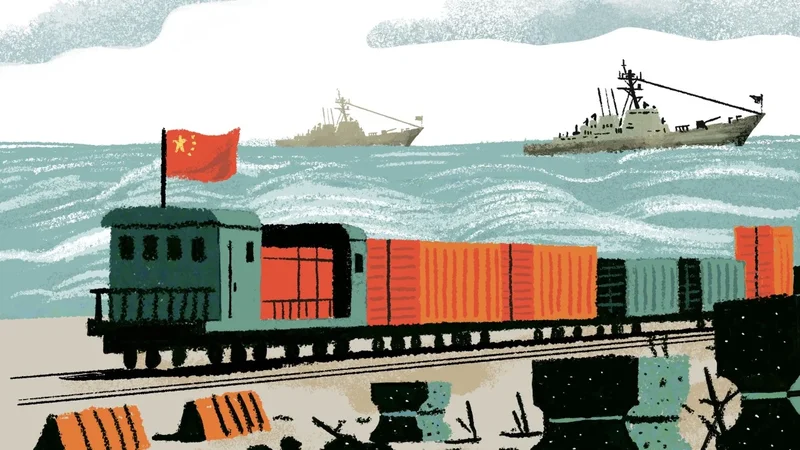
China tests Central Asian land corridors to bypass maritime chokepoints
New Afghanistan link via Uzbekistan highlights diversification push, but critics ask if Taliban can ensure security for stable logistics
A new link to Afghanistan via Uzbekistan offers a practical example of this long-term diversification push. However, observers caution that security concerns and capacity constraints could make a meaningful shift away from sea freight difficult.
Officially launched in May with pilot shipments, the multi-modal freight corridor allows containers to be moved by rail from China through Kazakhstan into Uzbekistan, and then by road via Turkmenistan to Herat in western Afghanistan.
According to media reports in Afghanistan and Uzbekistan, the 7,400km (4,600-mile) route cuts delivery times by up to two-thirds – taking 30 days instead of two to three months via traditional sea-and-land routes through Iran or Pakistan.
Goods bound for western Afghanistan earlier typically travelled by sea to Iran’s Bandar Abbas port or via Pakistan before overland trucking. Such journeys often took an average of 31 to 55 days.
Afghan officials have hailed the corridor as a more efficient, lower-cost pathway, citing reduced costs and improved cargo safety despite domestic instability.
They told TOLOnews, an independent Afghan news broadcaster, in May that the corridors were operating regularly and could transform the landlocked, mountainous country into a key regional transit hub connecting Central Asia with South Asia and Iran.