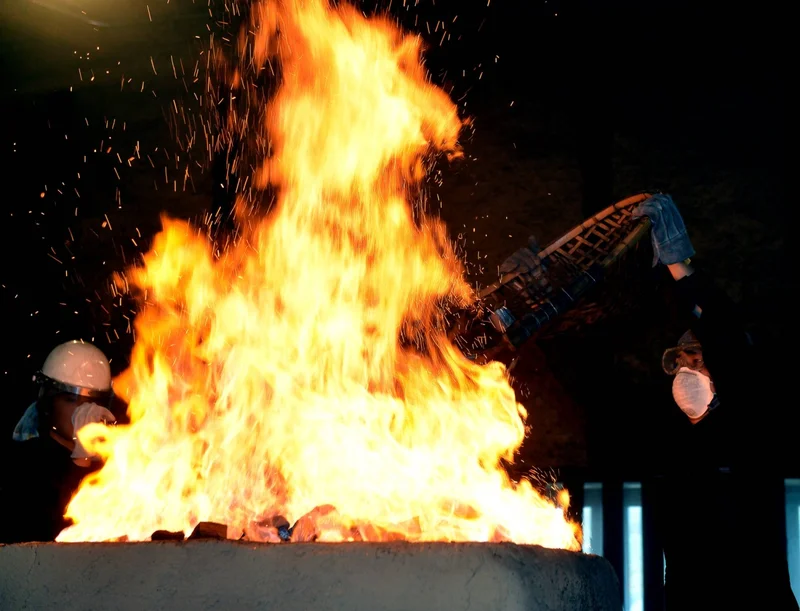
Unnan, Shimane Pref. – Inside a wooden outbuilding in the remote hills of Yoshida, part of Unnan, Shimane Prefecture, the air is thick with heat and a tangible sense of anticipation. Men and women who have labored shoulder to shoulder for the past 24 hours, adding iron sand and charcoal and blowing air into a clay furnace, watch as the walls are carefully broken apart and out emerges a 1-meter-long, 120-kilogram glowing black mass.
This is kera, the bloom of crude iron created by the ancient tatara smelting process. Hidden inside is tamahagane — the steel prized for centuries by katana swordsmiths and other craftspeople.
In the traditional tatara method, producing this kera takes subjective judgments based on the color of the furnace’s flames or the sound of the air rushing through it. For most of the 24 hours, nobody knows if the result is successful until the furnace is opened up. And even after the tatara is deconstructed, the kera must cool naturally and then be broken up and sorted into different grades, including the precious tamahagane.