NParks plans study on fish along reclaimed shores, including where Long Island works will take place
AI generated
SINGAPORE - The National Parks Board (NParks) is planning to study marine fish communities along the Republic’s reclaimed shores to better design and manage such habitats.
Fish scientists and enthusiasts told The Straits Times that the NParks’ study will help fill some gaps when it comes to the little-studied marine fish off East Coast Park. This comes as preparatory works for the Long Island’s reclamation project is slated to start end-2026.
“This could potentially help with future planning for the development and management of other fish aggregating devices like Bedok Jetty during the latter stages of the Long Island project,” said fish biologist Jeffrey Kwik.
Karenne Tun, group director for the National Biodiversity Centre at NParks, told ST that the study covering fish communities living along reclaimed shorelines, including East Coast Park, will help ensure future nearshore habitats better support ecological functions and coastal uses valued by the community.
NParks is in talks with marine fish researchers from the Singapore Institute of Technology (SIT) and the National University of Singapore (NUS) for the proposed study, which was conceptualised in 2025. Expected to span about three years, the research will examine the community structure of fishes, the distribution of adult and larval fishes, as well as the composition and impact of non-native species. It did not reveal the official start date of the study.
Kwik, an Associate Professor at SIT involved in the study, said such information has historically aided the protection and management of coastal marine habitats, such as mangroves and seagrass beds, in places like Australia and the United Kingdom.
“Information from changes in the size distribution of fishes over time has led to the enforcement of size and bag limits to enable sustainable recreational and commercial fishing and natural stock management in many countries,” he said.
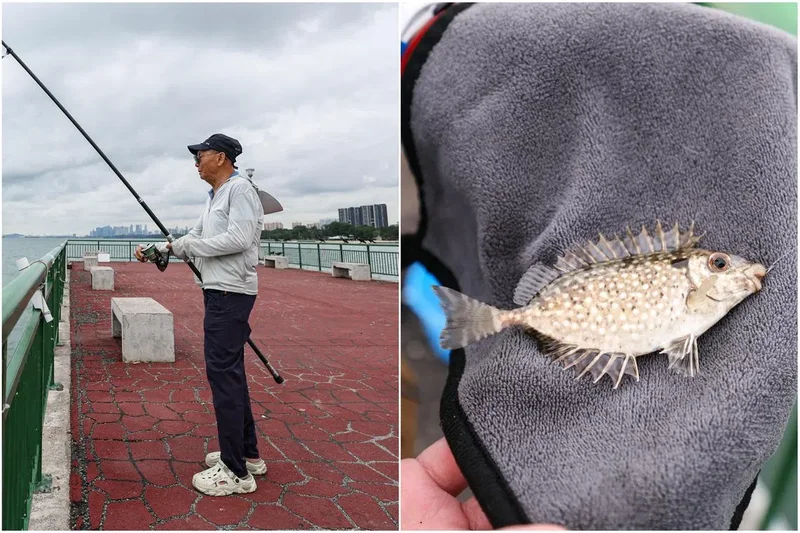
Some local anglers are concerned that the Long Island environmental study, which was made public in June, might overlook the diversity of marine life at Bedok Jetty. Preparatory works, which involve sand infilling, are expected to start nearby.
Addressing these concerns, the Housing Board (HDB), which oversees the reclamation, said the environmental study for Long Island’s preparatory works had recognised that environmental pressures could affect fish communities in sensitive habitats like coral reefs.
“Given the general mobility of fish communities and the continued availability of habitats outside of the active work areas, the impact on fish is assessed to be temporary and localised, compliant with the Environmental Quality Objectives set for the works,” said HDB.
The agency added that the report had assessed the impact on recreational fishing at Bedok Jetty, pointing out that the jetty is “primarily a recreational infrastructure rather than a natural ecological habitat”.
While recreational fishing can continue there during the works, the HDB noted that catch rates might drop.
A spokesman for the newly-formed fish enthusiast group Ichtythological Society of Singapore argued that the environmental study should reflect significant and rare species of fish that anglers had caught at the jetty and documented for the Lee Kong Chian Natural History Museum.
Kwik said that given the lack of information on fish communities there, it may have been difficult to predict the potential impacts across different species recorded either from research or citizen science. Factoring in national interests and time constraints, conducting an extended baseline study prior to the preparatory phase might not have been feasible, he noted.
The museum’s senior collection manager of fishes Tan Heok Hui agreed that the NParks study will be too late to comprehensively document the existing biodiversity at Bedok Jetty.
He pointed out that because the entire East Coast is already on reclaimed land, it is technically considered of lower ecological importance as compared to pristine marine habitats.
Tan, who has previously researched fish populations for other coastline developments here, said no proper baseline surveys currently exist for the East Coast.
A study that accurately reflects marine biodiversity in an area needs to span at least 1.5 years and utilise a diversity of survey methods before the environment is altered, Tan explained. He called for the NParks’ study to employ a range of methods, noting that existing impact assessments often overlook less mobile, bottom-dwelling, or burrowing organisms.