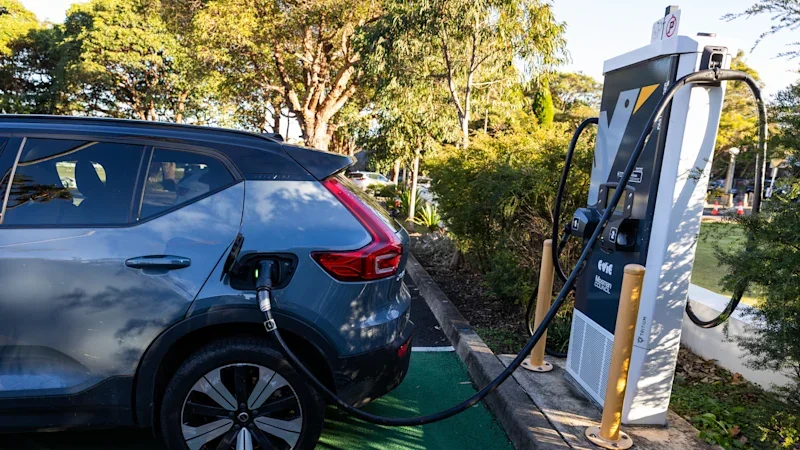
Soaring electric vehicle uptake is materially reducing Australia’s petrol demand, as experts forecast the ongoing global oil crisis could put enough clean cars on the road to leave the country less exposed to future fuel shortages.
Fuel prices hit record highs in March due to Iran shutting off oil exports via the key shipping channel in the Strait of Hormuz, in response to the United States’ missile attack.
EV sales soared in response. There are now about half a million battery-only electric vehicles on the road, which, based on average driving patterns and fuel consumption, are estimated to avoid around 600 million litres of petrol use each year.
While only 2 per cent of cars on the road are battery EVs, the fuel they displace is equivalent to about 4 per cent of the 16 billion litres of unleaded petrol consumed by motorists each year.
Experts said the volume of fuel savings were set to continue to grow rapidly as EV adoption accelerated.
Swinburne University professor of transport technology Hussein Dia said several factors had combined to lock in ongoing growth in EV sales.
“We have the falling battery prices, falling vehicle prices, greater range of vehicles – especially from China and, I think, growing consumer confidence in EVs,” Dia said.
“While the geopolitical instability and tensions are not creating the transition [to EVs], they’re certainly reinforcing it.”
Battery-only vehicles exceeded 20 per cent of all new car sales in May, and when also counting the various types of hybrid vehicles, with both a combustion engine and electric motor, EV sales reached nearly 50 per cent of the new car market.
In June more than 30,000 battery-only EVs were sold, representing one in every four new vehicles purchased.
Rising fuel prices threaten to contribute to further sales growth.
The escalating conflict in the Middle East is driving up Brent crude oil futures, which exceeded $US100 a barrel on Friday, up from around $US72 at the start of the month.
Back home, unleaded petrol started the week at around $1.70 in Sydney and Melbourne but had climbed to nearly $1.80 on Thursday.
National Roads and Motorists Association spokesman Peter Khoury said the rise in oil prices mean unleaded petrol could hit $2 a litre, especially when the current 16¢ a litre cut in excise ends early next month.
However, Cox Automotive analyst Mike Costello thinks hot EV sales may “cool just a little bit” by the end of the year, compared to the record figures since the war began on February 28.
“The burst of orders that happened around March and April for electric cars have softened somewhat. The big challenge for the second half of the year is, now that a lot of people who were on the precipice of buying an EV have made that decision, how does the industry convert the next tranche of people who are a little bit further away from making that decision?” Cox said.
“But the big variable in this is what happens with the fuel situation.
“Fuel prices were relatively under control for the last few months, but if we start to reports of fuel shortages or price spikes, you may well see a second wind.”
A symbol of the electric shift is Chinese EV maker BYD, which in June sold 18,881 vehicles, just 243 sales short of overtaking the nation’s leading car brand, Toyota, which sells no battery-only vehicles.
EVs exceeded the milestone of 100,000 new vehicle sales for the first time in 2025 and Electric Vehicle Council chief executive Julie Delvecchio said this figure had already been reached in the first six months this year.
“Australians bought 100,000 battery electric vehicles in the first six months of this year alone. Those cars are already reducing our country’s fuel demand by 10 million litres every month,” Delvecchio said.
“Every electric vehicle sold in Australia chips away at our dependence on imported fuel and helps keep more of those dollars circulating in the Australian economy.”
The comparison of avoided fuel use in this article is based on unleaded petrol consumption. Diesel fuel, which is used for many of most popular big cars like utes and 4WDs, as well as heavy industry is not included.
Australia imports 90 per cent all of its liquid fuels and diesel and petrol are sourced independently of overseas refineries.
The figures also exclude savings from hybrid vehicles, which are also delivering significant fuel savings.
A traditional internal combustion engine vehicle typically uses between seven litres to 10 litres per 100 kilometres. A plug-in hybrid vehicle, if it is recharged daily, uses between zero and three litres per 100 kilometres.