Price is a few ticks from your stop. Your finger hovers. And then you do the thing you swore you’d never do again — you drag the stop lower, just to give it “room to breathe.”
You didn’t just move a line on a chart. You made a decision. A worse one than the decision you made an hour ago, when you set that stop with a clear head.
Here’s the part nobody tells you. The stop you set before the trade is the smartest version of you that will exist for the entire life of that position. You had no money on the line yet. No adrenaline. No sunk cost whispering in your ear. That version of you looked at the setup and said: if it gets here, I’m wrong. Then the trade opened, and every second after that made you dumber.
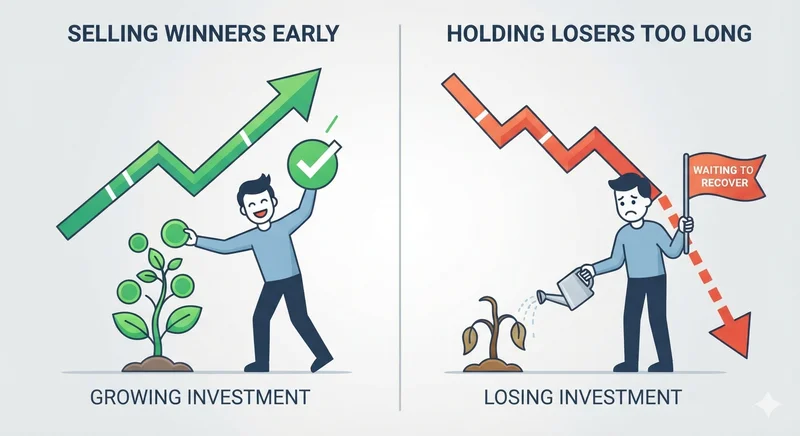
Terrance Odean studied 10,000 brokerage accounts and found traders were about 1.5 times more likely to sell a winner than a loser. The same instinct that makes you snatch profits early makes you refuse to take losses. Odean estimated this behavior — holding losers, cutting winners — quietly costs traders 3 to 5% a year. Moving your stop is that instinct in its purest form.
Think about what you’re actually claiming when you widen a stop. You’re saying the calm, informed version of you was wrong, and the scared version watching red candles has better information. That’s backwards. The scared version doesn’t have better information. It has worse judgment and a bigger emotional stake. It’s not analyzing. It’s bargaining.
And the market doesn’t care about your bargain. Your stop moving from -1% to -2% didn’t change a single thing about supply and demand. It just doubled your loss if you’re wrong, which — given that you were wrong enough to hit the original stop — you probably are.
Most traders think the problem is the stop was “too tight.” Sometimes it was. But you don’t fix a badly placed stop by moving it mid-trade. You fix it by sizing the position for a wider stop before you enter, or by admitting your entry timing was off and taking the small loss. Moving it live isn’t analysis. It’s you renegotiating a contract with yourself, in the middle of losing, using the worst possible mental state to do it.
I did this for years. I’d set a stop, watch price approach it, and convince myself the level was “obviously” going to hold. Sometimes it did, and that was worse — because it taught me that moving stops works. Then one trade would run against me the full distance, the loss three times what I’d planned, and it would erase a month of discipline in an afternoon. The wins from moving stops are small and frequent. The losses are large and rare. That math always ends in the same place.
There’s a reason systematic trading exists, and this is most of it. A rules-based system sets the stop and doesn’t get a vote afterward. It can’t feel the fear. It can’t bargain. When price hits the level, the position closes, no discussion. That sounds cold until you remember that “cold” is exactly the state you were in when you made the good decision — before the trade, when you set the stop in the first place.
So here’s the one thing to change. Treat your stop as already executed the moment you place it. The trade isn’t “open with a stop below.” The trade is “this much risk, already spent.” You’re not deciding whether to honor the stop when price gets there. You decided that when you entered. Everything after is just the market telling you which pre-made decision was right.
If you can’t stop yourself from moving stops — and plenty of good traders can’t, because willpower fails exactly when the pressure is highest — then take the decision out of your hands. That’s the whole argument for automating execution. Not because a bot is smarter than you. Because a bot is the version of you that set the stop when you were calm, and it never gets scared enough to change its mind.
The stop you set when calm already knew the answer. The only mistake left is not listening to it.