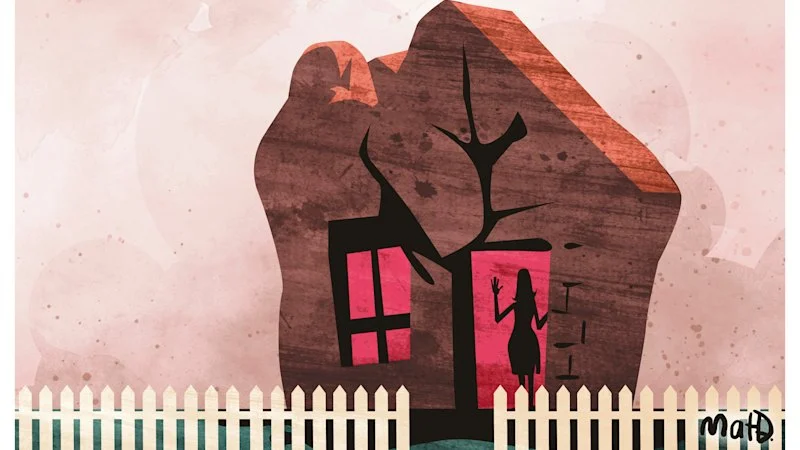
The setting could hardly have been more symbolic. Last week’s general assembly of the Presbyterian Church of NSW and the ACT met in the Audrey Keown Theatre at Presbyterian Ladies’ College, Sydney, a school that has spent more than 140 years educating girls for lives of leadership.
Inside those walls, an assembly that was roughly 90 per cent male voted 136-61 to ensure that women could no longer hold one of the church’s highest local leadership offices: elder.
Few venues would better expose the contradiction.
PLC has a proud history of producing women who have helped shape Australian society, including Justice Carolyn Simpson, appointed to the Supreme Court of NSW, and Professor Susan Dorsch, the first woman appointed to a professorship in the University of Sydney’s faculty of medicine.
Yet within the PLC theatre, the Presbyterian assembly voted that women were biblically unqualified to govern the very institution that helped educate them.
Supporters describe the motion and the result as an expression of complementarianism: the theological belief that men and women are equal in worth but assigned different God-given roles within the church and family. This language is carefully chosen. “Different roles” sounds reassuringly even-handed. In practice, the distribution of power is anything but.
Governance, doctrinal oversight and pastoral leadership remain reserved exclusively for men. George Orwell recognised this kind of linguistic sleight of hand. In Animal Farm, the promise from the ruling pigs that “all animals are equal” quickly gives way to the revealing qualification: “but some animals are more equal than others”. Equality, once modified, has an uncanny habit of becoming hierarchy.
Research consistently shows that homogeneous leadership groups are more vulnerable to groupthink and blind spots, while diverse leadership teams tend to make stronger governance decisions, particularly when addressing complex issues.
Advocates, researchers, royal commissions and church-commissioned reviews have repeatedly warned that gender-imbalanced leadership structures and cultures can undermine organisations’ ability to recognise, respond to and prevent domestic and family violence.
An analysis published by ABC News highlighted how insular evangelical and complementarian structures frequently pressure women to remain in violent marriages under the guise of honouring God or keeping their wedding vows. Given that there is an alternative theological position of egalitarianism, it begs the question: why would Presbyterians choose the option of poorer governance that creates greater risk for women?
Nina Funnell, an investigative journalist and PLC alumna, is the founder of the #LetHerSpeak campaign that has led to multiple law reforms, dismantling archaic victim-survivor “gag laws”.
A Walkley and Australian Human Rights Commission Award winner, Funnell has reported extensively on gender, power and violence against women. She has worked closely with Our Watch, a national independent organisation that leads primary prevention of violence against women.
Our Watch lists both “gender inequality” and “men’s control of decision-making and limits to women’s independence in public and private life” as primary drivers of men’s violence against women. Both drivers are strengthened by the assembly’s vote.
Research from the Australian National University found that religious identity and participation were associated with more patriarchal beliefs about gender roles and that, while religious individuals acknowledged domestic violence was an important national issue, they did not “recognise it as an issue among members of their own faith”, Professor Naomi Priest, the study’s lead author, said. The study recommends that “addressing patriarchal beliefs and acknowledgment of domestic violence within faith communities are key targets for action to address domestic violence”.
It would be comforting to imagine the assembly simply hadn’t considered the abusive implications, or more comforting still that its gathering was a dystopian fiction performed on the PLC stage. Those explanations, however, remain imaginary. The assembly had consulted widely in recent years and had received ample feedback that this decision would cause women to be less safe in their congregations.
Additionally, a recent internal report presented to the assembly by its own women’s ministry committee revealed deep fractures within the wider ranks on this very issue. The committee surveyed ministers, elders and congregants in the church and found significant differences between the responses of female congregation members and male ministers to the following two statements: “Men and women work well together in this church” and “Women trust the elders in this church with issues specifically related to women (e.g. domestic violence, sexism).”
The assembly may have been more fittingly held in Orwell’s Nineteen Eighty-Four than at PLC. The doublethink going on within parts of the Presbyterian church is astonishing: declaring that women are equal to men, while the men actively restrict women’s equal voice and opportunity; claiming to abhor all forms of violence, while voting in favour of measures and structures that drive men’s violence against women; and claiming to strengthen healthy biblical relationships between men and women, while simultaneously committing acts of overt sexism and undermining the health and safety of women.
The Audrey Keown Theatre exists to celebrate young women and the leaders they can become. Last week it hosted an overwhelmingly male assembly who decided precisely where to install the stained-glass ceiling.
Kylie Maddox Pidgeon is a psychologist with tertiary qualifications in theology. She is a former member of the Presbyterian Church.