- See more This is Money on Google - save us as a Preferred Source
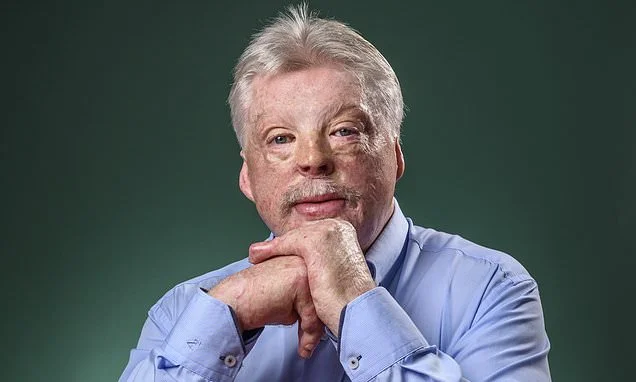
Simon Weston, 64, is a former soldier with the Welsh Guards and a Falklands War veteran. He sustained severe burn injuries when Argentine Skyhawk fighters attacked the RFA Sir Galahad, which was transporting his regiment, the Welsh Guards.
The attack on June 8, 1982 left an initial 48 men dead and 97 injured, including Simon, who suffered 46 per cent burns to his head and body.
His recovery involved more than 90 major operations over many years, the last one being about five years ago.
Simon has since devoted his time to various charities and fundraising initiatives. The father of three lives in Cardiff with his wife Lucy.
Veteran: Simon Weston is a former soldier with the Welsh Guards and a Falklands War veteran
What did your parents teach you about money?
I grew up on a council estate and saw just how hard it was to get by.
My mother, Pauline, worked two jobs, as a nurse and cleaning floors in a pub, so we could go on holidays. It was a tough time.
What was your first job and what did you earn?
I had a milk round and a paper round, and before joining the Army, I was working for a metal fabricator as a labourer.
I had to work under a dead man’s name as I was too young to do the job.
I probably got paid what a kid would earn back then, but I couldn’t say what I earned. I’m not sure I’d want to even if I could remember, just in case the HMRC come after me for the tax I didn’t pay!
Why did you end up joining the Army?
I got into a spot of bother when I was young, including getting caught in the passenger seat of a stolen car.
I wanted and needed some discipline, and the Army offered me a way out.
I remember I was able to draw £4 a week while in training, which would have been ridiculously low money even in the Second World War, let alone 1978.
Despite getting peanuts, we put some of our money into a savings account, so when we went on leave, we had a few hundred pounds to spend.
What was the reasoning behind the £4 a week pay?
The Army didn’t want us to squander our money. What they wanted was for us to manage it well, which you need to do if you’re on £4 a week, or the £5 a week I got as a lance corporal.
We needed to reserve enough money from our allowance to buy shoe polish, toiletries, and a cup of tea with a sticky bun in the NAAFI.
Did you see the Army as a career?
Yes. I signed up for nine years, which was the longest term possible unless you started rising up the ranks. I loved it.
I was stationed in Berlin and Northern Ireland. I was in the rugby team, stationed in Kenya, and then off to the Falklands.
If you didn’t have a penny, someone would lend it to you, and you’d pay it back when you could, interest-free. It was a great life, and I envisioned being in the Army for good.
How did the Sir Galahad attack change your life?
I was told by a resettlement officer that I was unemployable, and this from the guy who’s supposed to help me find a new career and future.
I felt I was left on my own. Everything I have, I earned. I can’t even get compensation for loss of hearing because I was injured before May 1987, which is the cut-off date for claims.
How do you view Argentina’s World Cup banner?
Who wants to see someone’s tatty old bedsheets? It was disappointing, disrespectful, very unprofessional, and childish.
I don’t think there is a place for politics being displayed in any sport because sport is about unifying people, not segregating people to generate arguments.
How did you get back to work?
The Welsh Guards kept me in the Army for as long as they possibly could, so that I wouldn’t struggle. I was in the hospital, so I wasn’t spending money.
I stayed in the Army for three years, in hospital, having surgery and unable to work. When I left, there were about three million unemployed, and not many opportunities, so it was really difficult.
I went to New Zealand to work with youngsters, and from there to Liverpool, where I co-founded a charity, Weston Spirit. That’s where my charity and fundraising work really began.
Did you make much of a living?
I wasn’t earning anything in the early days, so I had to be very careful with my spending.
I lodged for a while and eventually started to earn some money when people became interested in my public speaking. Television offers came in, and more work rolled in off the back of that.
Unprofessional: Simon Weston says Argentina's World Cup banner was 'disappointing, disrespectful, very unprofessional, and childish'
What was the best year of your financial life?
At around the same time, in the mid-1980s, I had the chance to write a book, Walking Tall, which was very successful and attracted more work as head fundraiser for a number of charities.
What was your best financial decision?
Getting life insurance. Even though you never want to call upon it, it gives a certain amount of security to your family, and it’s tax-free.
At one stage, I was doing tens of thousands of miles a year on the motorway, and car insurance was not going to provide for my family if something happened.
I had a wife and three small children at the time, who’d need financial support. Life insurance is about thinking of others, rather than yourself.
Do you own any property?
We have a five-bed detached house in Cardiff. I also own my mum’s old home, which was a detached property and my mother-in-law’s semi-detached.
They both had to move because of things that had happened, break-ins and other issues.
What is your number one financial priority?
The same as it’s always been, paying the bills, taxes, and what little remains of the mortgage.
Simon Weston is available for speaking engagements via htalentmanagement.com. For more information on Debra The Butterfly Skin Charity, visit debra.org.uk.