Shark Week 2026 prepares to kick off on July 26, 2026. And, meanwhile, marine scientists have unveiled an exciting shark discovery. Researchers from the University of the Sunshine Coast (UniSC) in Australia have identified a walking shark in Papua New Guinea. The species was previously unknown to science, adding another branch to one of the ocean’s most unusual shark groups.
A team led by Jess Blakeway and Christine Dudgeon discovered the species during fieldwork in Milne Bay in 2025. They published their findings in the peer-reviewed Journal of the Ocean Science Foundation on June 15, 2026.
The announcement comes at a time when shark research has never been more important: more than 1/3 of shark and ray species worldwide are threatened with extinction, according to the International Union for Conservation of Nature (IUCN).
A walking shark that science had never seen before
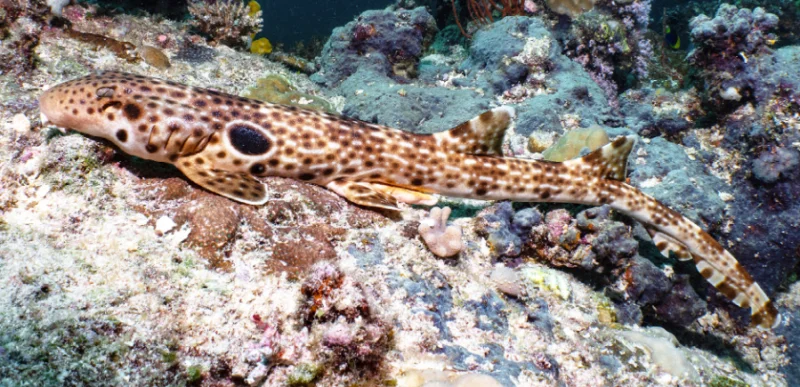
The newly described species, Hemiscyllium dudgeonae, has been given the common name “Dudgeon’s walking shark” in honor of Christine Dudgeon, a renowned shark geneticist and ecologist who has spent more than two decades studying walking sharks.
The species lives in a small area of reef off Papua New Guinea’s southeastern coast. Like other members of the epaulette shark group, it uses its strong fins almost like legs, allowing it to move across shallow reef flats where many other sharks cannot reach. It feeds on small invertebrates living on the seafloor and poses no threat to humans.
For Dudgeon, the discovery carried a particularly personal significance. She said:
New shark species don’t come along that often, and it’s most definitely the first one named after me.
A pattern no one expected
The discovery began during night surveys in the shallow waters of Milne Bay, where researchers were studying endangered epaulette sharks, which is the group that includes the newly identified Hemiscyllium dudgeonae. These small reef sharks take their name from the two dark spots behind their gills, which resemble the decorative shoulder pieces – epaulettes – worn on military uniforms.
The research team was searching for known epaulette shark species when Dudgeon encountered an individual that immediately appeared different. During the dive, she carefully captured the shark by hand and brought it back to the research boat for closer examination.
Once on board, the shark caught the attention of lead author Jess Blakeway. The shark’s unusual color pattern did not match the species the researchers expected to find. Blakeway said:
Straight away I recognised that the colour pattern was different from any of the other species I had worked with before.
Instead of the leopard-like spots they were familiar with, the shark had a brown body covered with distinctive white dashes. The markings suggested the team might be looking at something entirely new. Blakeway later told Smithsonian Magazine:
This new one has got lots of spots and dashes that reminded me of braille or morse code.
The researchers continued searching the area, and the evidence became increasingly convincing. Over the following two nights, they found another 11 individuals with the same distinctive pattern, strengthening the possibility that they had discovered a previously unknown species.
A shark with nowhere else to go
While the discovery generated excitement among scientists, it also raised immediate conservation concerns.
Researchers found the new species within a very limited geographic range, making it potentially vulnerable to habitat degradation, coastal development, fishing pressure and climate change. Species restricted to small areas often face greater risks because a single environmental threat can affect a large proportion of their population.
However, the shark was not unknown to everyone. Local communities in southeastern Papua New Guinea had long recognized the animal and called it kadedekedewa, a name that loosely translates as “dog shark” or “lazy shark” because of its slow, deliberate movements across the seafloor. Scientists only recently confirmed that this familiar reef shark represented a distinct species.
Scientists now hope to collect more information about the species’ population size and distribution to determine its conservation status. Blakeway said:
We hope to collect more data on our next research trip in October to help the International Union for Conservation of Nature (IUCN) Red List assess the species as vulnerable or endangered with extinction.
Why discoveries like this still matter
The discovery of Dudgeon’s walking shark highlights an important reality: scientists continue to find new shark species even in the 21st century.
Every discovery improves our understanding of marine ecosystems and helps conservationists identify species that may require protection. In this shark group alone, five of the 10 known species are already considered threatened because of their highly restricted geographic ranges.
In other words, researchers cannot protect species they do not know exist.
As Shark Week shines a spotlight on the world’s most famous sharks, the discovery of Hemiscyllium dudgeonae offers a different perspective. Not every shark story involves giant predators breaching from the water or dramatic encounters in the open ocean. Some unfold quietly on remote reefs, where species can remain hidden from science for decades.
Blakeway told Smithsonian Magazine:
A lot of the time, we talk about the deep sea as unknown. We don’t really think of the shallow water as being unknown. So, finding a new species of shark that is pretty shallow water-oriented is just so exciting.
The discovery of a completely new shark species in 2026 serves as a powerful reminder that the ocean remains one of Earth’s least explored frontiers. Every expedition, every survey and every genetic analysis has the potential to reveal something unexpected.
Remarkably, this shark entered the scientific record at the same moment researchers began asking how best to protect it. That contrast captures both the excitement and the urgency of modern marine science; discoveries are still being made, but the window to safeguard many species may be growing smaller.
How to celebrate Shark Week 2026
Shark Week 2026 runs from July 26 through August 1 and features 20 new shows exploring shark behavior, ecology, migration and conservation.
If you’d like to dive deeper into the world of sharks during the week, consider:
- Watching Shark Week documentaries on Discovery Channel.
- Exploring educational resources from marine conservation organizations such as the Shark Trust and Save Our Seas Foundation.
- Supporting shark conservation projects and citizen-science initiatives that help researchers monitor vulnerable populations.
- Visiting local aquariums, science centers or marine museums that often organize shark-themed activities and talks.
Bottom line: Shark Week begins with a remarkable discovery: scientists have identified a new walking shark, proving the ocean still holds secrets worth protecting.