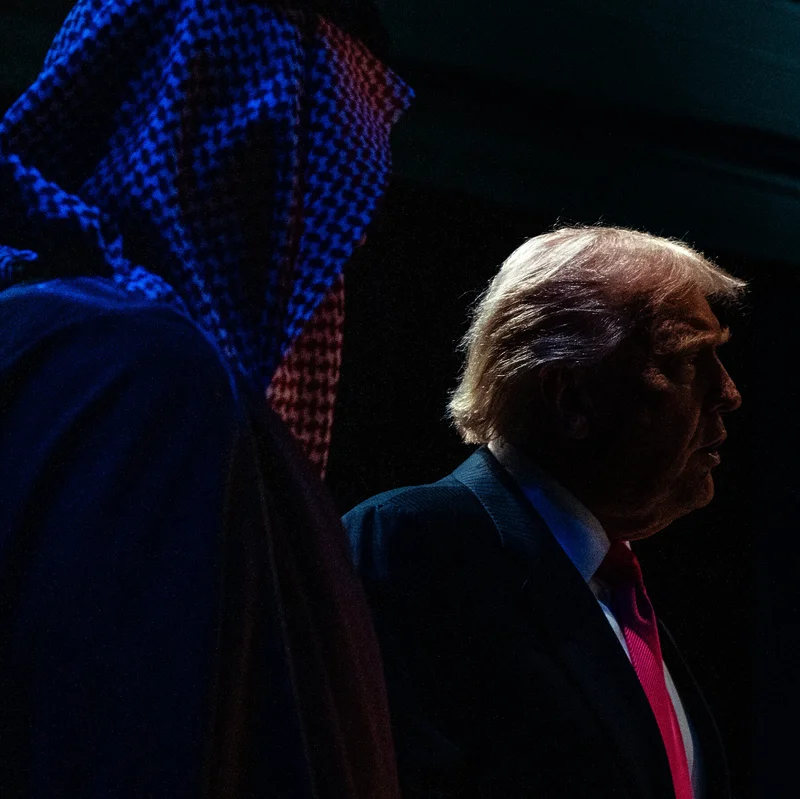
The decision by President Trump to grant Saudi Arabia access to American nuclear technology aligns with his administration’s push to accelerate domestically backed nuclear power projects around the world.
But it may also contribute to a major trend in Mr. Trump’s second term: allowing the government to help enrich the president, his family, advisers and others in his orbit.
There is no evidence at this point that Mr. Trump’s friends or family helped orchestrate the Saudi nuclear deal. Yet a number of the president’s allies and relatives, including members of his cabinet, stand to benefit if his big bet on nuclear power pays off. Certain investors with ties to these deals are positioned to profit, even if the delivery of large new loads of nuclear-powered electricity remains years away.
The overarching goal is to generate more electricity as the demand surges worldwide, driven by a data-center building boom and growing consumer consumption. Investors are financing traditional, large-scale nuclear power plants along with a new technical approach called small modular reactors. Others are mining the uranium needed to power nuclear plants. Some others are vying to build those plants.
In some cases, how the Trump family or the president’s allies could potentially gain from the president’s nuclear plans is straightforward. In others, no direct line can be drawn, but there are such overlapping business ties that it is hard to separate the policy decisions from the potential personal benefits.
For example, Westinghouse, the Canadian-owned but U.S.-based company that developed the technology behind the AP1000, a large-scale reactor whose design has been used in China and for plans in Eastern Europe, is expected to be part of the deal, according to three people familiar with the matter.