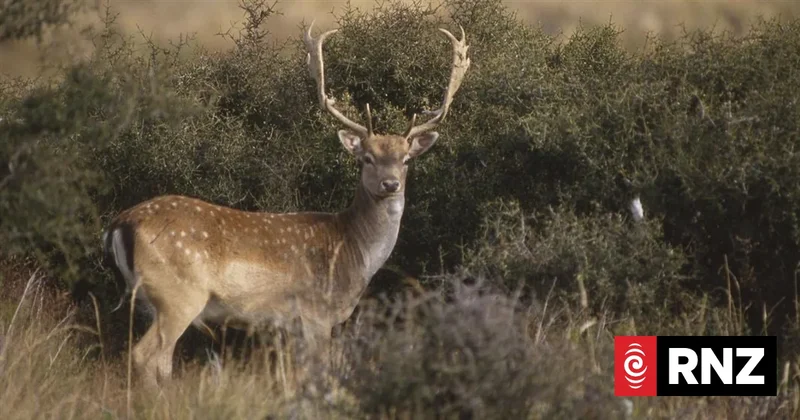
Ecologists are calling for a deer management strategy, as a new report finds the pests threaten native forests' regrowth.
A paper by the University of Canterbury published today revealed rising deer numbers are driving a slow decline in native forests.
Emeritus professor and the study's lead author David Norton said deer populations have grown back to levels seen in the 1950s and 60s.
He told RNZ the decline might not be visible straightaway,
"Our mature canopy trees, whether they're podocarps or beech trees, they live for many decades and they're not going to necessarily disappear because of deer today.
"But it's the regeneration that's coming away underneath that is a real concern," he said.
He said deer were hollowing out forests of food sources which support forest ecosystems.
He said forests in South Westland and Western Otago were "just empty".
"There's a layer of moss on the forest floor; there's a canopy of silver beech trees 20, 30 metres up - nothing in between."
He said forests were shelters for native biodiversity, natural carbon storage and helped water catchment, and they were already under strain from climate change.
"We're getting more intense storm events. We're getting drier summers. Our forests have tolerated disturbances and extreme events in the past.
"But when we add deer into it, I think there's a real concern there that the two things together may lead to a much more pronounced forest collapse, and that will then have downstream effects."
He said he worried especially about landslides, after which some of the early plants to regrow were ones which deer enjoyed as food.
Grazing on this regeneration, he explained, would undermine the area's resilience to further slips.
Ideally, he said he would not have any deer in the country but he understood the social value of deer.
Instead, he called for a national management strategy involving conservation groups, iwis, hunters and farmers.
"But I do believe as an ecologist, the first priority has to be biodiversity conservation and landscape resilience. Hunting opportunities, recreational opportunities have to come in underneath that," he said.