News analysis
Tan Boon Liat’s $950m sale adds to en bloc momentum as sellers turn realistic on pricing
AI generated
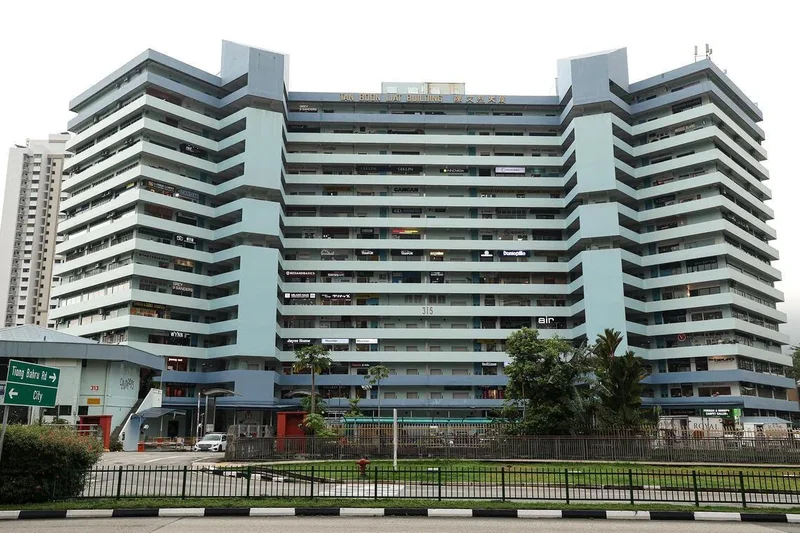
SINGAPORE – The $950 million sale of freehold Tan Boon Liat building in Outram and two other major deals in the past year signal a selective recovery in the collective sale market, but a broader rebound will hinge on whether more en bloc sellers remain realistic in their pricing and if their sites offer compelling redevelopment opportunities.
Among the major deals, Tan Boon Liat’s collective sale is the largest, following the $880 million sale of Changi condominium Loyang Valley in April and the $810 million Thomson View deal in 2025.
Excluding these, the collective sale market has been subdued, with a total of only three transactions in 2026. These include the $391.9 million sale of a rear block of The Centrepoint to a Frasers Property unit in February.
Catherine He, Colliers’ head of research for Singapore, noted that Tan Boon Liat, Loyang Valley and Thomson View share three characteristics – “exceptional scale, strong locational fundamentals and reserve prices that were meaningfully re-priced”.
Pricing realism has become one of the most important factors driving successful collective sales, said Terence Lian, head of investment sales at Huttons.
These three large successful collective sales all closed at below their initial reserve prices.
Hopefuls like Pine Grove in Ulu Pandan and People’s Park Centre, which have undergone several failed bids, also lowered their reserve prices in renewed attempts.
This signals that their sellers recognise they are not only competing against other en bloc sites and the government land sales (GLS) programme, which offers developers fresh sites to tender for almost every month, but that they are also battling rising maintenance costs as their buildings age and leases decay.
“Owners who’ve been through multiple failed attempts are learning to price their sites based on what buyers will actually bid, rather than what they hope the site is worth,” said Nicholas Ng, head of land and collective sales at JLL Singapore.
In particular, owners of leasehold sites need to be realistic in their pricing, because the longer they hold out, the more lease upgrading premium a developer has to pay to bring an ageing lease back to a fresh 99-year tenure, which in turn affects the attractiveness of the en bloc site, he added.
Developers, on the other hand, have to continue to price projects based on achievable selling prices to home buyers, while grappling with higher construction costs, land betterment charges, development risks and regulatory requirements.
As such, it is not surprising that acquiring sites from the GLS programme, which is more straightforward, is still the preferred route for landbanking.
A significant closing of the gap in expectations is, therefore, critical to helping more collective sales succeed.
It also helps to have a compelling redevelopment story.
The Urban Redevelopment Authority’s (URA) decision to rezone the Tan Boon Liat site from the current Business 1 zoning to “residential with commercial on the first storey”, coupled with a substantial increase in plot ratio from 3.1 to 4.9, significantly enhanced the site’s redevelopment potential, Lian said.
As the land was zoned Business 1 at the point of purchase, the acquisition is not expected to incur additional buyer’s stamp duty (ABSD) for the developer. Developers acquiring land for residential use face a 40 per cent ABSD on their purchase, including a non-remittable 5 per cent.
“Without such catalysts, developers’ appetite for large collective sale sites remains selective, as the underlying constraints such as ABSD, construction costs, and the 80 per cent consent threshold, have not changed,” Colliers’ He pointed out.
While the Tan Boon Liat deal is encouraging for large collective sale site hopefuls, Lian said “each site will continue to be assessed on its planning parameters, redevelopment potential, development costs and overall project feasibility”.
Colliers’ He believes Tan Boon Liat’s success may not be easily replicated, as its unique attributes are not shared by other large developments, such as People’s Park Centre and International Plaza, which are at different stages of trying for a sale.
“Both are leasehold properties, require lease top-up premiums and involve complex mixed-use redevelopment in the Central Business District,” she said.
Nonetheless, Kevin Liang, former collective sale committee chair for International Plaza, said Tan Boon Liat’s success is sparking hope among large collective sale sites’ sellers.
International Plaza in Tanjong Pagar will hold an extraordinary general meeting on Aug 1 to form a new collective sale committee for its second attempt, he told The Straits Times.
The 50-storey commercial and residential block’s $2.7 billion maiden attempt closed with no bids in November 2021. One of Singapore’s biggest integrated projects built in the 1970s, International Plaza comprises 209 apartments, 559 offices, 192 strata shops, a carpark and a pool.
“The reserve price will likely be lower this time because the building is ageing and the lease is decaying. Owners have more incentive to sell because maintenance costs are rising and the land lease tenure is decreasing,” Liang said.
Liang also downplayed the authorities’ rejection in October 2021 of International Plaza’s redevelopment proposal into a 280m-high, 62-storey project with a 24.05 plot ratio under the Central Business District Incentive Scheme.
The scheme encourages the conversion of existing, older office buildings into new mixed-use developments in the CBD.
The URA found that the property “currently has a good mix of uses, ranging from residences to retail, food and beverage and personal services, in addition to offices”.
“Hence, even without redevelopment under the scheme, International Plaza is already in line with the planning intention and is, in fact, functioning as an amenity centre for the area,” it said.
Nonetheless, URA’s planning guidelines issued in October 2021 state that the future project’s “residential quantum should at least match the existing residential quantum on site, at 30,361.52 sq m (excluding any bonus gross floor area). There will be no further increase in the office quantum, which will be capped at 87,861.96 sq m in the new project.”
That is a good thing, as it means that the existing 19.24 gross plot ratio is to be maintained for the future project, Liang added, which the URA has said “is substantial and considerably higher than the surrounding developments in Tanjong Pagar, such as Guoco Tower”.
Apart from International Plaza, Horizon Towers in Leonie Hill and Far Horizon Gardens in Ang Mo Kio are also restarting their collective sale processes after previous failed attempts.
Whether the fledgling momentum building in the collective sale market can continue will depend on whether further equilibrium can be struck between sellers, who face higher home replacement costs, and developers, who remain constrained by higher costs and development risks.