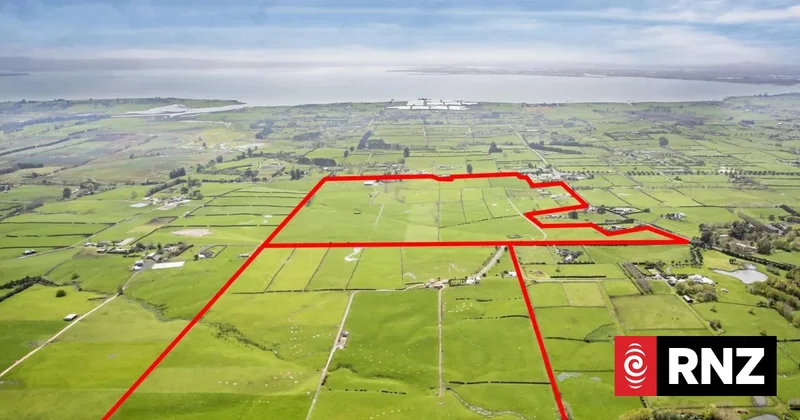
Council buys more land as Auckland approaches burial capacity
Auckland Council will address iwi opposition to its new cemetery as it develops the site, the council's general manager of parks said.
The council has bought 100 hectares of land near Karaka for $16 million, which is expected to provide for around 100 years of burials for South Auckland.
As part of the purchase process, the council engaged with Ngāti Te Ata, Te Ākitai Waiohua, and Ngāti Tamaoho including Whātāpaka Marae, said Taryn Crewe, Auckland Council's general manager of parks and community facilities.
Ngāti Tamaoho and Whātāpaka Marae objected to the purchase of the land for a cemetery for cultural reasons, Crewe said.
"That's related to tikanga, the relationship between burial practice and water, and those implications of establishing a wāhi tapu."
Crewe said the council has heard and respects those views, which are challenges that would exist no matter where the council purchased land for cemetery use.
"We've committed to a real partnership approach with those iwi, and the intent is to work with them through the master planning to make sure we are maximising the opportunities for ecological and cultural values to be done on the site, alongside primary burial.
"We've got the opportunity on that particular site, there's daylighting of streams that we can do, creating buffers and natural areas, and also looking at the type of burial provision that we have."
She said that's not just ash burials and body burials, but also natural burials which the council has started to use at North Shore and Waikumete cemeteries.
A natural burial has a tree in place of a tombstone, so the cemetery looks more park-like, Crewe said.
The council looked for land suitable for burial purposes for 10 years, she said.
The council purchased land in Kumeū earlier this year that gives 15 years' burial capacity for West Auckland. Crewe said before the purchase, South Auckland was expected to run out of cemetery space by 2030.
The new cemetery will be developed in stages over coming decades, she said.
Franklin Local Board also raised concerns about the site, relating to land use, rural amenity, traffic and road safety, proximity to Te Hihi School, and alternative site options.
Planning for the site will begin later this year, and will involve wider stakeholder liaison through the consenting and design phases, ahead of developing the site, Crewe said.
"The development of a cemetery site of this scale will be a multi-year process and it is likely to be some time before it is fully operational. The staged development will span decades similar to how we have developed our other three hub cemeteries."