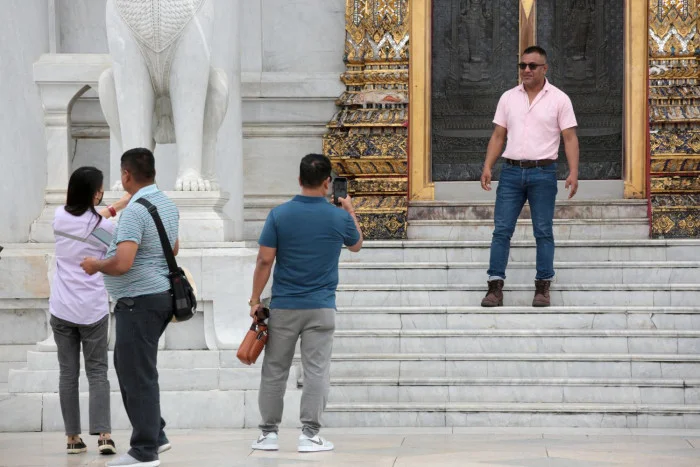
The decision to give Indians 30-day visa-free entry is expected to drive the market to a new record of 2.7 million visitors next year, supported by more flights from second- and third-tier cities to Thailand, say authorities.
Patsee Permvongsenee, executive director of the Asean, South Asia and South Pacific region at the Tourism Authority of Thailand (TAT), said the outlook for the Indian market remains positive following cabinet approval of visa-free entry for 30 days for Indian visitors.
The allowance starts once the decision is published in the Royal Gazette, but authorities are unsure when that will be.
As of July 18, Thailand has recorded 17.3 million foreign arrivals this year, down more than 3% year-on-year, with 1.3 million Indians placing the nation as the No.3 source market.
Arrivals from India are on track to reach 2.55 million this year. Indian carriers have expanded flights from second- and third-tier cities to Thailand, while airlines that temporarily suspended services because of the Middle East conflict and fuel crisis are preparing to restore capacity, said Mrs Patsee.
India is projected to post strong economic growth, supporting outbound tourism as domestic tourism expands on the subcontinent, she said.
According to TAT, the outbound Indian market is expected to reach 50 million trips by 2030, up from 32.7 million in 2025.
Thailand remains the No.3 overseas destination for Indian tourists, particularly in the leisure segment. Many see holiday prices in Thailand as competitive compared with premium domestic holidays in India, the agency noted.
Khajornrit Khwanmongkol, director of TAT's New Delhi office, said the weak rupee against the US dollar could dampen outbound travel sentiment among some middle-income earners, prompting them to postpone their trips, though the broader market is expected to remain resilient.
He said travellers during this period are generally high-spending visitors, with Indian tourists spending an average of 6,200 baht per day, or more than 36,000 baht per trip.
The earlier shift to a visa-on-arrival requirement created confusion and had a greater impact on travel demand than other factors, said Mr Khajornrit.
Nattachit Oonsiam, director of TAT's Mumbai office, said many travellers, particularly meetings and incentive groups, have switched to Vietnam amid uncertainty over Thailand's visa policy in recent months, as such groups typically plan their trips at least one month in advance.
Indian travellers can visit Phu Quoc Island without a tourist visa, while visas are still required for travel to other parts of Vietnam.
SEIZING OPPORTUNITIES
According to TAT, there are roughly 66,000 airline seats per week available for Thailand-India routes.
India's rapidly expanding aviation sector, driven by new airports and jets as well as stronger domestic connectivity, is expected to lift international travel in the coming years.
Diwali and Christmas combined account for about 45% of annual outbound travel. The TAT recommends promoting Thailand 6-8 weeks before each holiday to maximise bookings.
More than 500 million Indians are active on social media, with the leading platforms for tourism operators targeting Indian travellers YouTube, Instagram and WhatsApp, noted the agency.
Some 44% of Indian travellers are influenced by social media, while 60% rely on recommendations from friends and family, said the TAT.
Roughly 41% prefer family holidays, while 35% choose accommodation as part of the travel experience, according to the authority.
Demand is rising among solo travellers and small groups of up to three people, who typically book less than a month in advance, noted the TAT.
Emerging outbound travel trends include meetings and business travel, luxury experiences such as yacht trips and fine dining, health and wellness holidays, and experiential travel centred on local communities, gastronomy and Muay Thai.
To better serve Indian tourists, the TAT recommends Hindi-language signage and information materials, Indian vegetarian and halal food options, as well as digital payment facilities and flexible booking policies.