Wild deer increasingly encroaching on farms, moving closer to urban areas, hunter says
Wild deer are spreading closer to urban areas as they chew through protected pockets of native bush, crops and acres of pine trees.
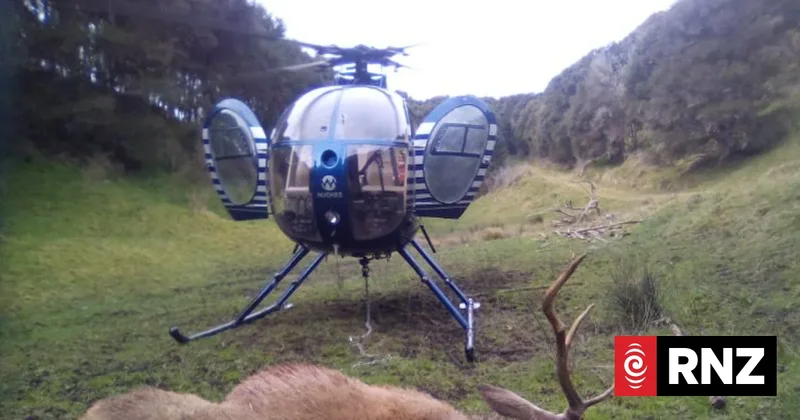
Kerry Flanders shoots deer for farmers in parts of Hawke's Bay at night using thermal imaging to spot them and says there are a lot more deer migrating from native forests and bush onto farmland - and many people don't realise it's happening.
This follows research from the University of Canterbury showing rising deer numbers are driving a slow decline in native forests as they hollow out forests that support ecosystems.
The paper 'Deer in the Headlights: Sleepwalking Our Way to a Native Forest Catastrophe' warns of a slowly developing crisis that's often hard to see.
It says deer are stripping younger trees and plants sheltered under the canopy of older trees and recommends an urgent national deer management strategy to better control the pests.
Flanders says it's no surprise that deer numbers are getting out of control as he sees large numbers where he shoots in the Puketapu and Puketitri areas.
"On a day you might go into a farm and have a look and see one or no deer at all. But later on at night you might see fifty or sixty when it's dark in the same place where during the day you see none."
Flanders says the deer wander wherever they want - decimating areas of native trees and plants as well as crops and young pine forests.
He says some young pine forests have needed replanting, as wild deer have eaten them. And fences are no barrier - even the allegedly pest proof ones.
"The deer just go wherever they want to. They even jump deer fences as well. Quite often I've seen it. I'm chasing them and they jump straight over the top of a deer fence! There you go - how did that happen? But it does."
Flanders says many farmers don't allow shooting on their farms, and that's part of the problem, as deer numbers continue to rise with little control.