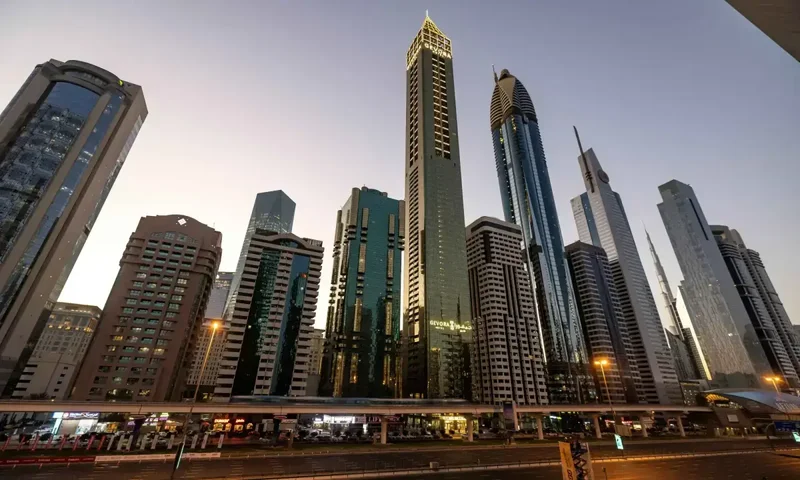
DUBAI: Just over a year after moving to Dubai, Steve found himself moving unexpectedly up the property ladder, taking advantage of a cooling real estate market amid the Middle East war. His new apartment is larger and closer to work than his previous resident, but the rent is nonetheless 15 per cent cheaper, he said, using a pseudonym due to Dubai’s sensitivity on the matter. When he arrived in Dubai last year, “it was really difficult to get a place in this area and the rents had gone up by a lot”, said the 35-year-old, who works in the media sector. Dubai’s property market — a pillar of its economy — has soared in recent years, buoyed by the arrival of international high-net-worth individuals attracted by the glamorous lifestyle on offer in the emirate. Agent says there are people who think this is the right time to invest, amid Mideast conflict But the outbreak of the US-Israel war on Iran in late February has dampened growth, as targets in Dubai came under fire in the early days of Iran’s retaliation against American allies in the region. Even some of its most iconic sites, such as Burj Al-Arab and the Palm Jumeirah, were considered safe, dealing a blow to the city whose population is more than 90pc foreigners. Hostilities resumed in July, following an April ceasefire, but Dubai has so far not been in the firing line. But its image as a city that is “safe no matter what” has yet to recover from the blow it was dealt, said a real estate agent, speaking on condition of anonymity. ‘Grey area’ Today, she said, “we are in some sort of grey area. I’m getting a split sentiment; people think this has destabilised the region for a long time… And there are people who say this is the right time to invest.” Clients have not completely disappeared, the agent said, but the margins for negotiation have expanded. “Since the war, the market has shifted from a seller’s market to a buyer’s market,” she claimed. British real estate consultancy Knight Frank said, “We have already noted prices ebbing widely across the city’s mainstream market by between 5pc and 20pc, depending on location”, after having surged by an average of 82.9pc since 2021. Property giant Emaar nonetheless announced last month a massive $55 billion project in the heart of Dubai, hoping to attract some 150,000 residents, signalling its confidence in the market’s ability to bounce back. Binghatti, another major developer, said it had sold two luxury apartments in the centre in June, at $54 million and $19m, respectively. According to a report by the Betterhomes agency, based on official figures, sales transaction values fell in the second quarter of 2026 by 45pc year on year, with the luxury sector hit particularly hard. But chief executive Richard Waind nonetheless insisted that the situation has improved over the past weeks. “We’re starting to see demand increase again through June and then into this month, both in terms of buyer activity and buyer deals happening,” he said. Published in Dawn, July 27th, 2026
Residents cash in on Dubai real estate cooldown