Two decades of monitoring show how migratory birds, viral reassortment, and global flyways are reshaping the spread of highly pathogenic avian influenza.
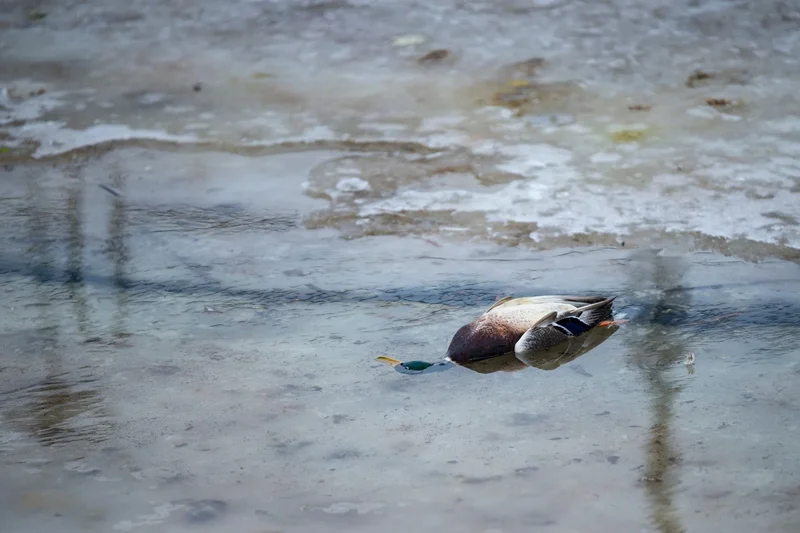
Study: Evolving dynamics of H5Nx avian influenza in China revealed by long-term wild bird surveillance. Image Credit: GatisVil / Shutterstock
In a recent study published as an Article in Press in the journal Nature Communications, a group of researchers investigated the long-term evolution, transmission, and geographic spread of H5Nx highly pathogenic avian influenza virus (HPAIV) in China's wild birds through nationwide surveillance and genomic analyses.
Background
Avian flu outbreaks affect millions of birds, disrupting global poultry production and threatening wildlife conservation and public health. Highly pathogenic avian influenza (HPAI) H5Nx viruses have far exceeded their original geographic range by spreading across continents with the help of migratory birds and often engaging in the exchange of genetic material.
Since various continents are connected through migratory flyways, it is important to determine the pattern of the spread of these viruses and the manner in which they evolve. Further research is needed to strengthen international surveillance and improve early detection of newly emerging viral lineages.
About the study
The researchers conducted nationwide surveillance of avian influenza viruses (AIVs) in wild birds across China from February 2003 through February 2023. During this period, 219,445 samples were collected from 28 provincial-level regions.
Surveillance before 2013 was largely restricted to northeastern China, especially Heilongjiang Province, but this changed after the establishment of the Bird Flu Monitoring and Alert System (BFMAS) in 2014.
The surveillance project included both active monitoring with live birds and passive surveillance with reports of sick and dead birds. Samples collected included fresh fecal samples, tissues, and swabs from various sources.
The specimens collected were transported under temperature-controlled conditions and underwent virus isolation in specific pathogen-free embryonic chicken eggs.
Identification of the viruses was done through hemagglutination tests, subtyping, ribonucleic acid (RNA) extraction, amplification, and Sanger sequencing. The scientists performed a thorough analysis of global outbreak cases from the Food and Agriculture Organization (FAO) records, as well as obtained open-source genome sequence data from the Global Initiative on Sharing All Influenza Data (GISAID) and the National Center for Biotechnology Information (NCBI) databases.
Phylogenetic, phylogeographic, statistical, and evolutionary analyses were then performed to evaluate viral diversity, transmission pathways, geographic spread, host transitions, and long-term evolutionary patterns of H5Nx viruses.
Study results
Nationwide surveillance identified substantial changes in the occurrence and distribution of H5Nx HPAIVs over the 20-year monitoring period. Researchers collected 219,445 bird samples in China from February 2003 to February 2023 and isolated 1,344 AIVs, yielding an overall isolation rate of 0.61%. Prior to 2014, there was limited monitoring, and no H5Nx HPAIVs were detected.
Following the introduction of the BFMAS, surveillance expanded considerably, yielding 368 H5Nx HPAIV isolates, including H5N1, H5N2, H5N6, and H5N8 viruses. Viral activity showed a clear seasonal pattern, with peaks between November and January and a drop-off in summer. Interestingly, no H5Nx HPAIVs were detected between mid-2017 and late 2020, despite the continued circulation of low-pathogenic avian influenza viruses (LPAIVs), suggesting possible suppression rather than confirming the absence of transmission.
Temporal shifts in viral subtypes were also evident. H5N1 predominated during 2014-2015, H5N8 became the dominant subtype during 2016-2017 and 2020, and H5N1 re-emerged between 2021 and 2023. These transitions closely mirrored global changes in clade 2.3.4.4b viruses and reflected ongoing viral evolution through antigenic drift, reassortment, and host immune pressures.
The surveillance program documented 46 distinct H5Nx HPAIV detection events, revealing marked geographic and seasonal variation. Most detections occurred along major migratory flyways, particularly the Central Asia Flyway and the East Asian-Australasian Flyway, with approximately three-quarters of events recorded between September and February during migration and overwintering seasons.
Phylogenetic analyses identified three major viral clades circulating in China, with clade 2.3.4.4b as the dominant lineage, exhibiting the greatest genetic diversity and geographic distribution. This clade continued to evolve through reassortment, creating multiple H5N1 and H5N8 genotypes over time.
Worldwide outbreak analyses also showed that, while poultry accounted for the majority of outbreaks throughout the study period, outbreaks linked to wild birds grew significantly after 2016 and often outnumbered poultry outbreaks from autumn 2020 onward.
Phylogeographic analysis revealed that the majority of earlier H5Nx transmission events occurred in East Asia, whereas more recent viruses found in China were genetically closer to viruses circulating in Europe and North Asia than to locally derived variants. Most clade 2.3.4.4b viruses detected after 2020 were consistent with repeated reintroductions through migratory birds rather than continuous local transmission.
Conclusion
The findings showed that long-term surveillance of wild birds contributes to a better understanding of the evolution, reassortment, and worldwide spread of H5Nx HPAIVs. According to the research, clade 2.3.4.4b has emerged as the dominant lineage mediating intercontinental spread, and the latest viruses found in China largely represent repeated reintroductions through migratory birds rather than sustained local circulation.
These observations emphasize the need for ongoing surveillance, genomic monitoring, and international cooperation to detect new viral variants and explore their routes of transmission.
Journal reference:
- Li, X., Lv, X., Li, Y., Fei, M., Zhang, S., An, Q., Qin, S., Peng, P., Li, J., Liang, H., Xiu, Y., Li, Z., Wang, Y., Wang, Y., Zeng, X., Hou, Z., Sun, H., Xu, Y., Li, Y., & Chai, H. (2026). Evolving dynamics of H5Nx avian influenza in China revealed by long-term wild bird surveillance. Nature Communications. DOI:10.1038/s41467-026-76039-9, https://www.nature.com/articles/s41467-026-76039-9